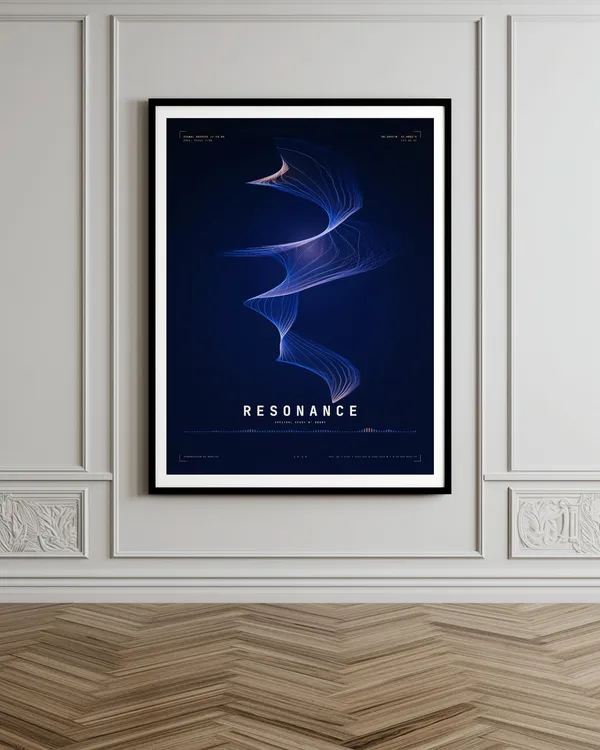
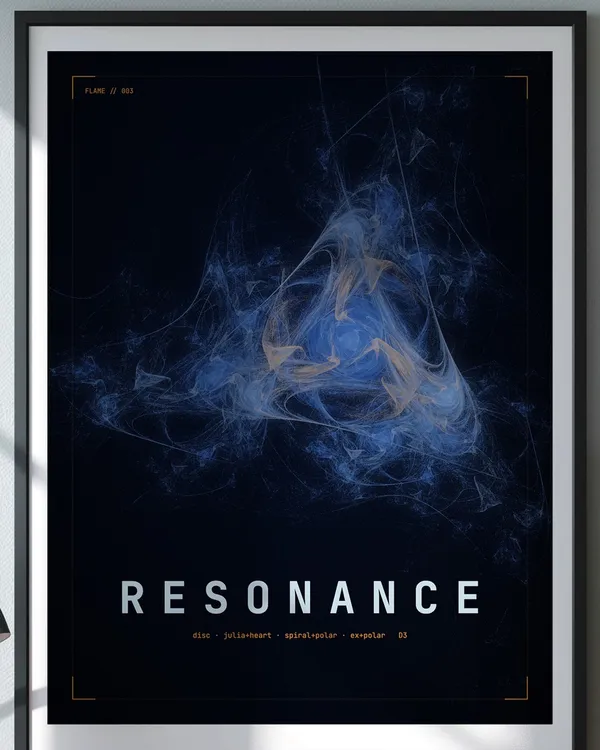
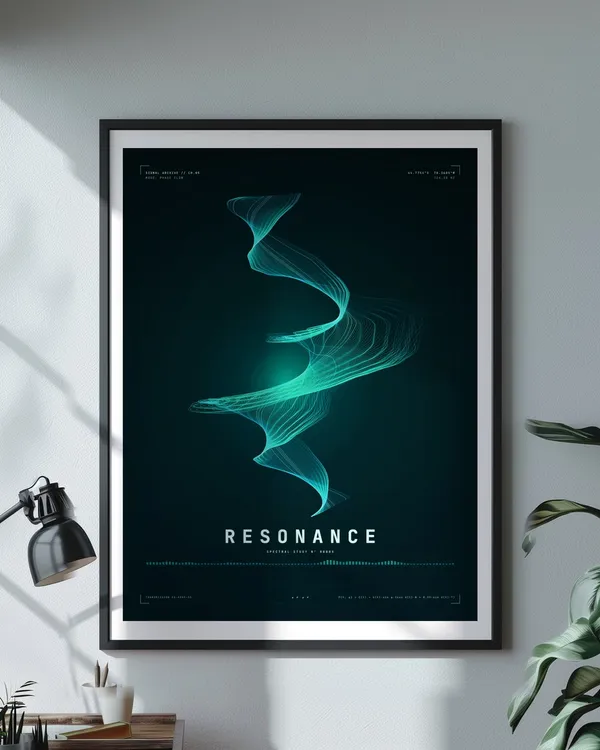
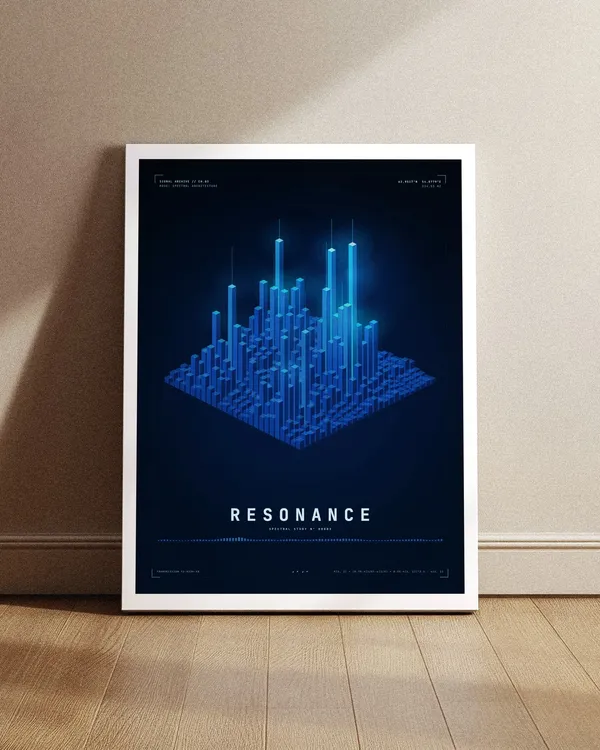
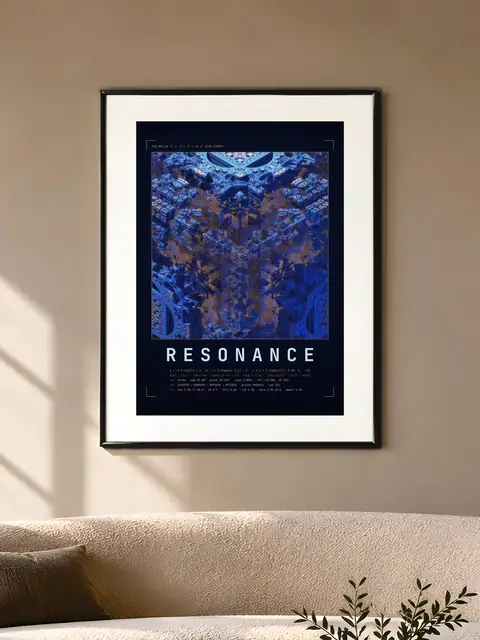
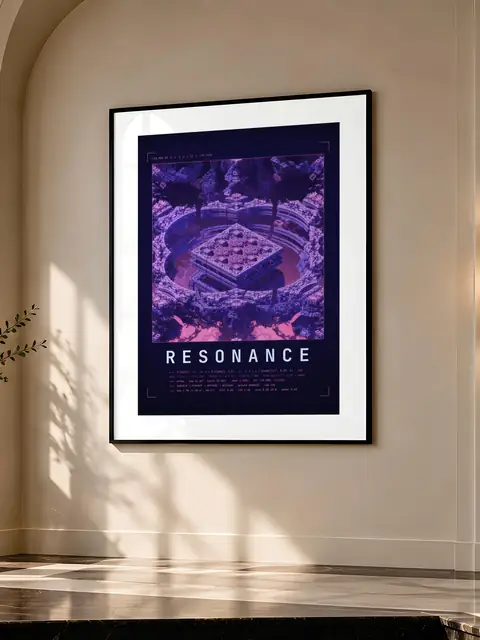
Fine art paper
200 gsm enhanced matte
Printed on thick uncoated art paper at 300 DPI. Rich colour, razor-sharp lines, no glare.
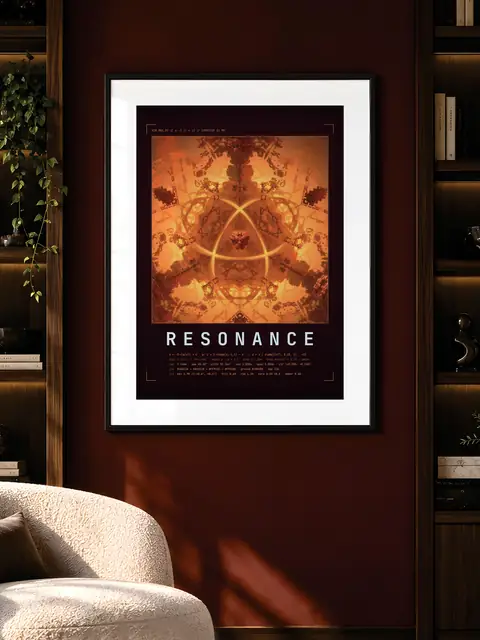
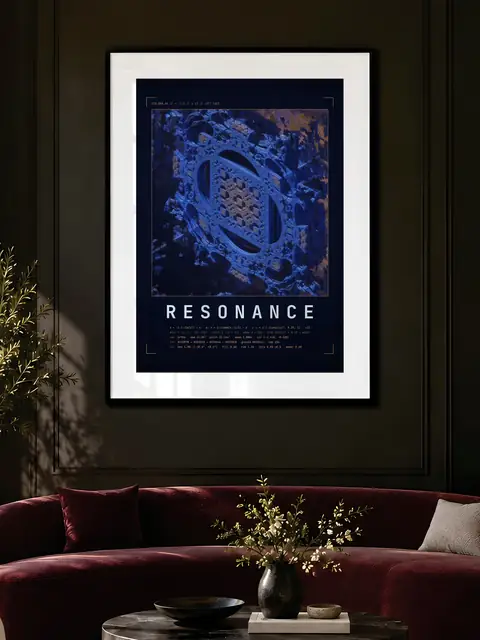
Real wood frames
Black or natural wood
Wooden frame, 22 mm deep, with plexiglass that is lighter and safer than glass. Arrives ready to hang.
Made to order
Free shipping worldwide
Each print is made for you when you order and packed to arrive flawless, wherever you are.
MATHEMATICS
The maths behind the picture
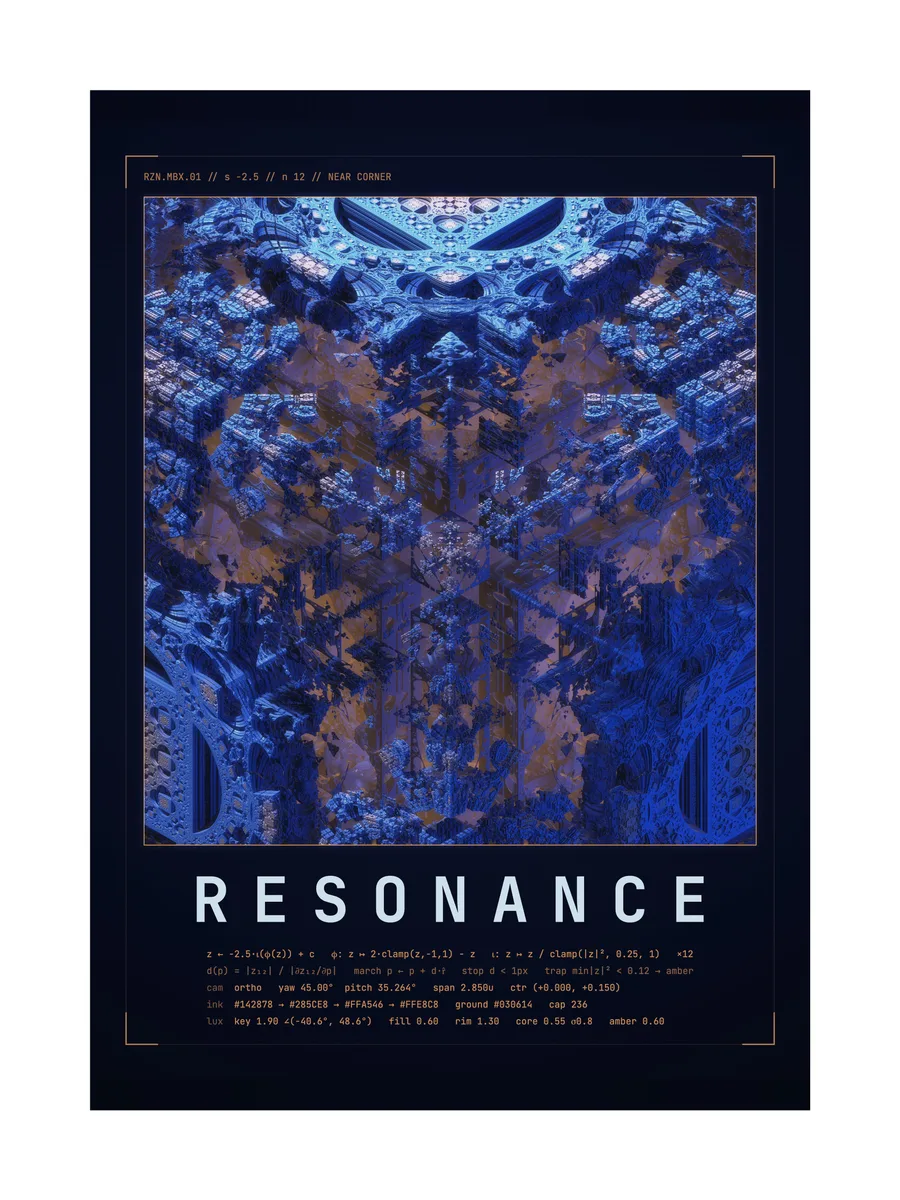
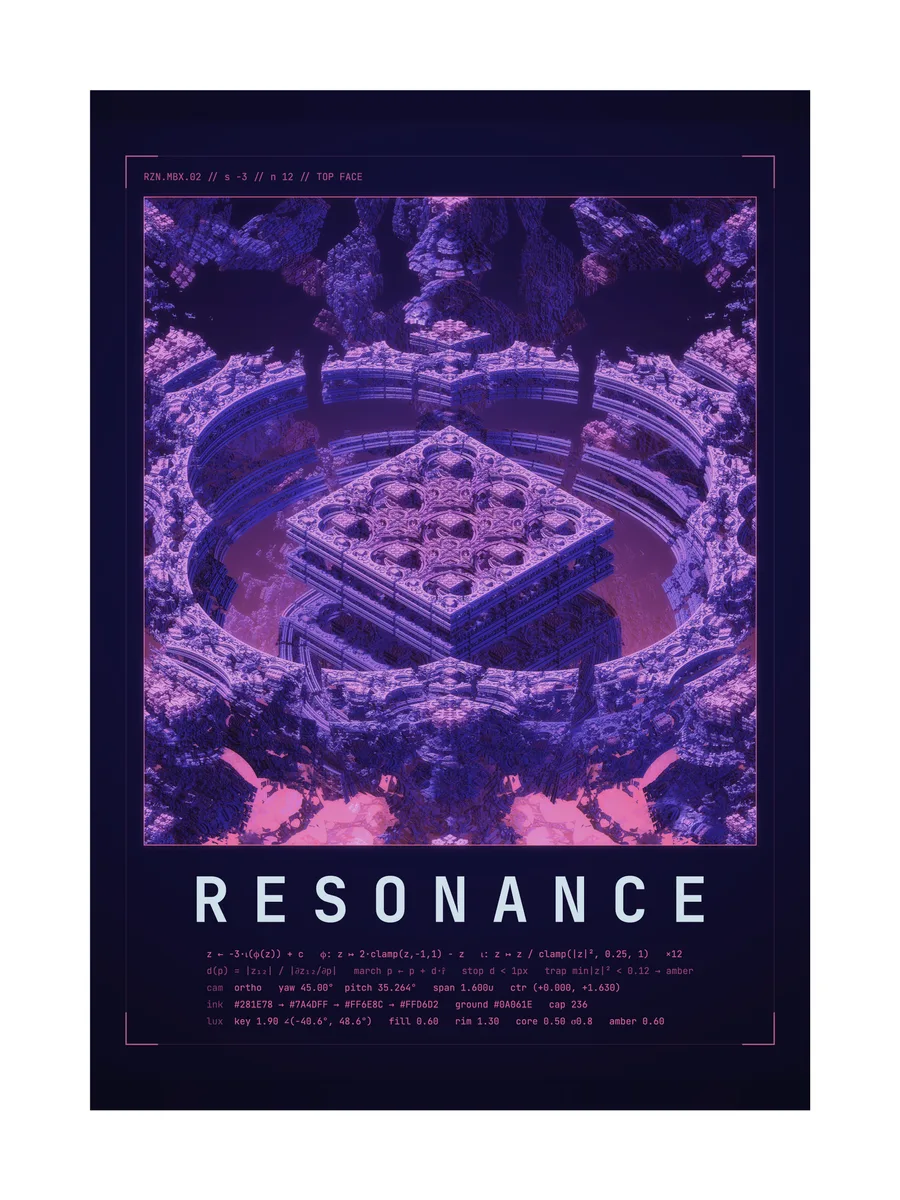
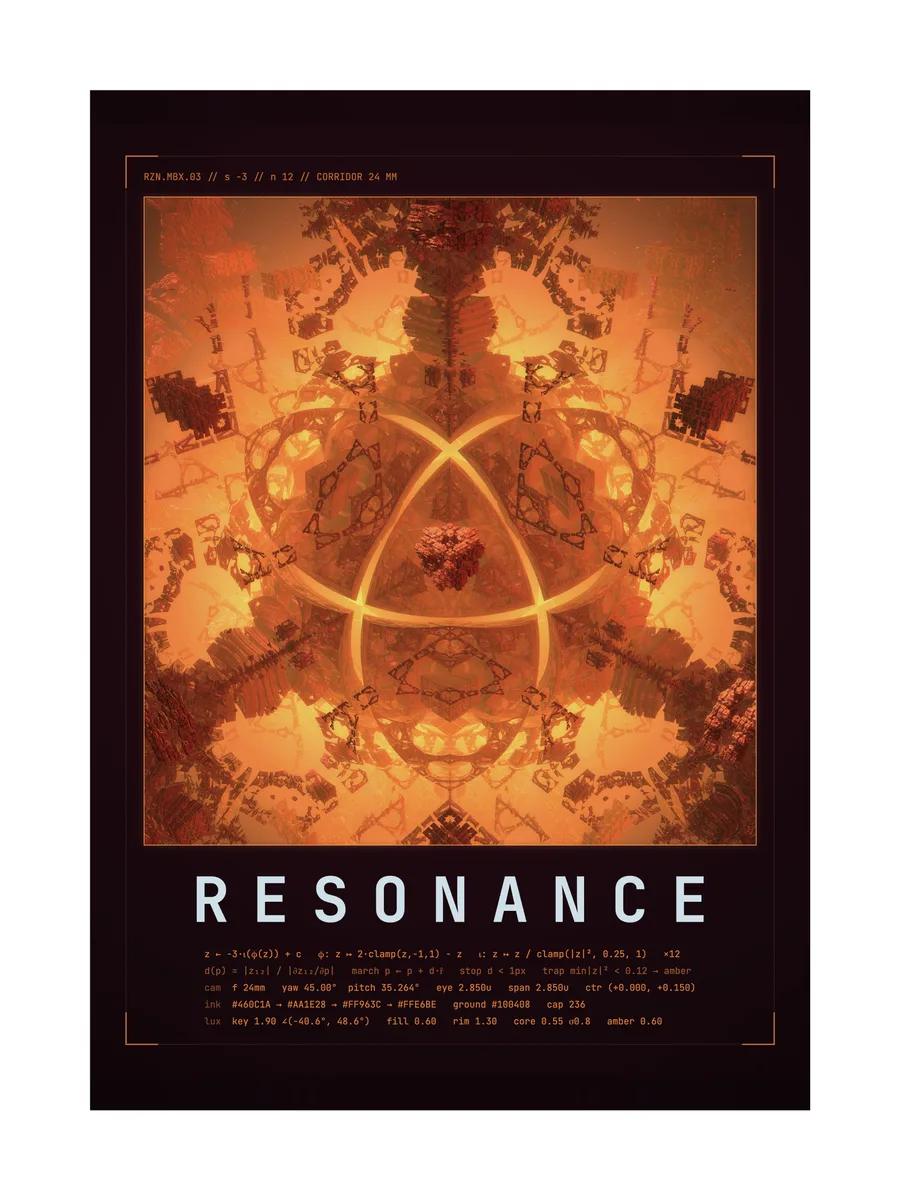
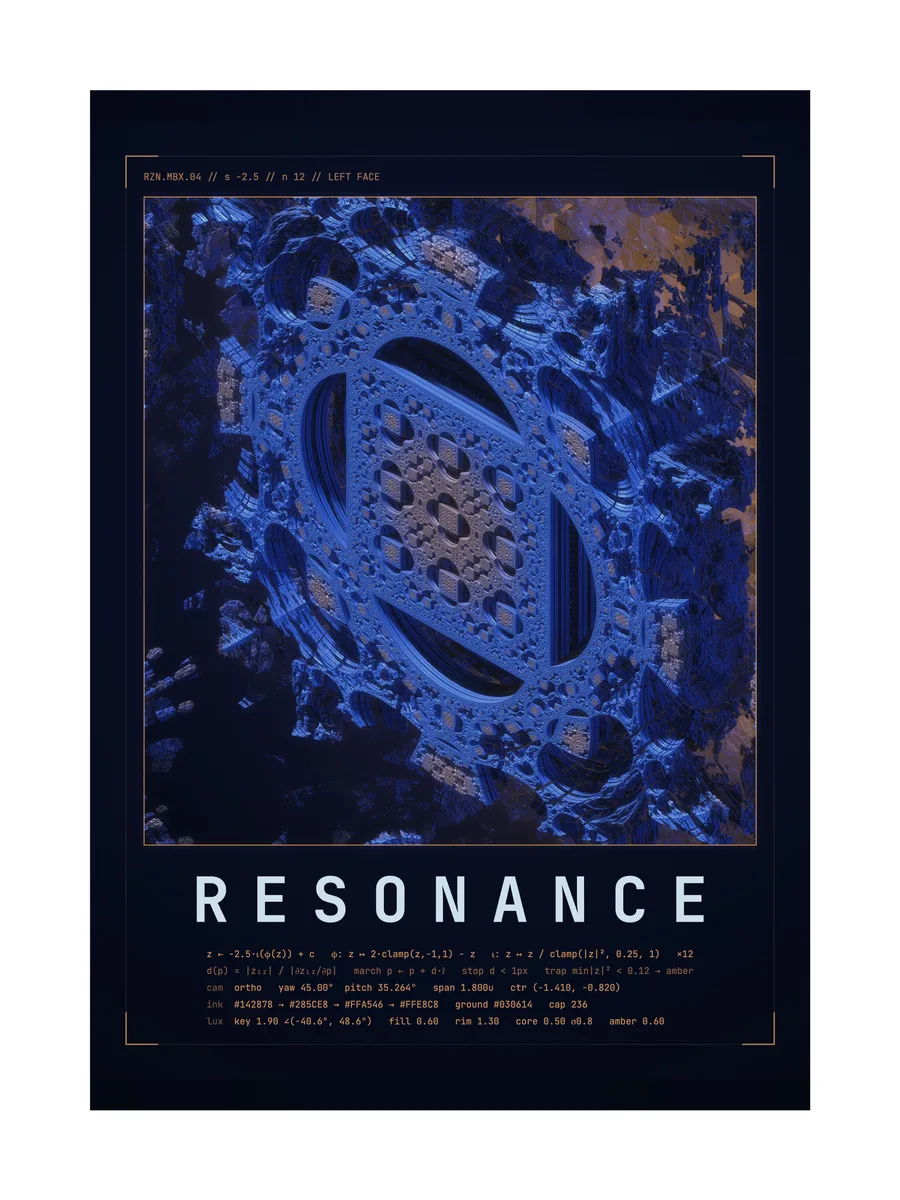
Every piece is computed, not drawn. These are the real equations and numbers from the program that made this exact piece.
x, y, z → fold into [−1, 1]z → s · z / clamp(|z|², 0.25, 1) + crepeat 12×, ray march to the surface
- s
- -3
- repeats
- 12
- View angle
- 24 mm lens, inside the near corner
- light
- key + blue fill + amber rim + warm core
- render
- tiles joined to 2550 × 2700 px
HISTORY
Where this idea comes from
- 1989
John C. Hart, Daniel Sandin and Louis Kauffman show how to ray trace 3D fractals with distance estimates, the method still used to draw them.
- 2010
Tom Lowe finds the Mandelbox while looking for a 3D cousin of the Mandelbrot set, and shares it on the Fractal Forums.
- today
Here every piece folds space 12 times for each point a ray touches, rendered in tiles and joined for print.
Follow along
@rezonanca.art