SERIES I // FRACTAL FLAME
Fractal flame posters
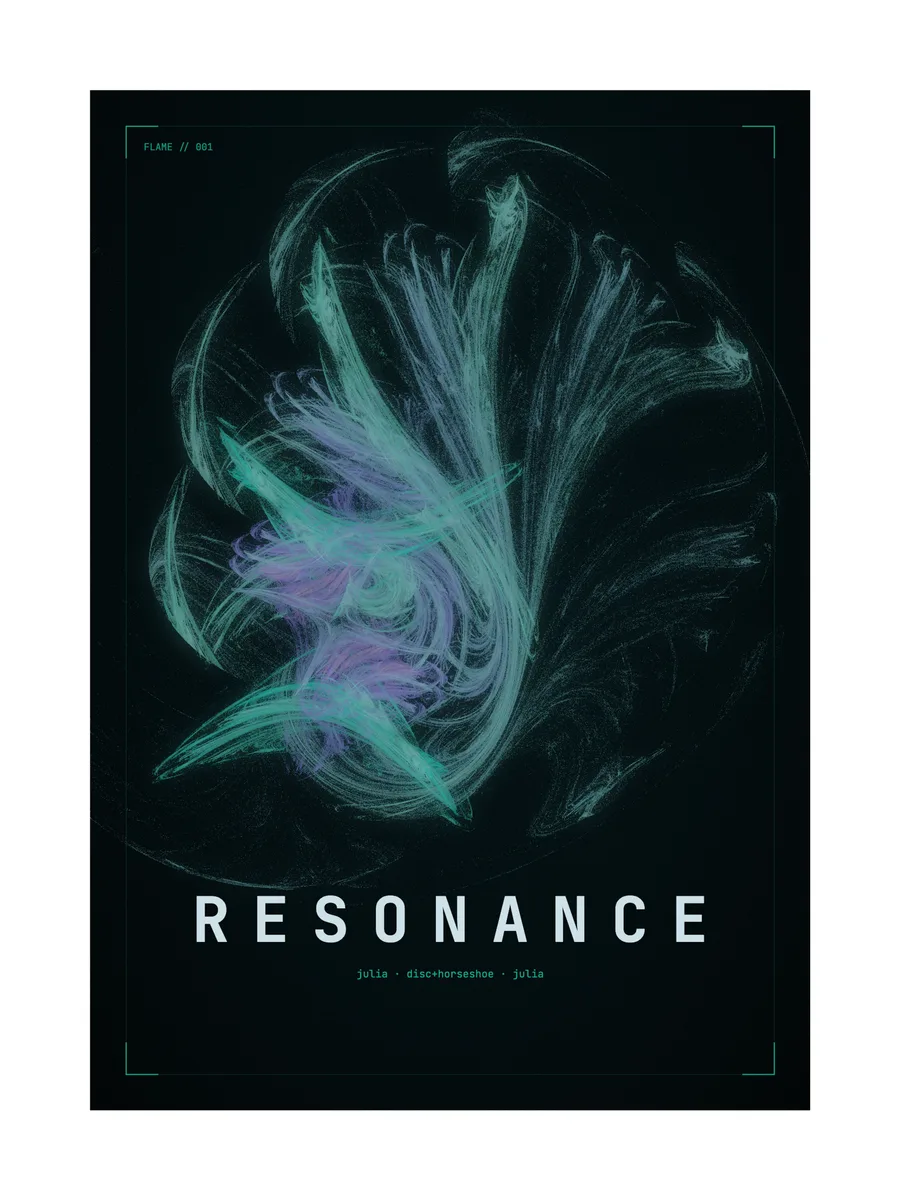
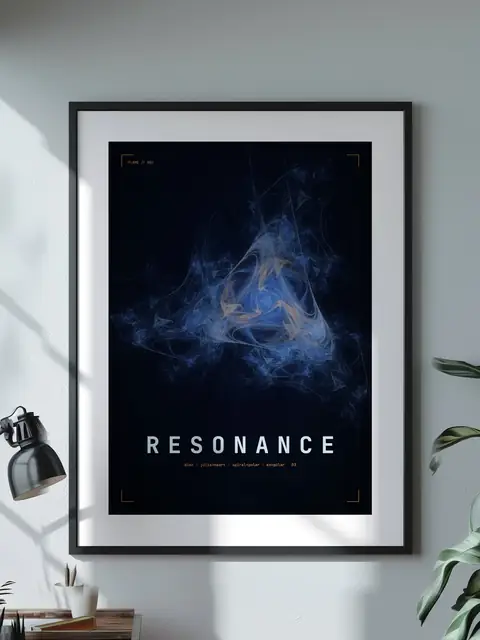
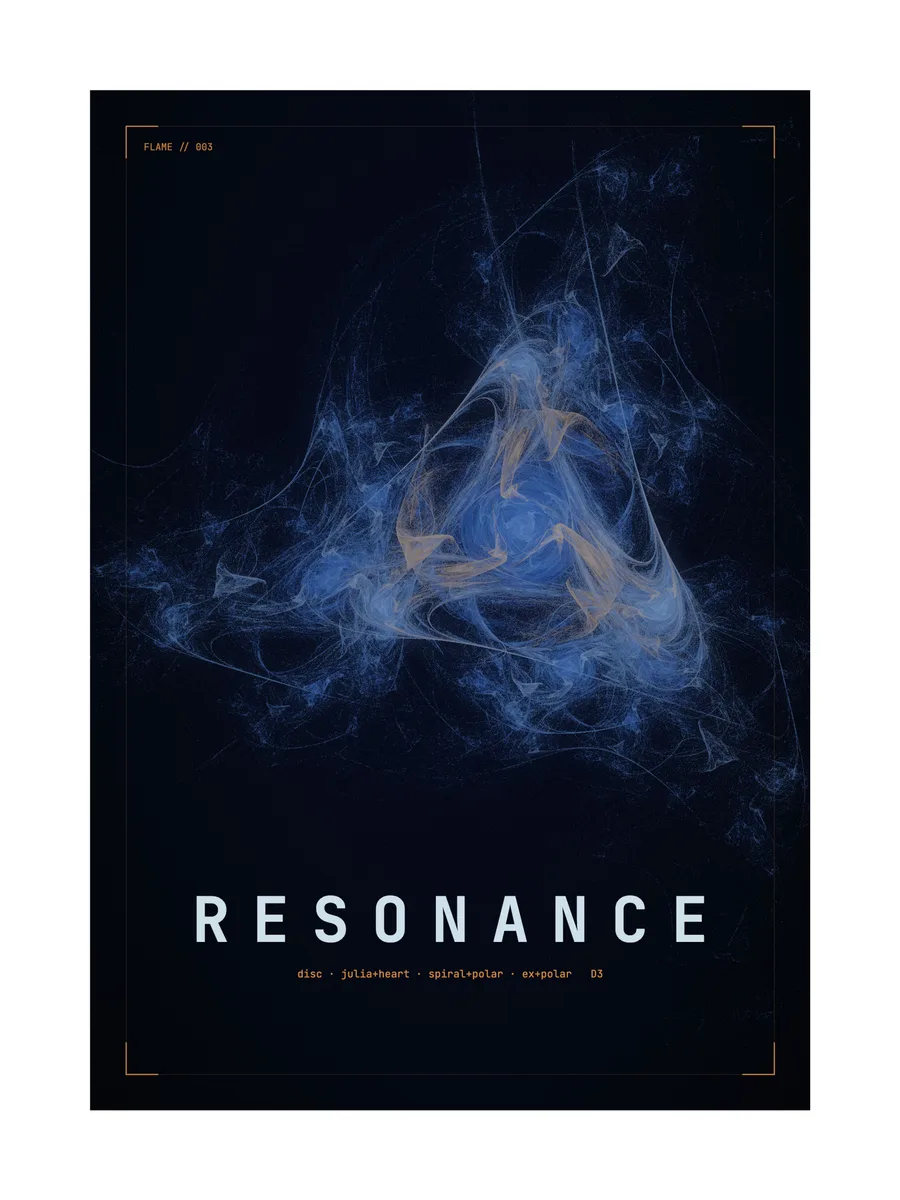
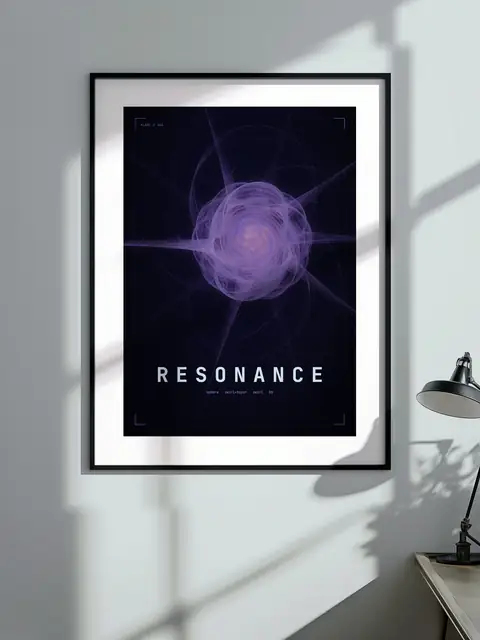
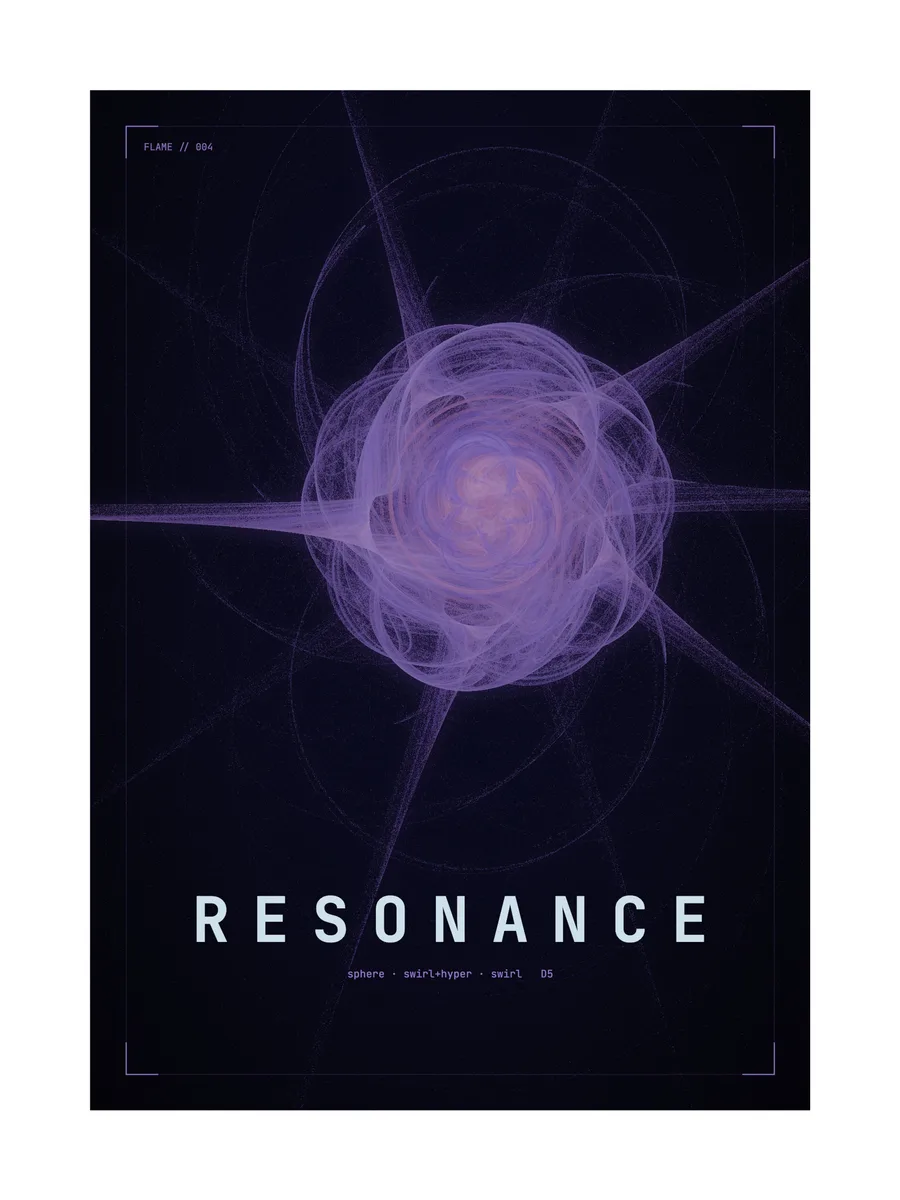
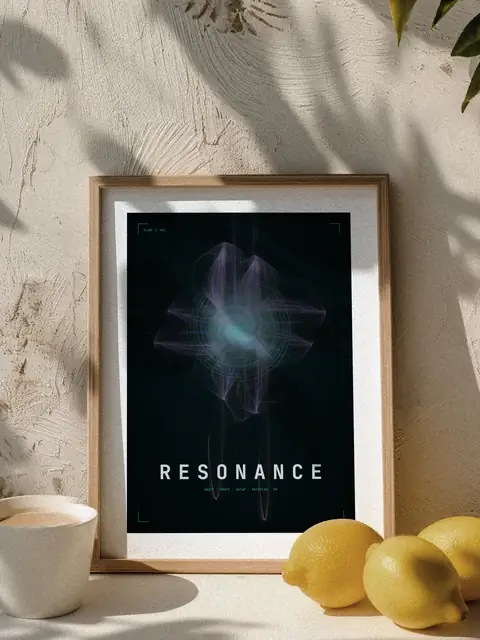
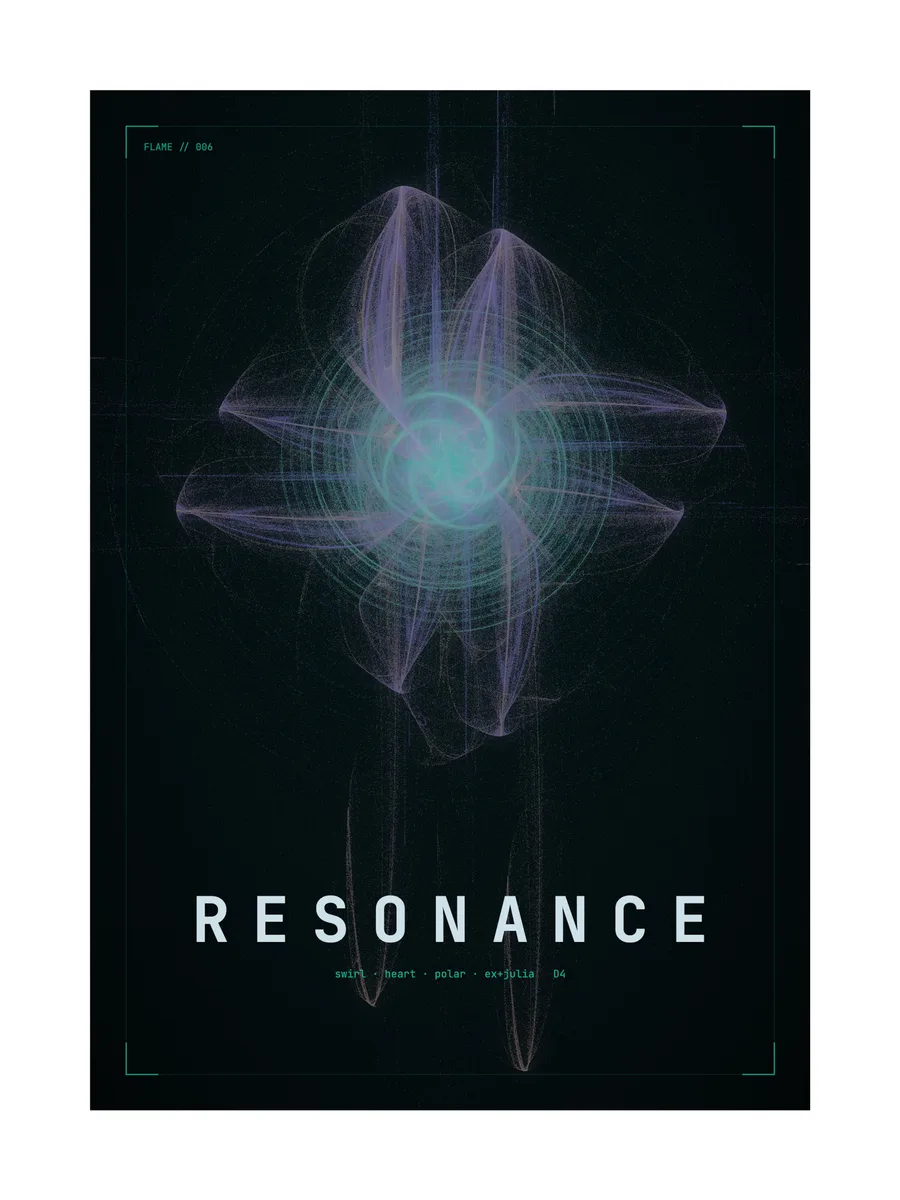
Light like smoke and silk. Millions of points jump between a few rules chosen at random, and their traces build shapes no hand would draw.
Read the guide: What is a fractal flame? →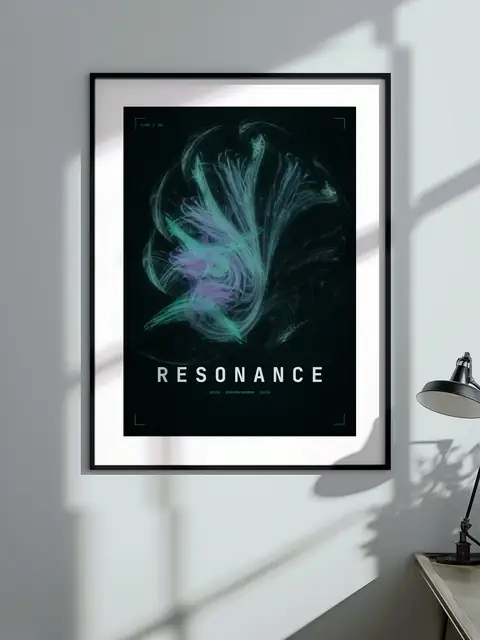
MATHEMATICS
The maths behind the picture
- 01
The chaos game
A point jumps millions of times, and at each jump it picks one of a few rules at random. Where it lands most often, the image glows brightest. Scott Draves devised the method in 1992.
xₙ₊₁ = Fᵢ(xₙ), i random - 02
Non-linear variations
Each rule is a shift and a turn, then a bend by one of several functions: sine, sphere, swirl, spiral. They make the shapes soft as smoke and silk.
F(x) = Σ wⱼ·Vⱼ(Ax + b) - 03
Colour from history
Each point remembers which rules it used last, and that history becomes its colour. Brightness is logarithmic, so even the faintest traces show.
L = log(1 + n) / log(1 + nₘₐₓ)
HISTORY
Where this idea comes from
- 1981
John Hutchinson describes iterated function systems: a fractal as a set of rules that repeat.
- 1988
Michael Barnsley shows that a few rules and the chaos game draw ferns and clouds.
- 1992
Scott Draves devises the fractal flame: non-linear variations, log density and colour from history.
- today
The flame is one of the best-known forms of programmer art. Here every piece has its own rules and its own number.
In nature
The flame descends from Barnsley's fern of 1988: a few rules, picked at random, draw a leaf down to its last vein.