SERIES E // SPECTRAL ARCHITECTURE
Spectrogram city posters
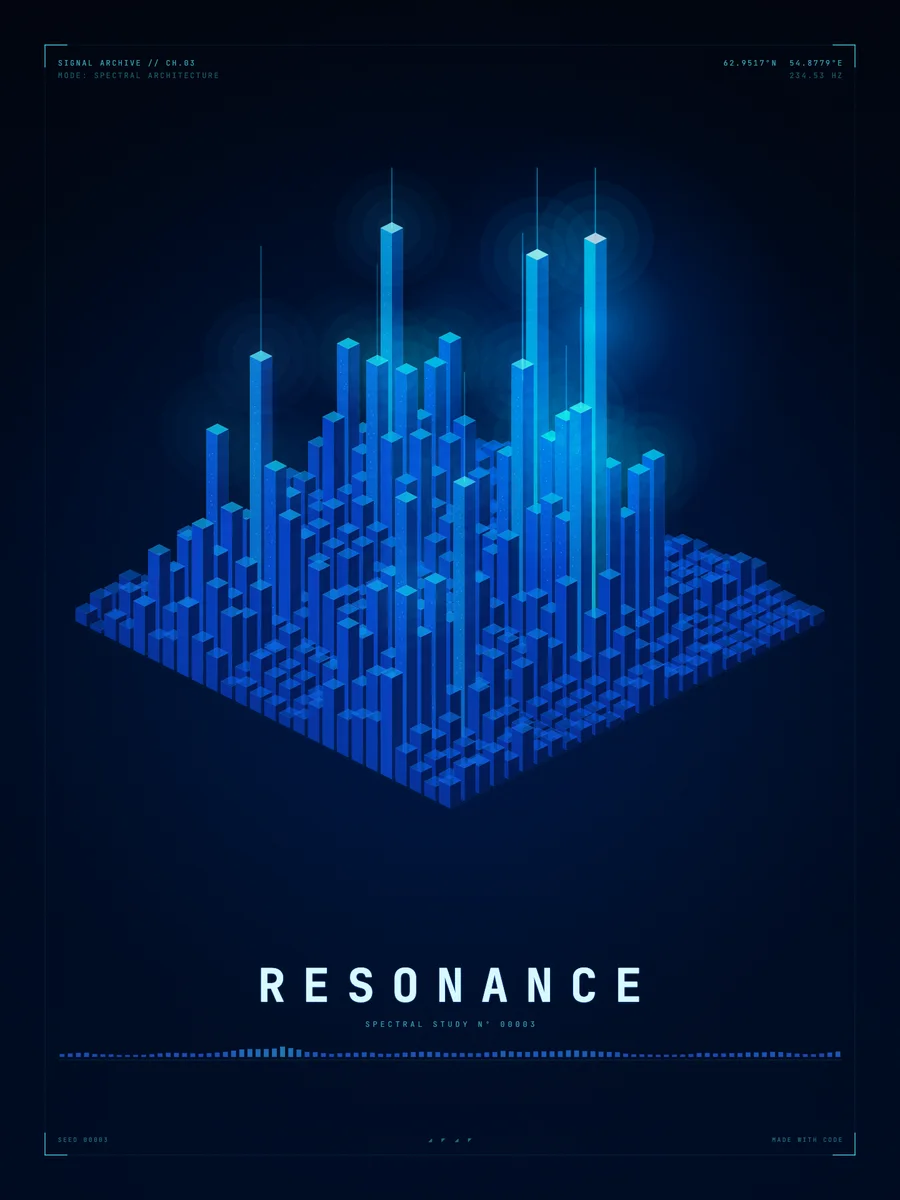
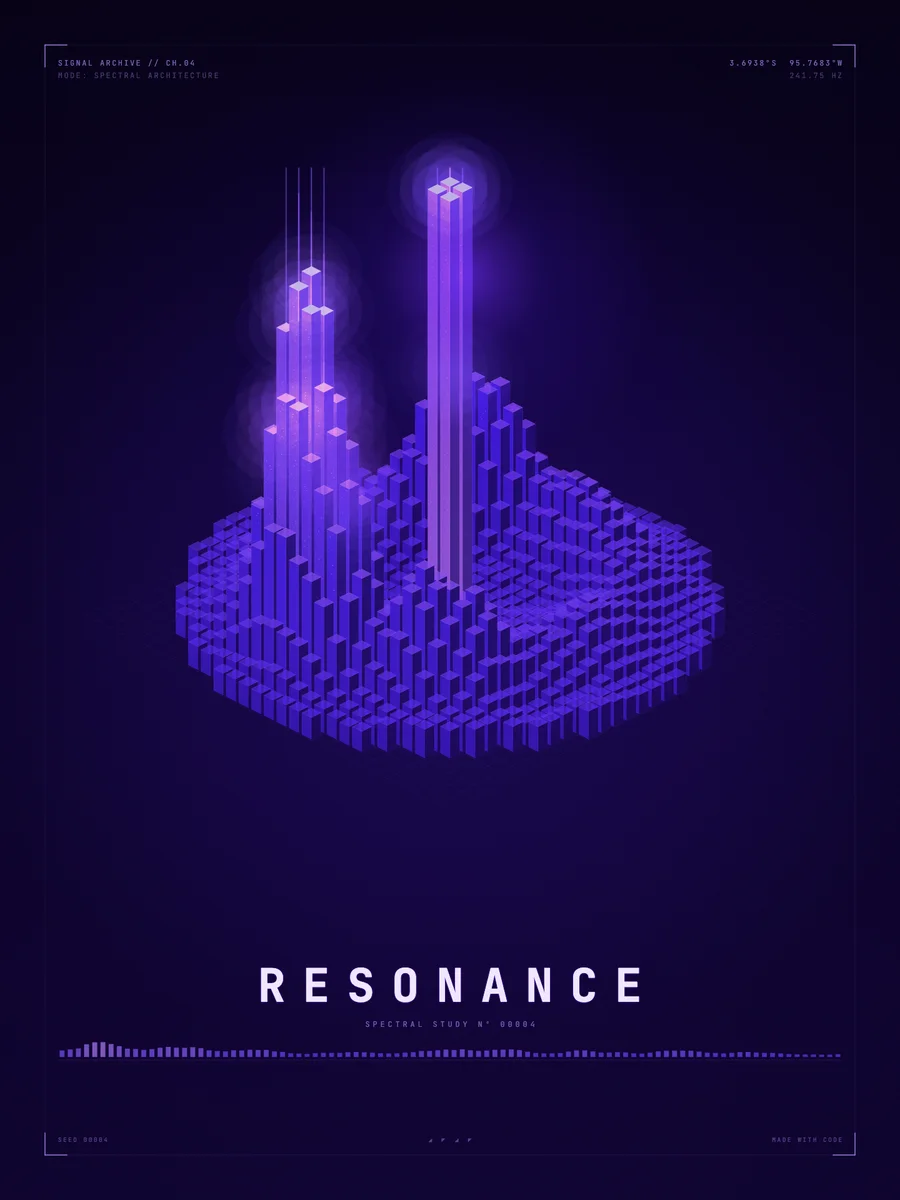
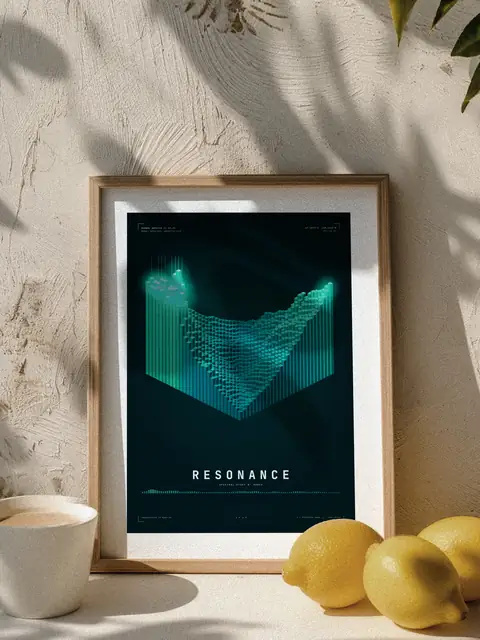
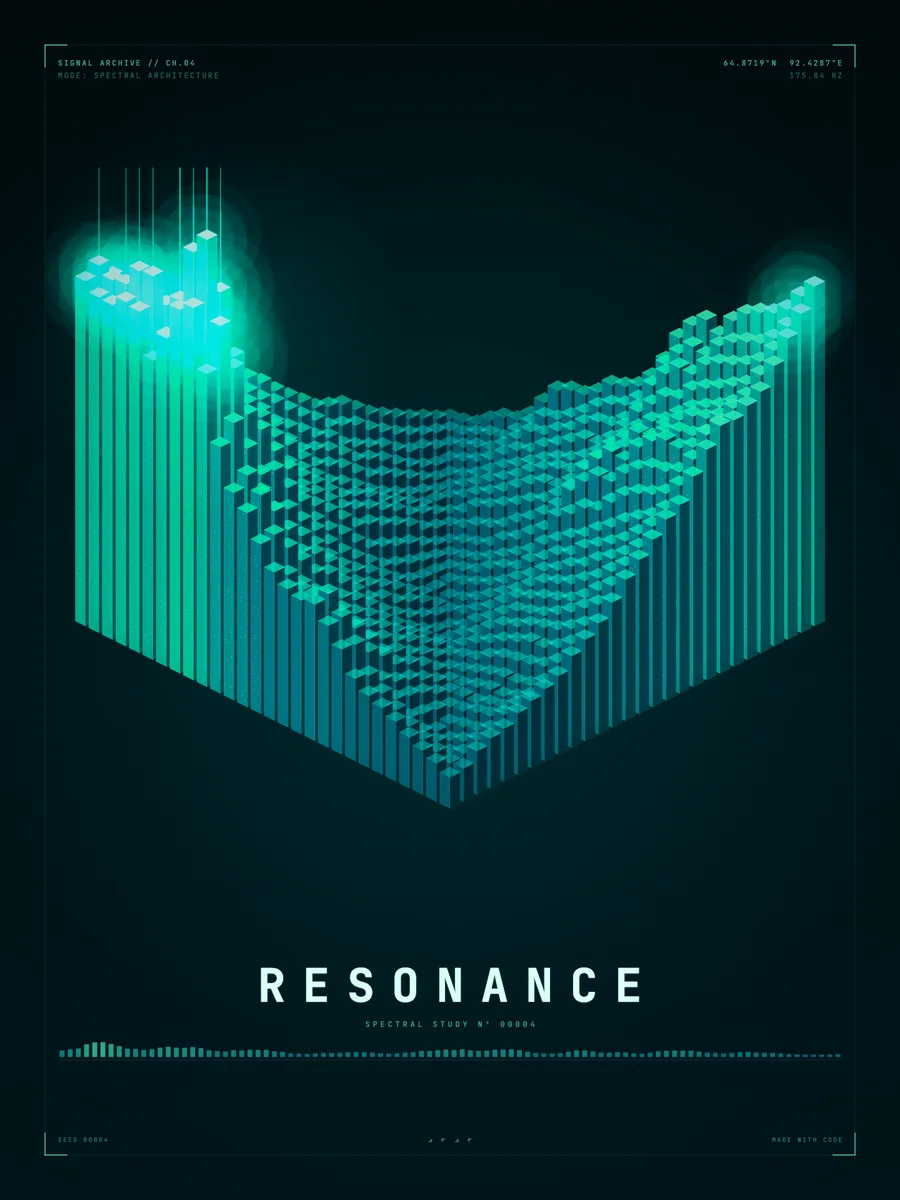
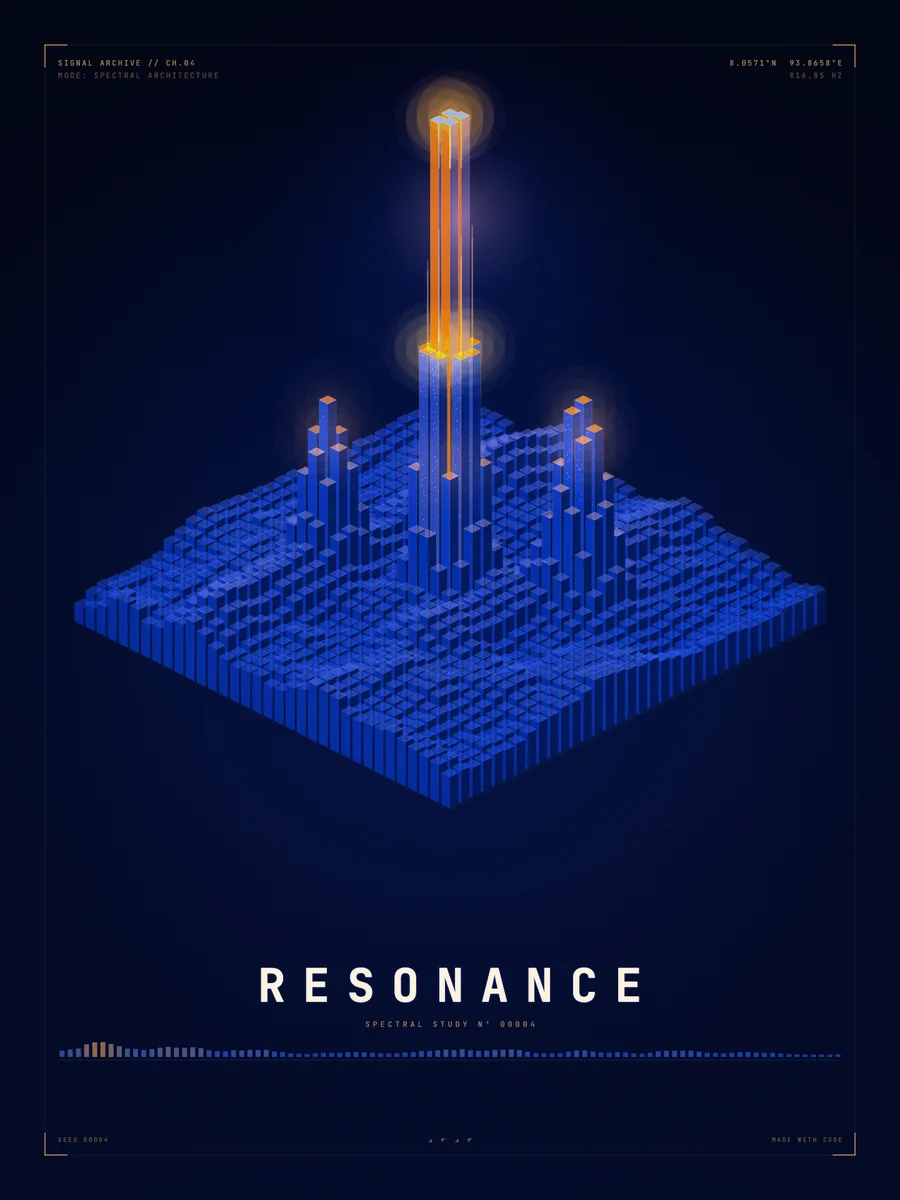
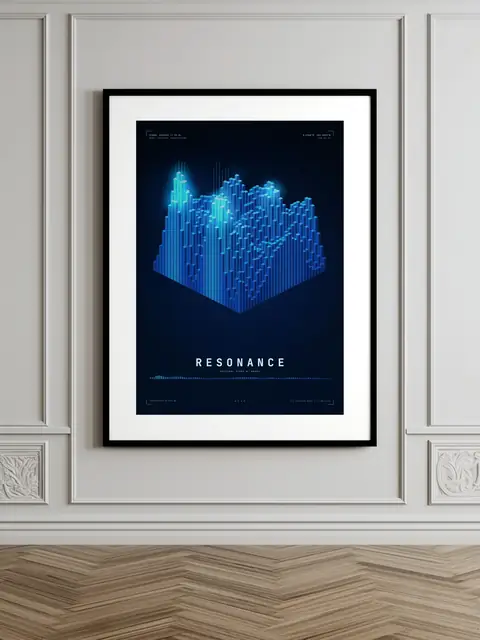
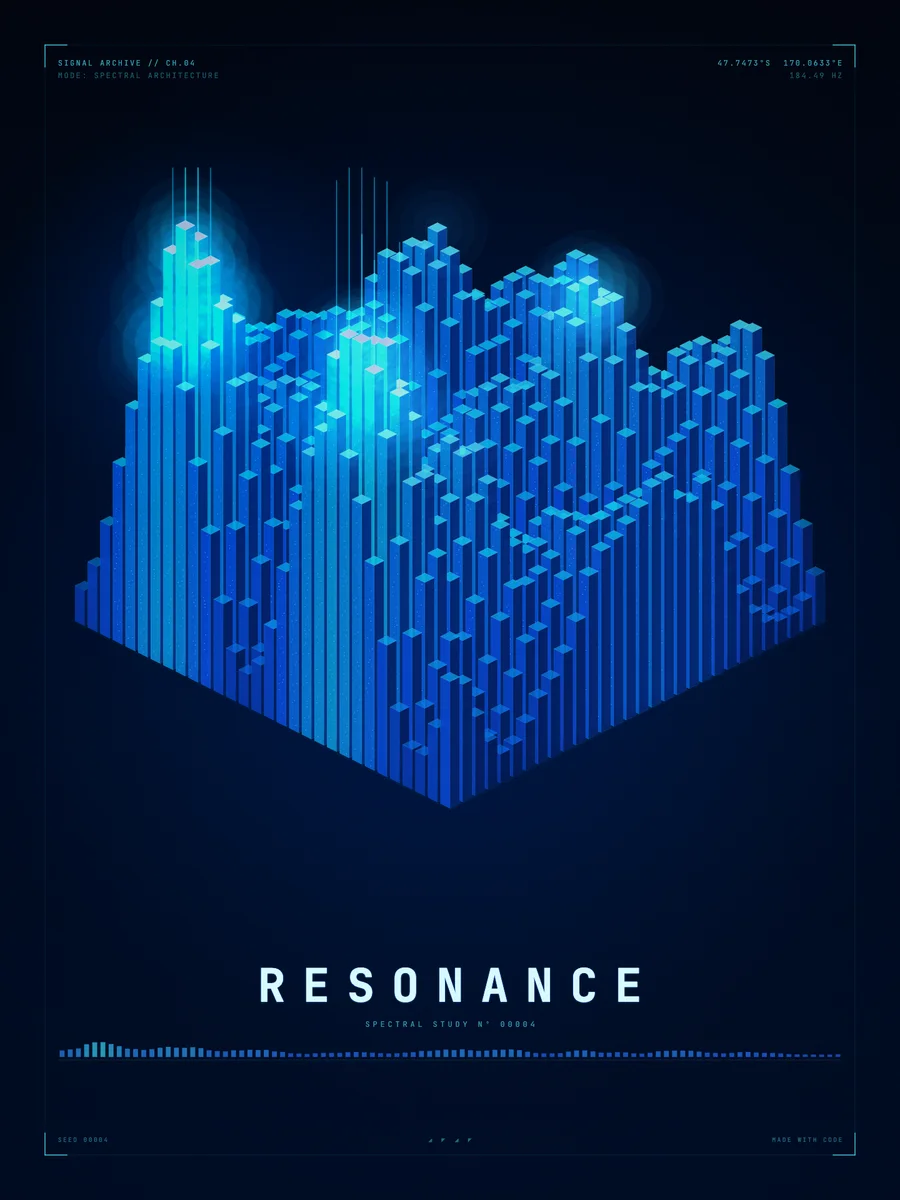
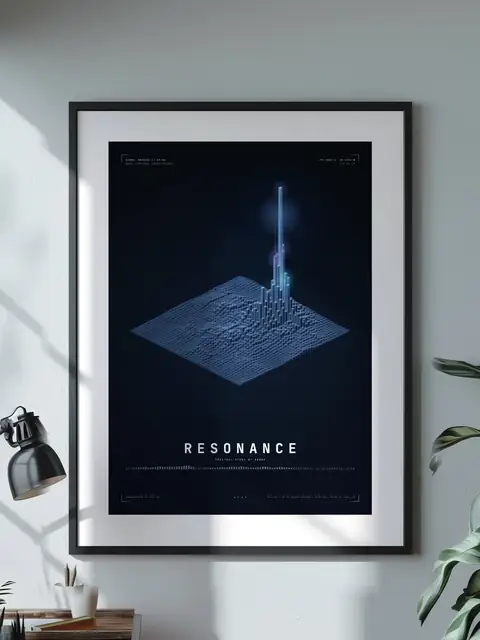
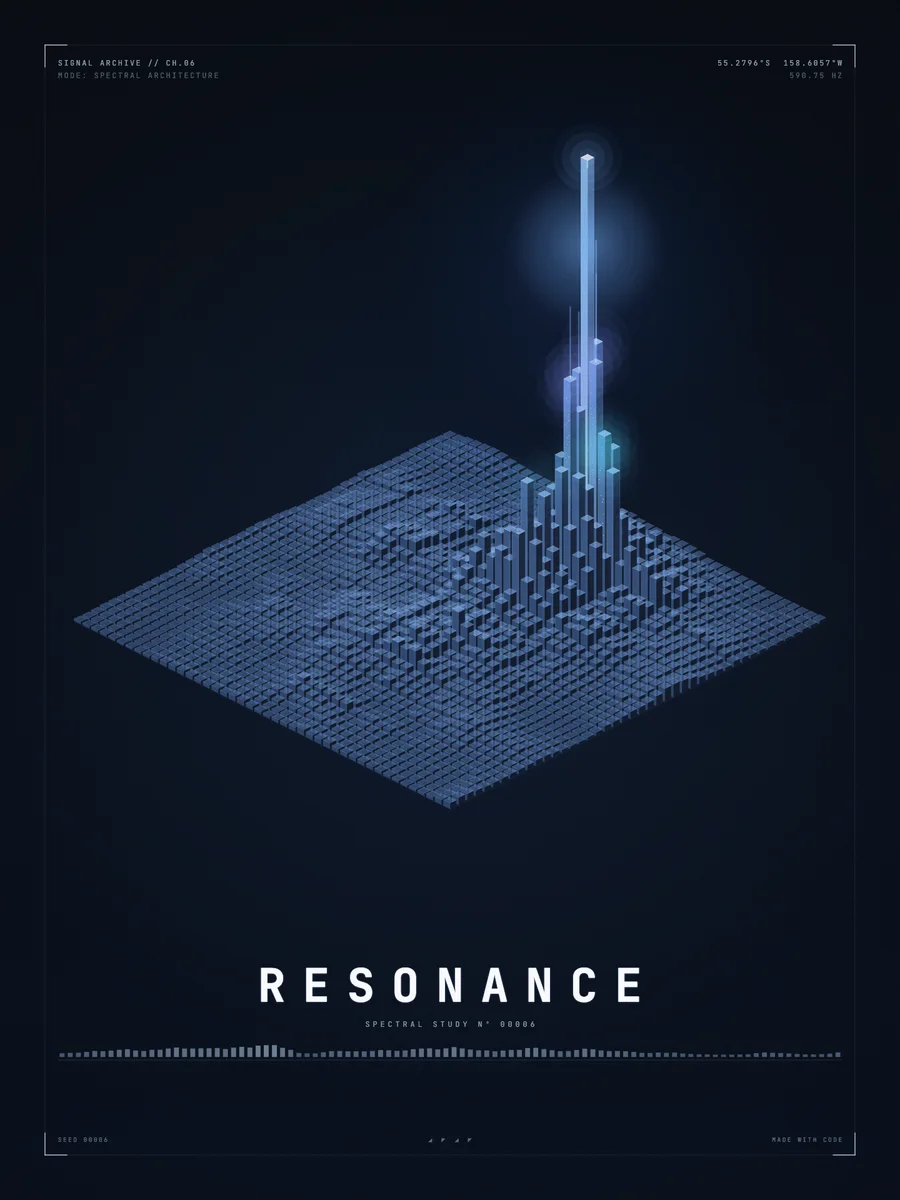
A spectrogram turned into a metropolis. A city that never sleeps.
Read the guide: Perlin noise explained →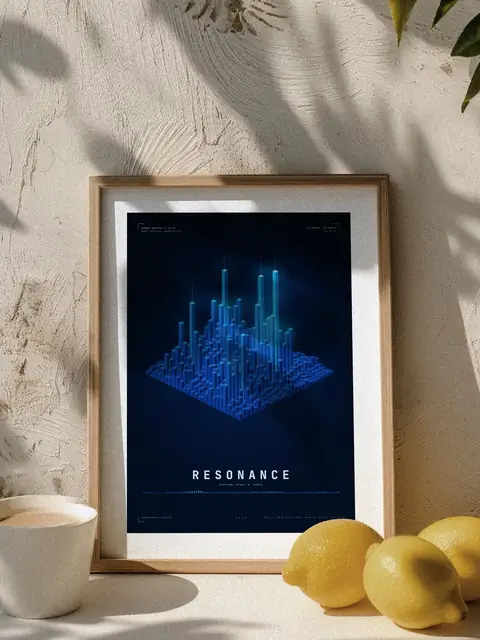
MATHEMATICS
The maths behind the picture
- 01
A spectrogram as a city
A spectrogram shows sound in two dimensions: how strong each frequency is at each moment. Here one axis is frequency, the other is time, and strength becomes the height of a tower.
H(i, j) = strength of frequency i at time j - 02
A Fourier series
The signal is a sum of a few sine waves of different frequencies, like a chord. Each frequency leaves its own row of towers across the city.
s(t) = Σₖ aₖ·(½ + ½·sin(2π·fₖ·t + φₖ)) - 03
Isometry
The city is drawn in isometric projection: no perspective, so parallel lines stay parallel. Towers are drawn back to front, so the front ones naturally hide the ones behind.
(x, y) = (i − j, (i + j)/2 − h) - 04
Perlin noise
Nature is neither perfectly smooth nor completely random: clouds, mountains and waves are somewhere in between. In 1983 Ken Perlin invented a noise that looks like nature: a smooth function that gives random but gentle changes. The program adds four layers (octaves) of this noise, each half as strong and twice as fine as the last. That is what gives the lines life, so they don't look like they were drawn with a ruler.
noise(x) = Σₖ 0.5ᵏ · perlin(2ᵏ·x), k = 0…3
HISTORY
Where this idea comes from
- 1822
Joseph Fourier publishes that any periodic signal can be broken into a sum of sine waves. It is the basis of sound analysis.
- 1947
Bell Labs presents "visible speech": a spectrograph that turns sound into a picture of frequencies over time.
- 1965
Cooley and Tukey publish the Fast Fourier Transform (FFT), putting spectrograms within reach of every computer.
Perlin noise
- 1982
Ken Perlin works on the effects for the film Tron and is frustrated that computer images look too "machine-like".
- 1983
Perlin invents his noise and publishes it in 1985 at SIGGRAPH, in the paper "An Image Synthesizer".
- 1997
Perlin receives an Academy Award for Technical Achievement: his noise becomes the basis of smoke, fire and cloud textures in film.
- 2001
Perlin publishes an improved version and "simplex" noise. Today games, films and programmer art all over the world use it.
In nature
A spectrogram is a picture of sound: time runs left to right, frequency bottom to top. Ornithologists have used it to read birdsong since the 1950s.