Guide // Fractals
The Mandelbrot set explained
The Mandelbrot set is the most famous fractal, and its whole definition fits on one line. Here is how that one line produces an endless coastline of spirals, seahorses and tiny copies of itself, and how our posters are computed from it.
01One equation
Take a complex number c, a point on a plane with a real part (left-right) and an imaginary part (up-down). Start with z = 0, square it and add c. Then square the result and add c again, and keep going.
For some values of c the numbers stay small forever. For others they grow without limit. The Mandelbrot set is every c whose numbers stay small. That is the entire definition.
zₙ₊₁ = zₙ² + c, z₀ = 002The escape radius
It is proven that once |z| grows past 2, it can never come back, so the point has escaped and c is outside the set. This gives a simple test a computer can run for every pixel: repeat the step until |z| passes 2, or until a maximum number of steps is reached.
Points that never escape within that limit are treated as inside the set. Our posters use between 400 and 1,400 steps per pixel; the deeper the zoom, the more steps are needed to separate the inside from the edge.
|zₙ| > 2 ⇒ c ∉ M03Where the colour comes from
The set itself is just one flat region. All the detail lives outside it, in how fast each point escapes. The program counts the steps each point takes to pass the escape radius, and that count becomes its colour and brightness.
Points far from the set escape in one or two steps and stay dark. Points close to the edge hesitate for hundreds of steps and glow. So the bright filaments in the pictures trace the boundary of the set.
04The shape of the set
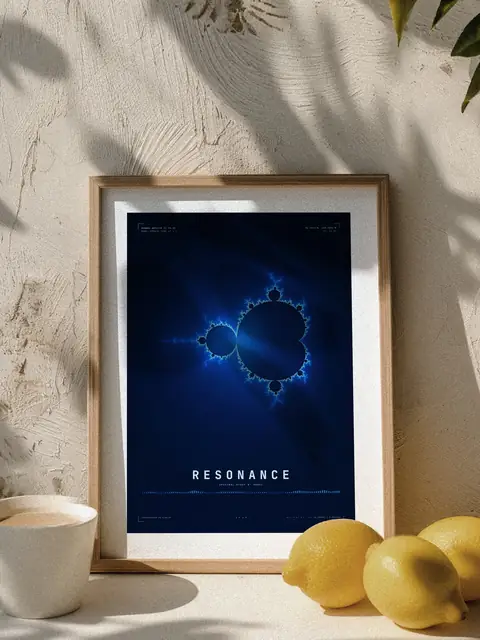
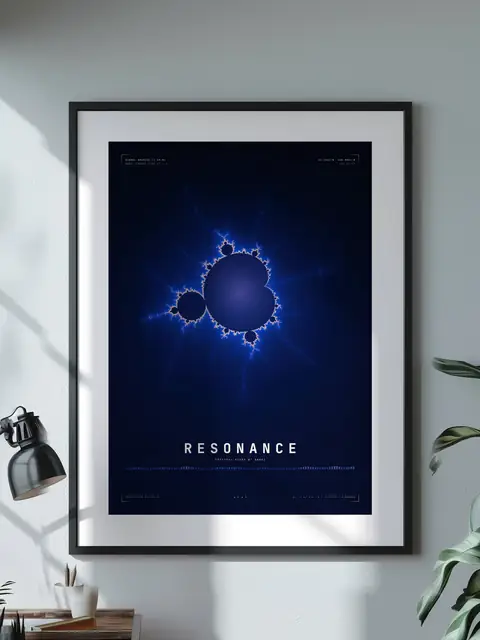
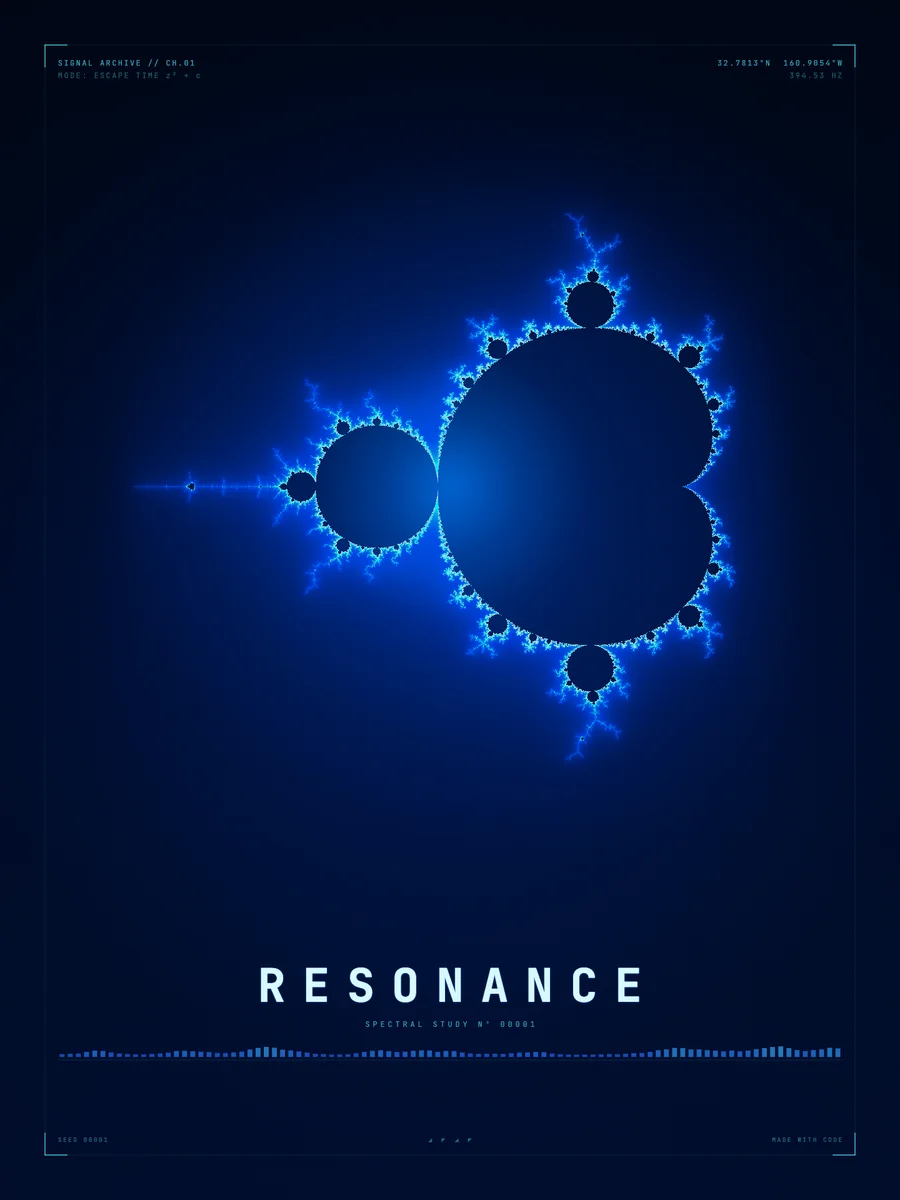
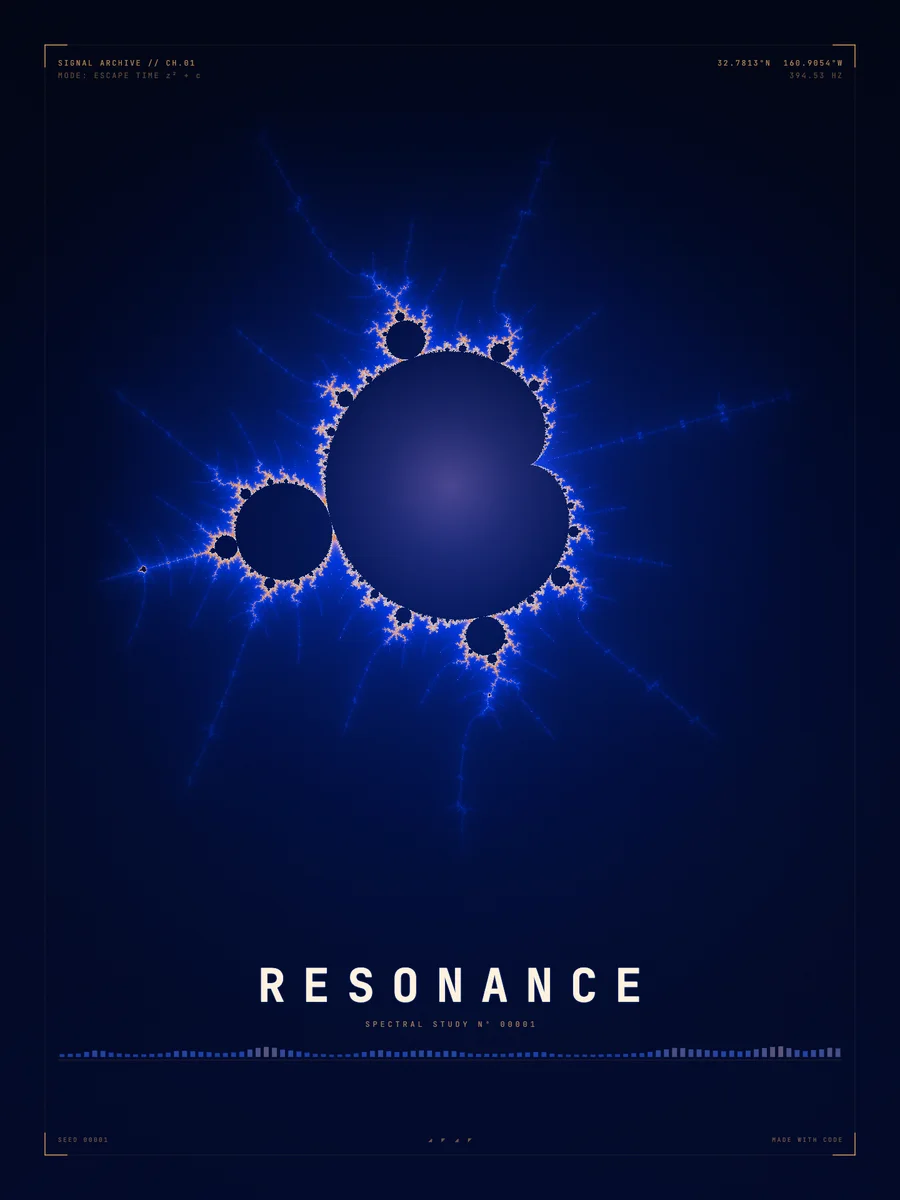
The large heart-shaped body is the main cardioid: there the numbers settle onto a single value. The round bulb on its left, centred at −1 with radius ¼, is where they settle into a cycle of two. Around them sit smaller bulbs for cycles of three, four and more, each attached at a precise point.
Adrien Douady and John Hubbard proved in 1982 that the set is connected: every piece, however small it looks, is joined to the main body by thin filaments. They also gave it its name, after Benoit Mandelbrot, who made the first detailed computer pictures of it at IBM around 1980.
05Seahorse valley
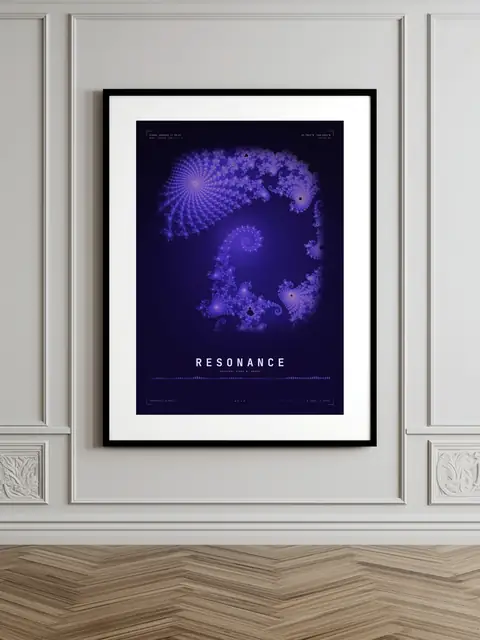
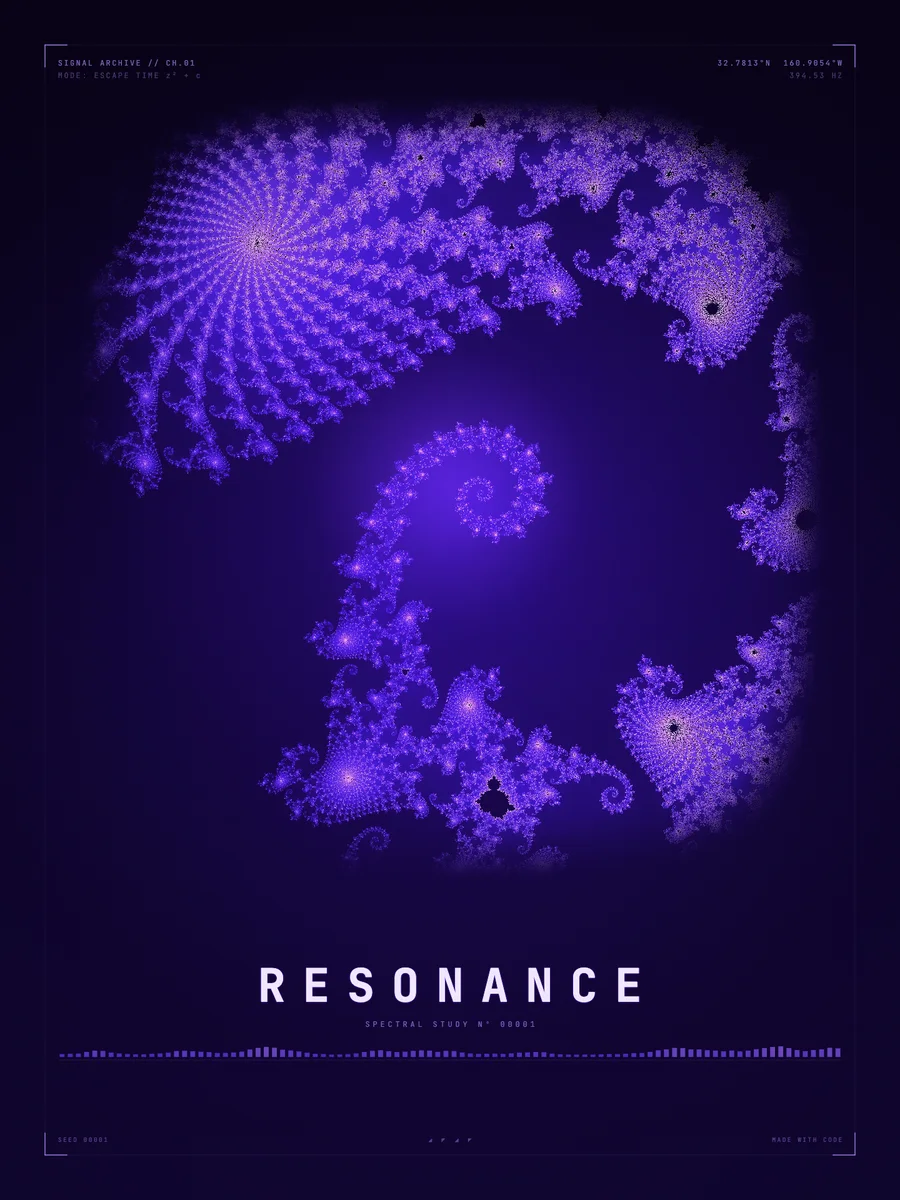
The gap between the main cardioid and the left bulb, near c = −0.75 + 0.1i, is called seahorse valley. Zoom in and the edge curls into rows of spirals with tails like seahorses, and each spiral holds smaller spirals.
Our Seahorse Valley poster is a window 0.0065 wide, centred at −0.7454 + 0.1127i: about 477 times closer than the full view, rotated 15 degrees and computed with 900 steps per pixel.
06Minibrots: the set inside itself
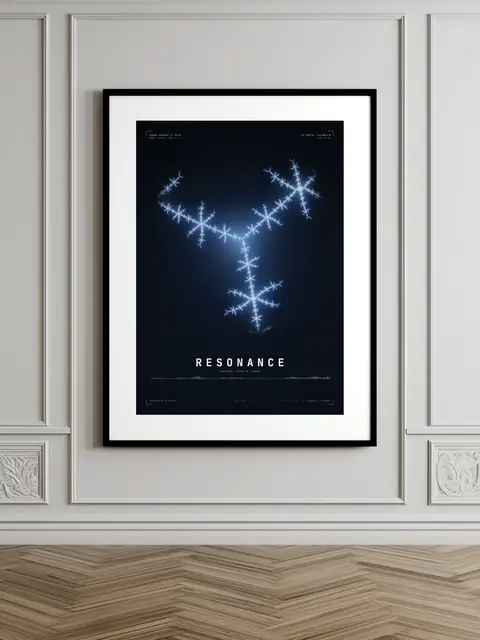
Follow a filament far enough and you will find a tiny copy of the whole set, complete with its own cardioid and bulbs. These are called minibrots, and there are infinitely many of them. The largest one on the real axis sits near c = −1.75, where the numbers settle into a cycle of three.
The copies are never exact. Each is wrapped in decorations that reflect where it sits, which is why no two deep zooms look the same.
07An infinitely detailed edge
The boundary of the set is a fractal. However far you magnify it, new detail appears, and the edge is so crumpled that it has Hausdorff dimension 2, as Mitsuhiro Shishikura proved in 1998. In other words, the edge is as complex as a line can be while still being a line.
The area of the set, by contrast, is finite: about 1.506 square units. And the set holds surprises. In 1991 Dave Boll found that counting the escape steps near the neck at −0.75 gives the digits of π.
dim_H(∂M) = 208Mandelbrot and Julia sets
Every value of c also has its own fractal, the Julia set, drawn by fixing c and varying the starting z instead. The Mandelbrot set is a map of all of them: when c is inside the set, its Julia set is one connected piece; when c is outside, the Julia set shatters into dust.
09How our Mandelbrot posters are made
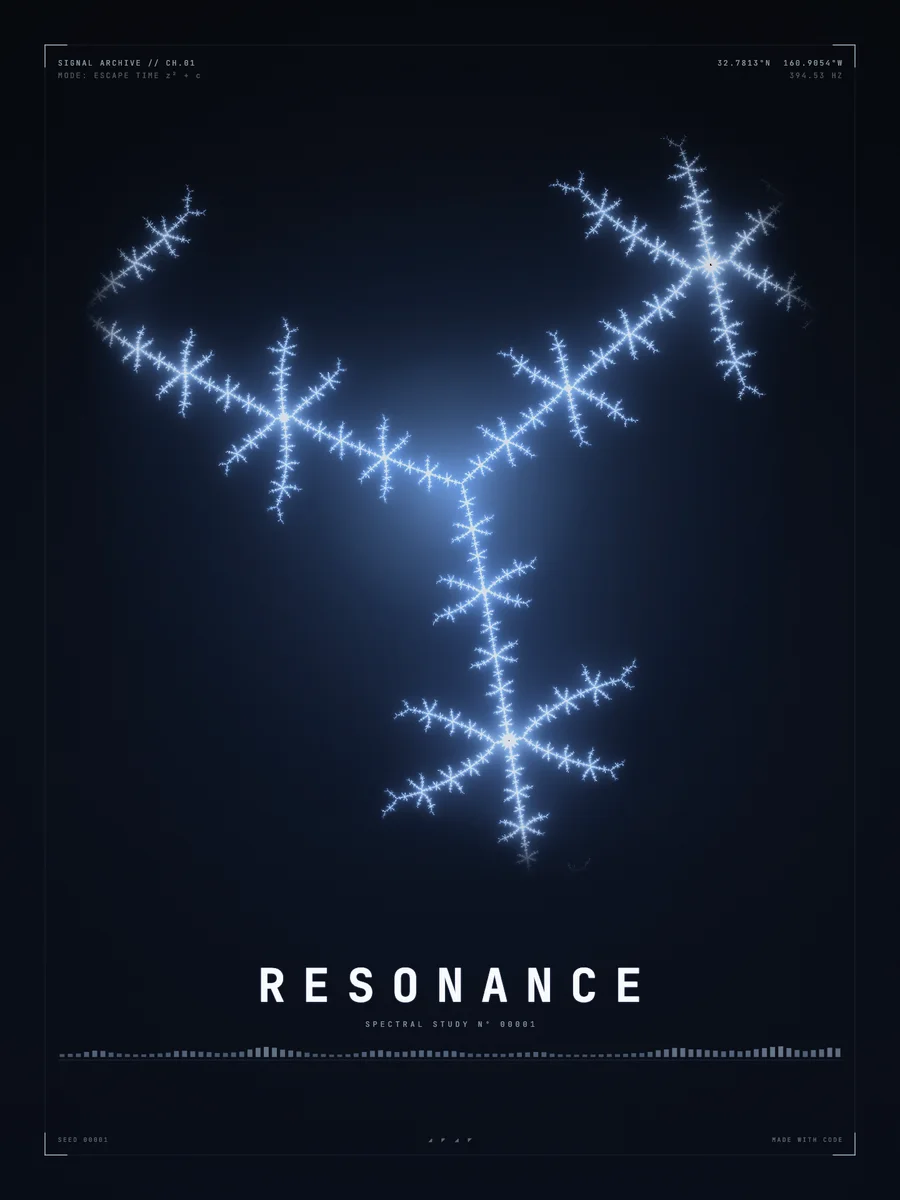
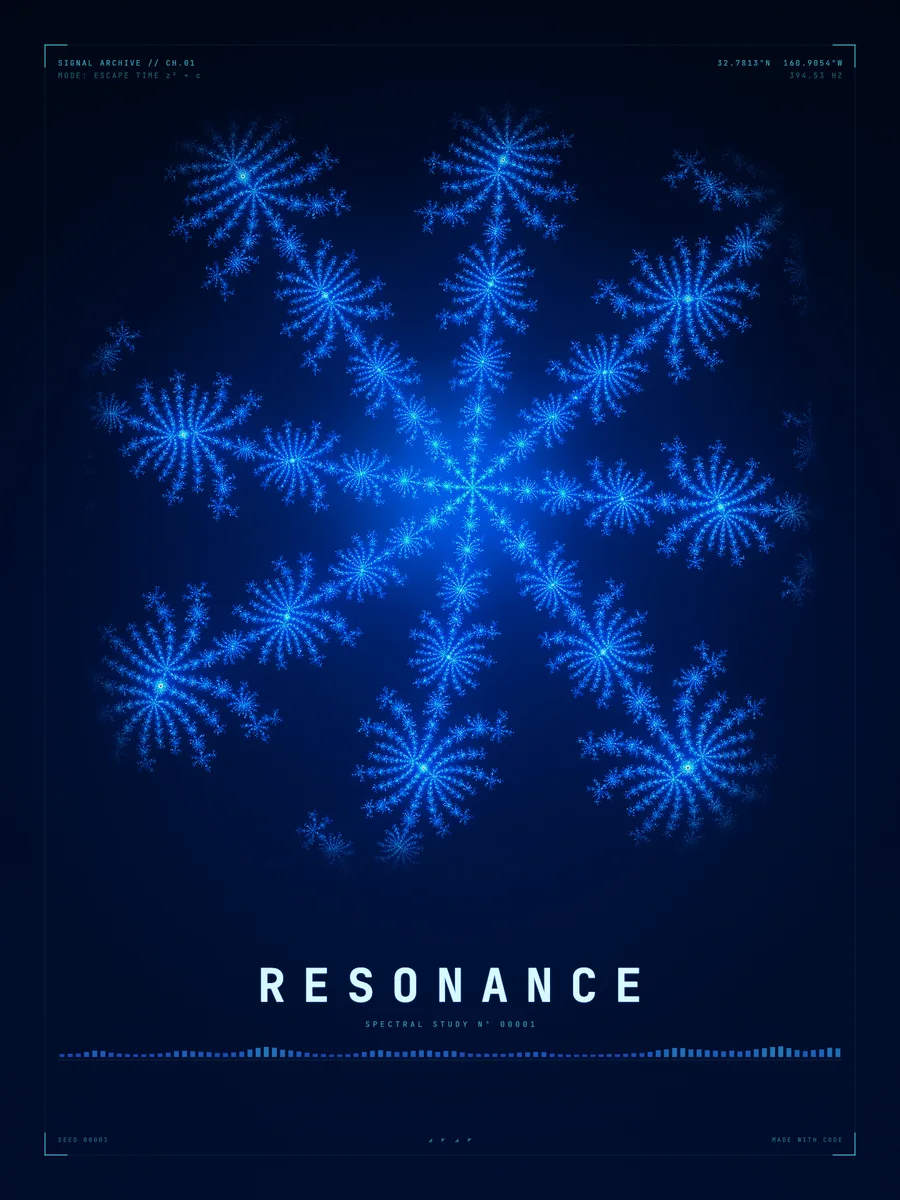
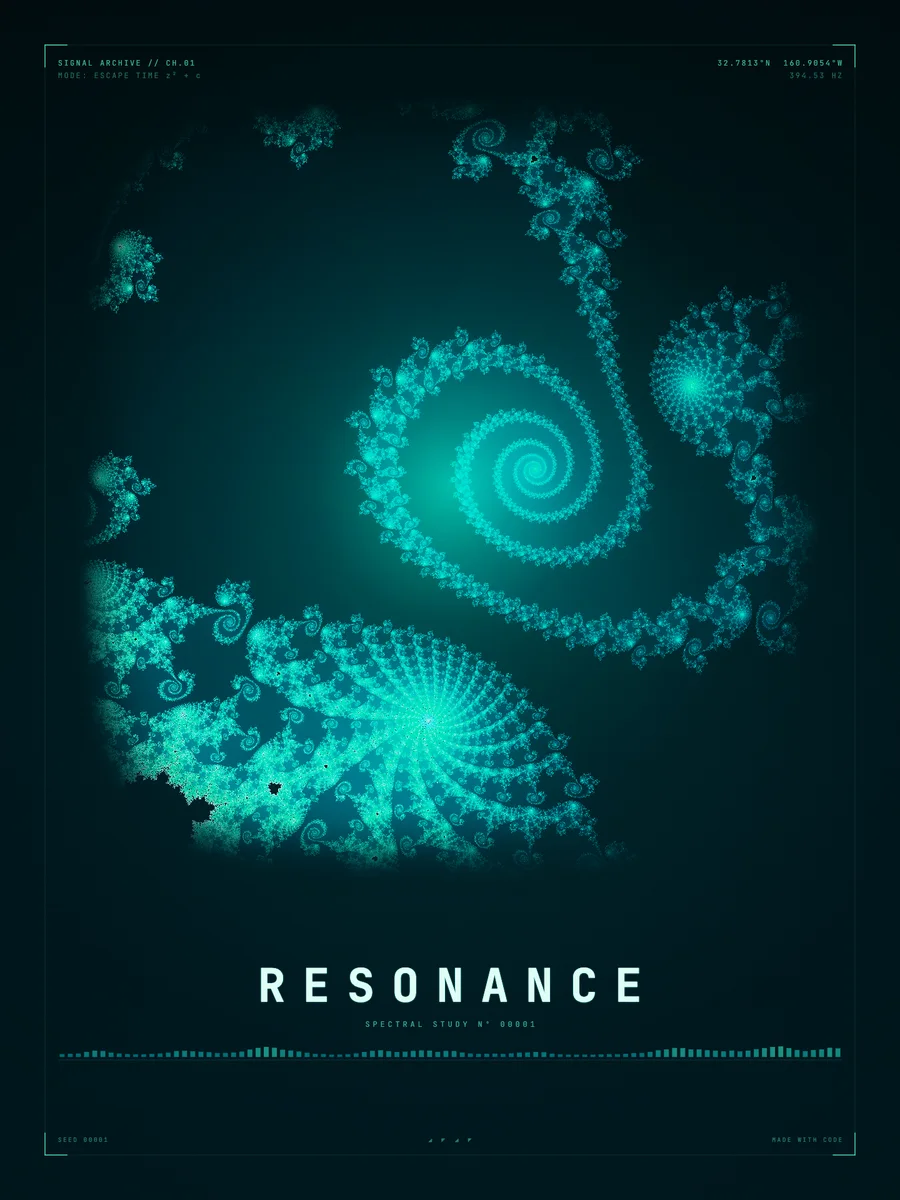
Each poster is a window into the set: a centre point, a width and a rotation. The program tests about 1.5 million points for every image, counts their escape steps and maps the counts to colour. Every product page lists the exact centre, zoom and number of steps, so you can find the same spot yourself.
FAQQuestions
What is the Mandelbrot set in simple terms?
It is the set of points c for which repeating "square it and add c", starting from zero, never grows without limit. Drawn on a plane, it forms the most famous fractal.
Why is the Mandelbrot set infinite?
Its area is finite, but its boundary is infinitely detailed: magnify any part of the edge and new spirals, filaments and smaller copies of the set keep appearing.
What is seahorse valley?
The region between the main cardioid and the left bulb, near −0.75 + 0.1i, where the edge forms spirals shaped like seahorse tails.
Who discovered the Mandelbrot set?
Robert Brooks and Peter Matelski drew an early picture of it in 1978. Benoit Mandelbrot made the first detailed images at IBM around 1980, and Adrien Douady and John Hubbard named it after him.