SERIES L // Diskont
Mandelbox fractal posters
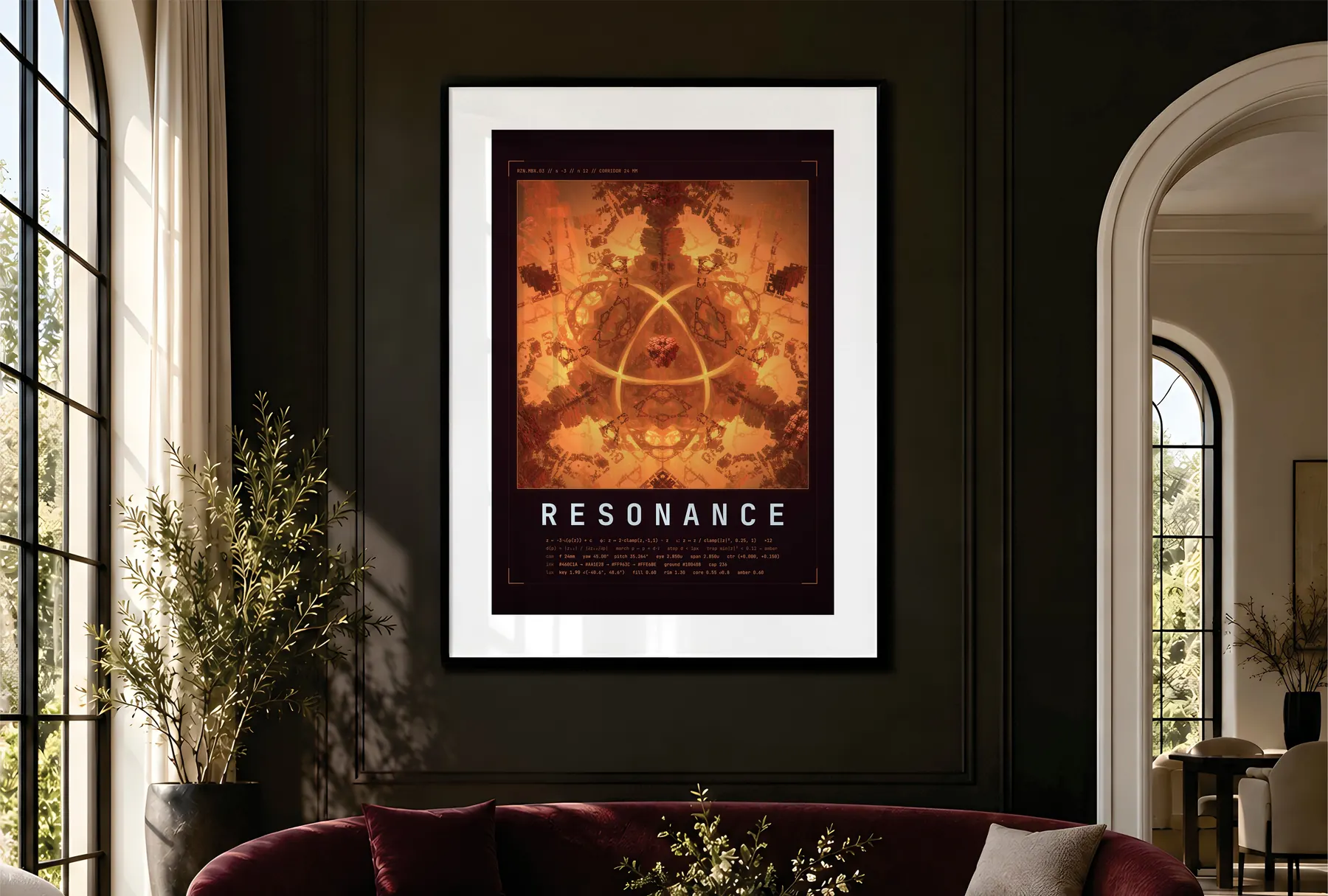
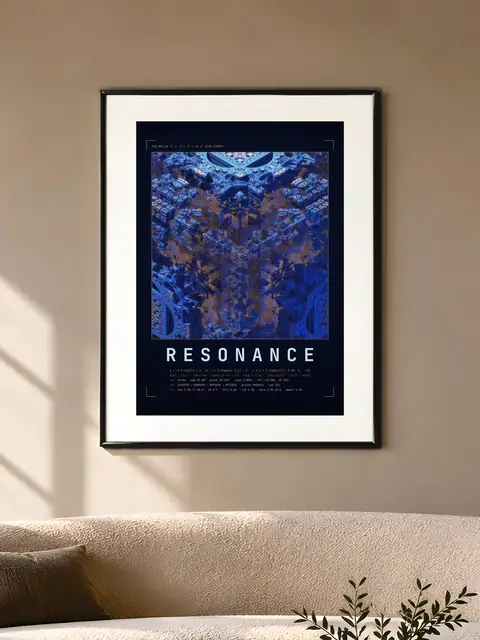
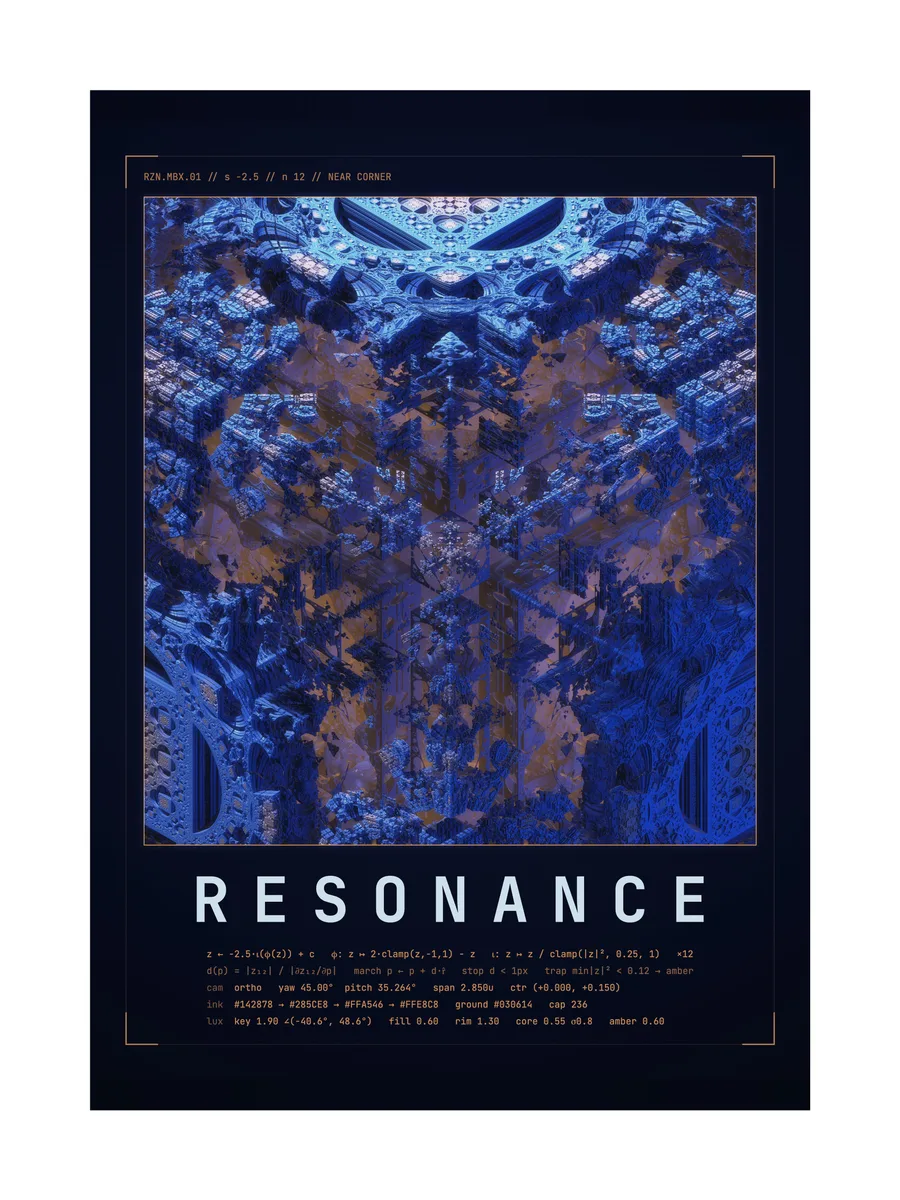
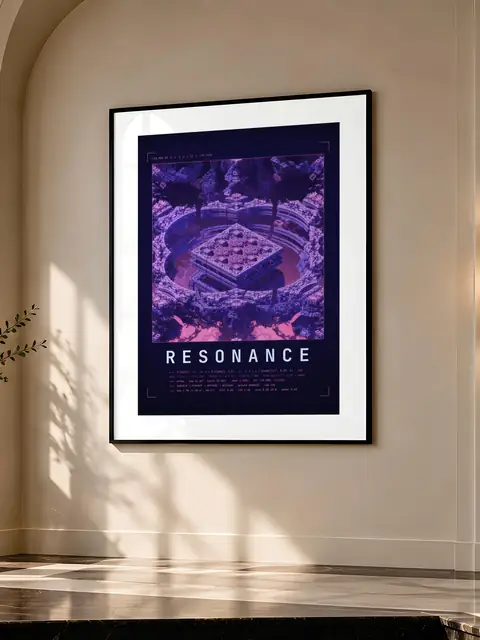
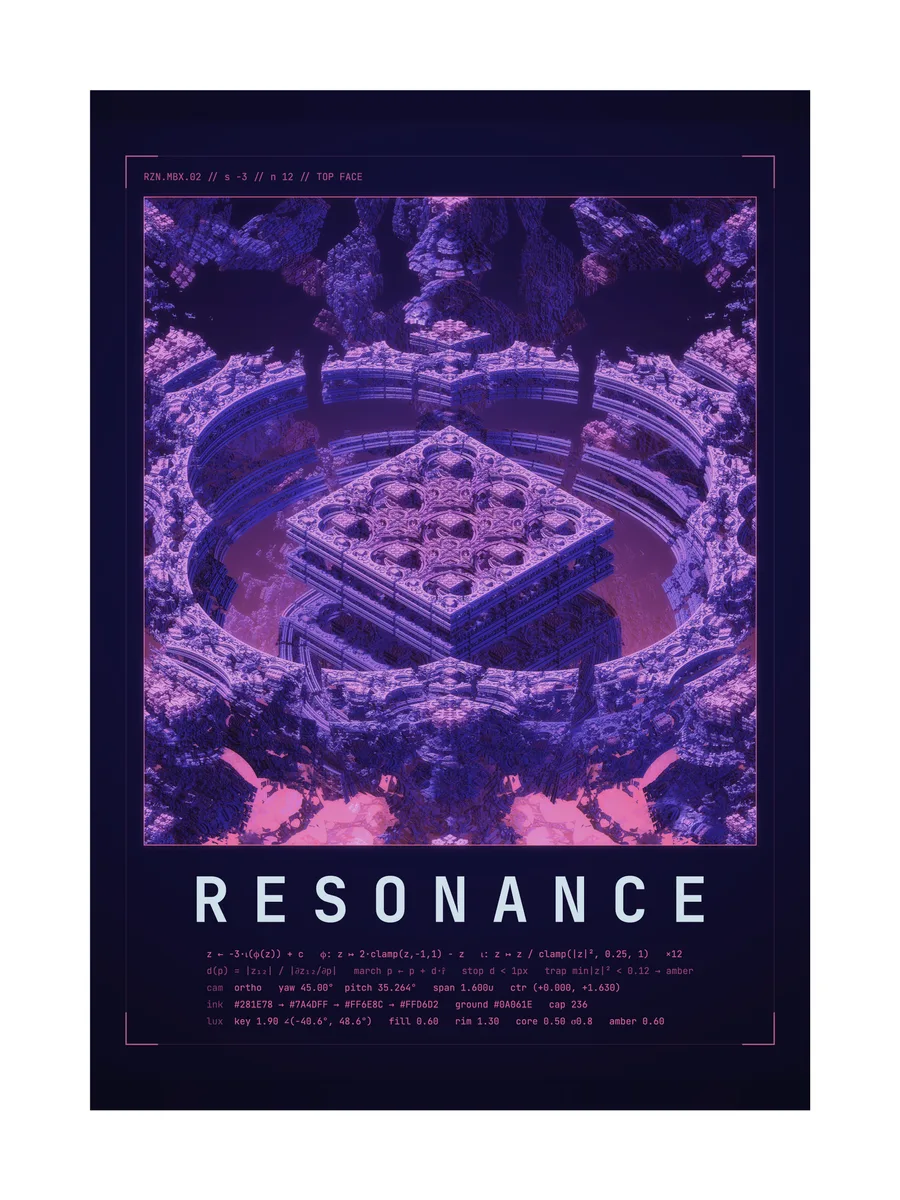
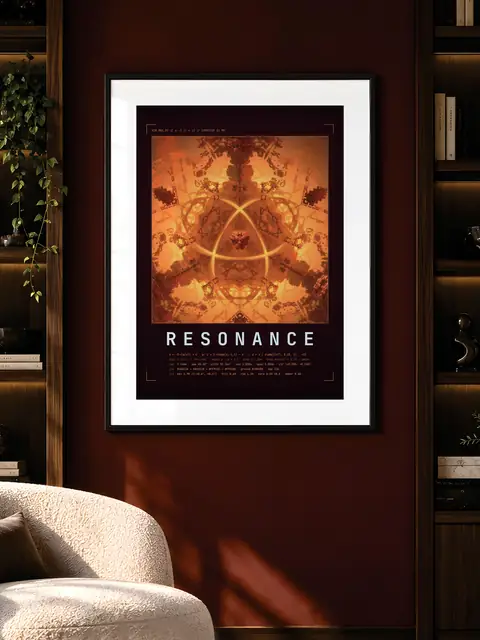
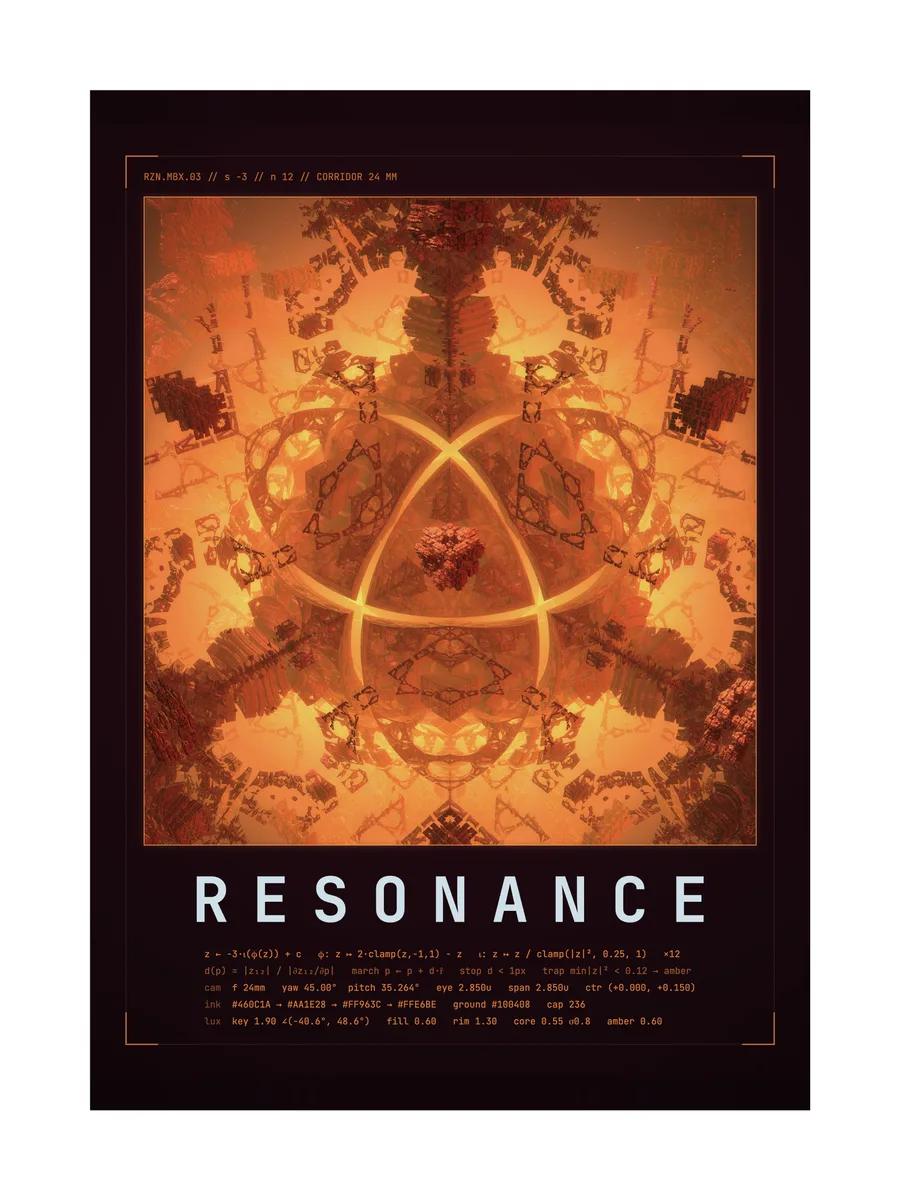
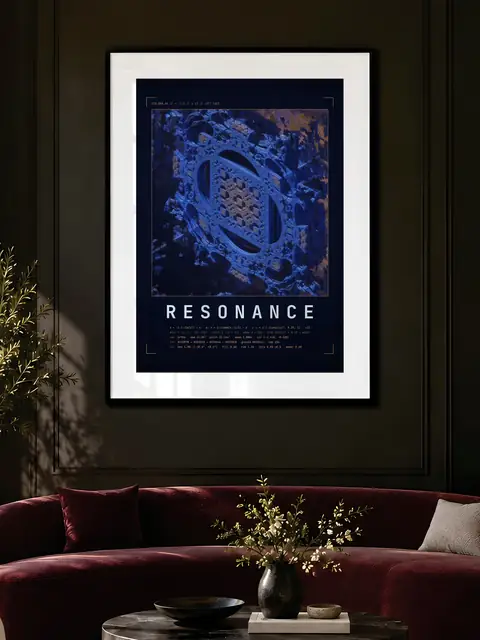
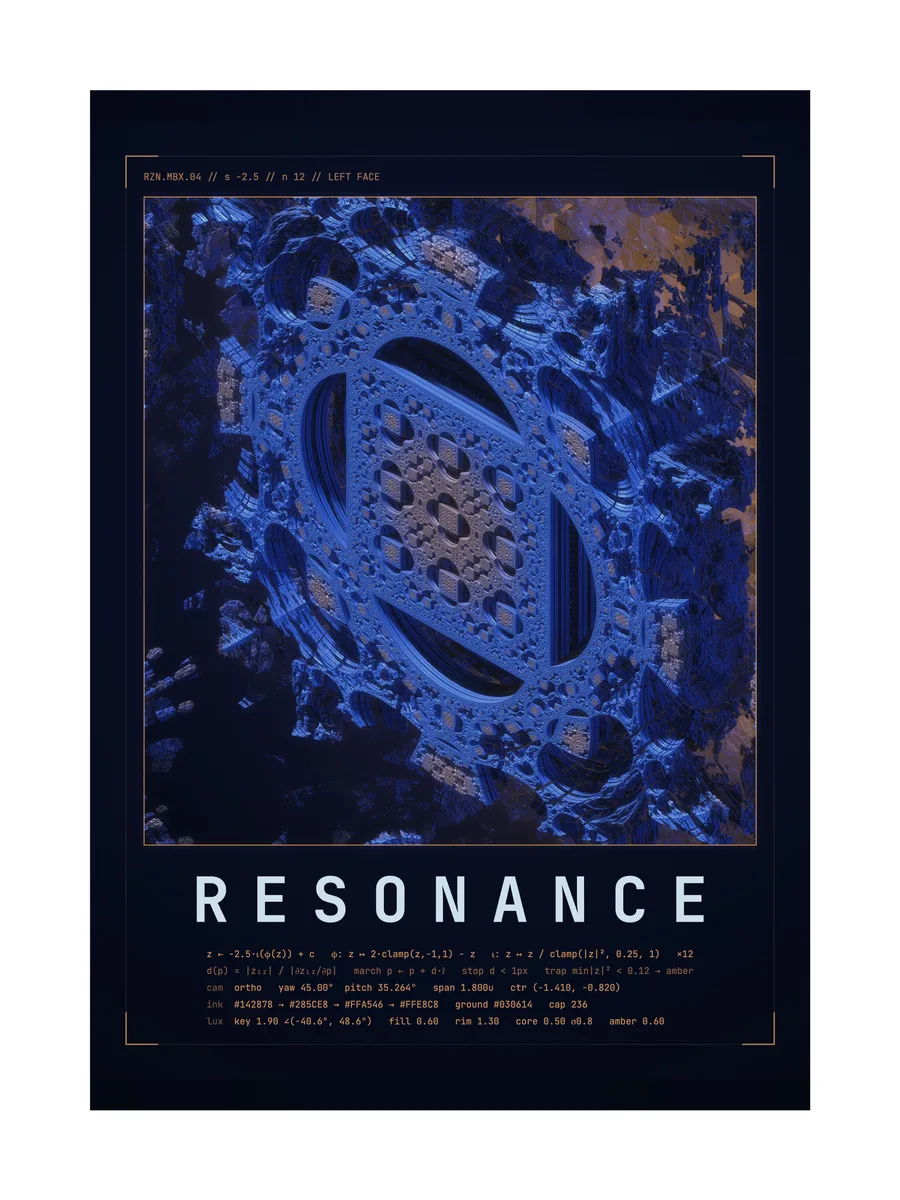
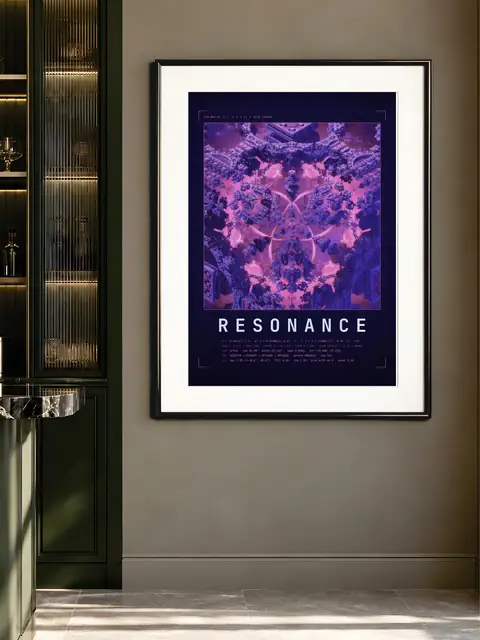
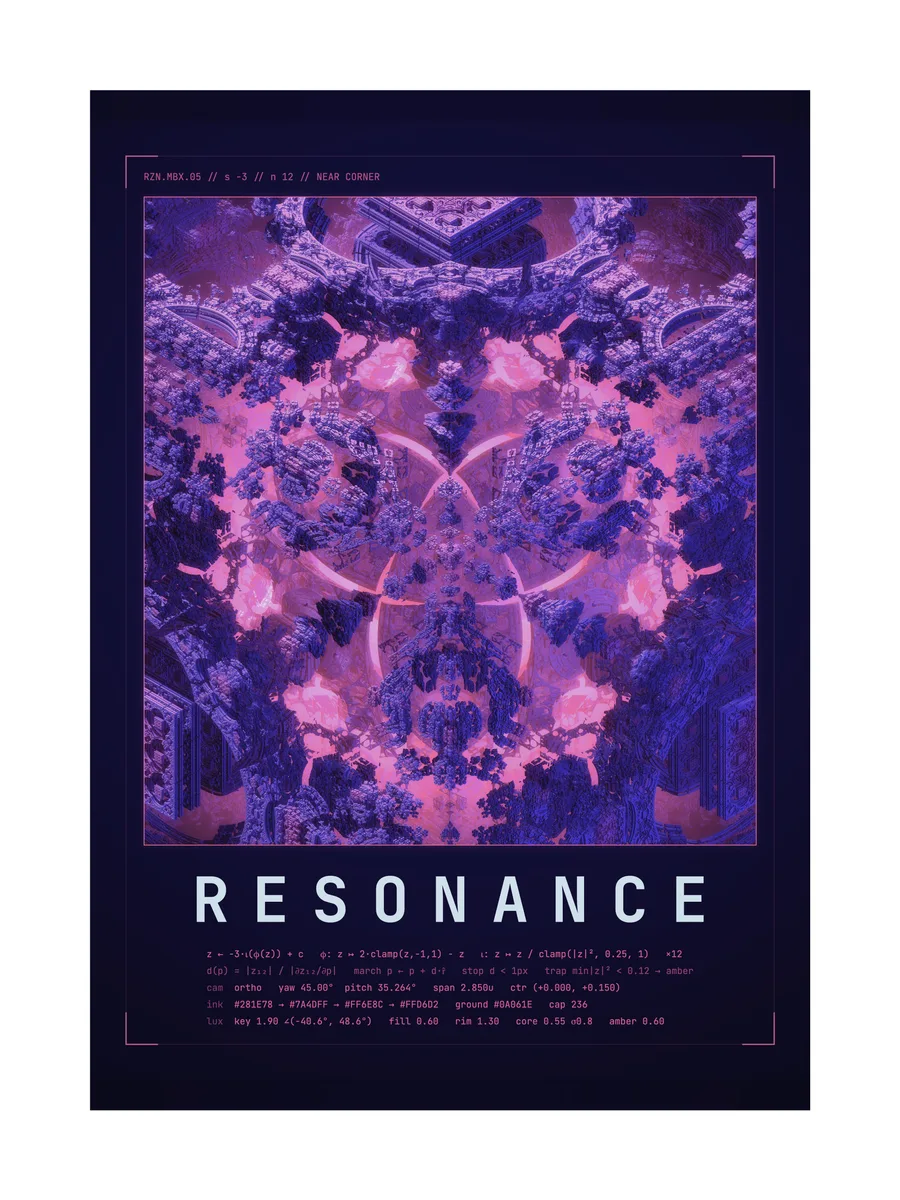
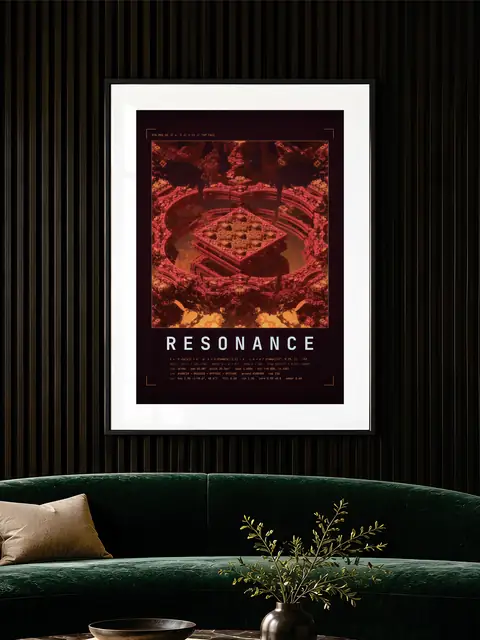
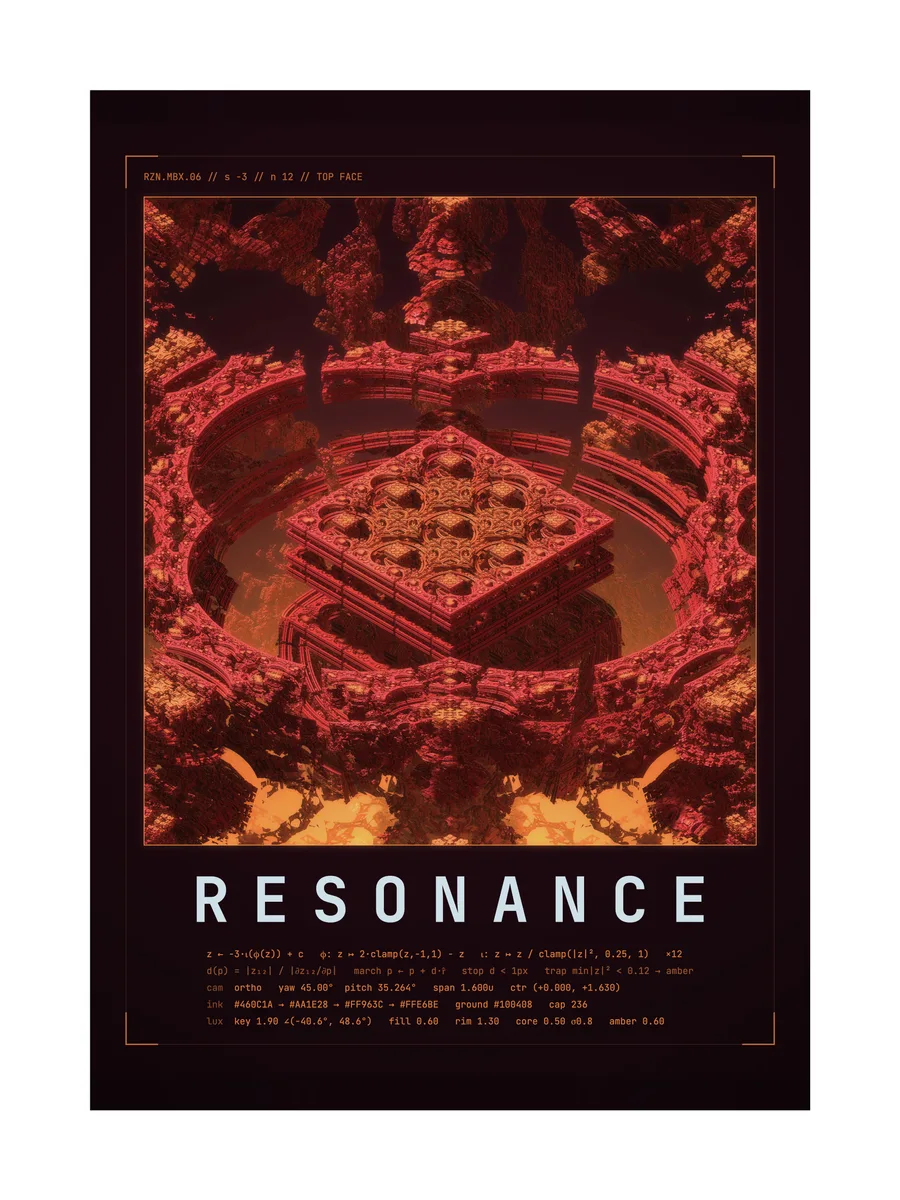
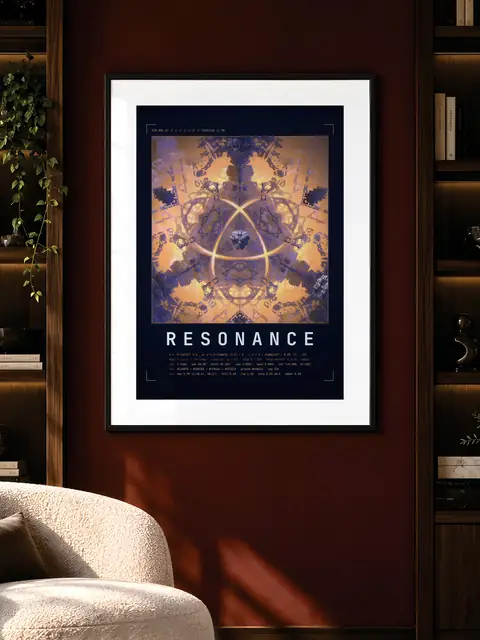
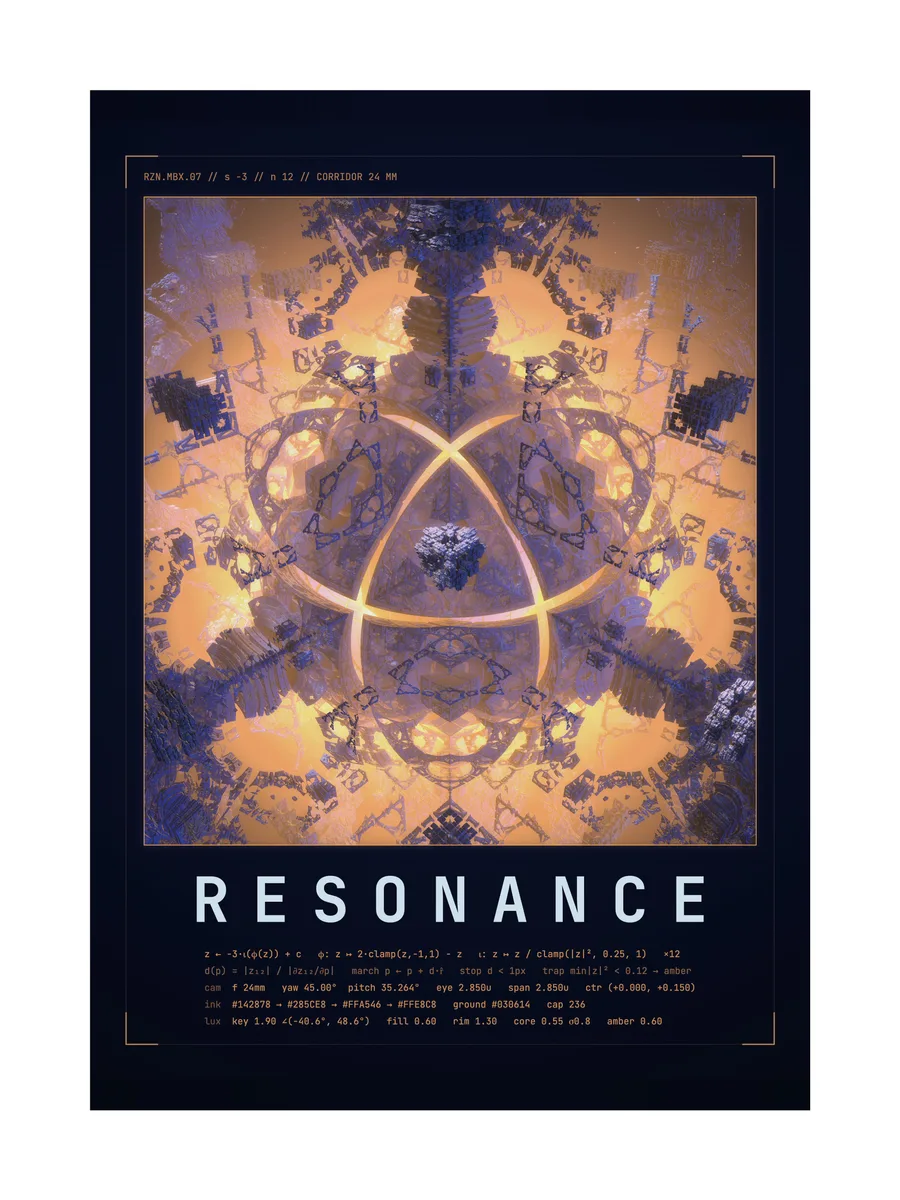
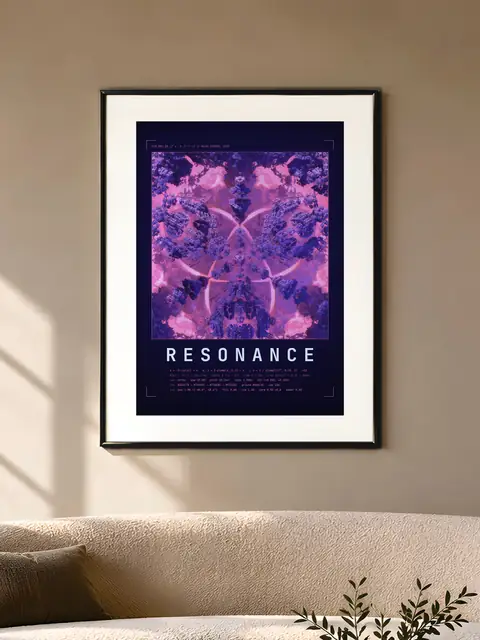
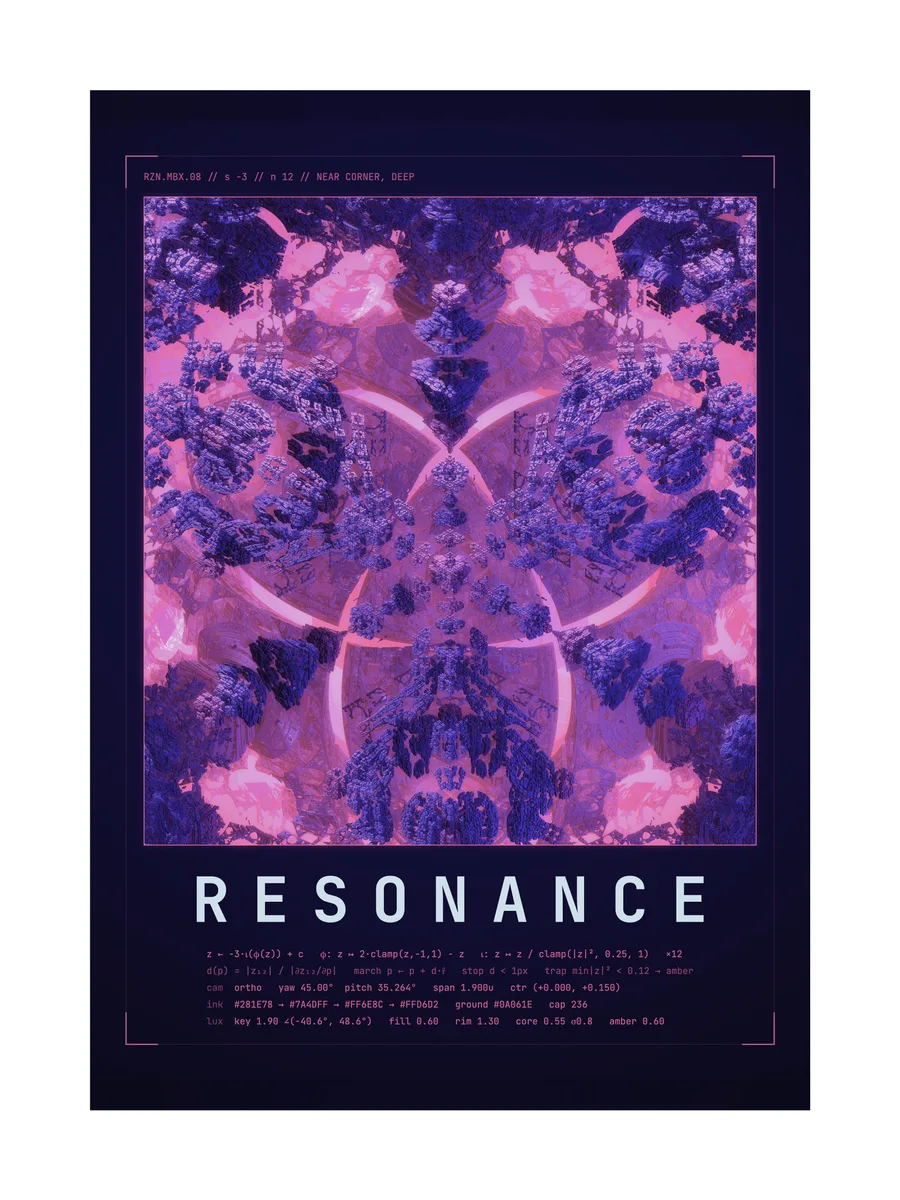
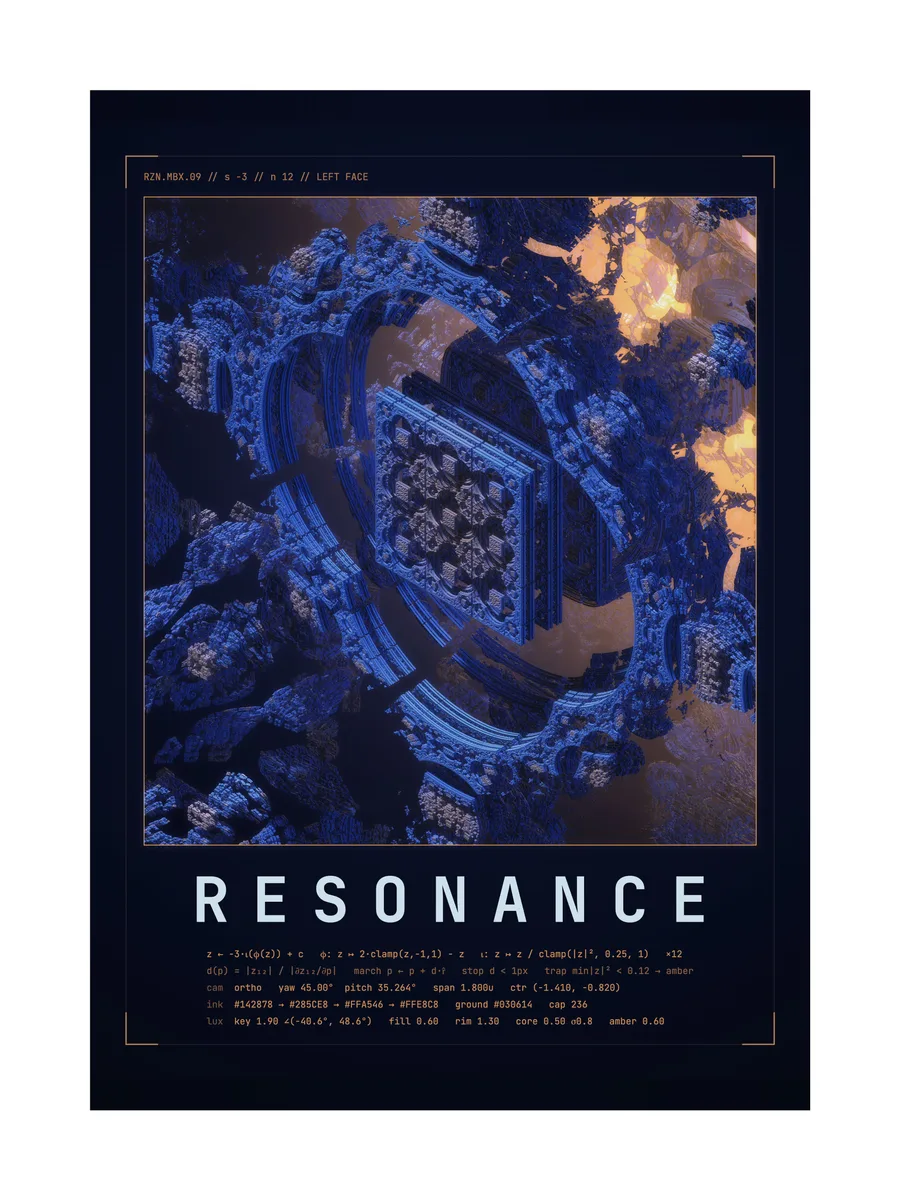
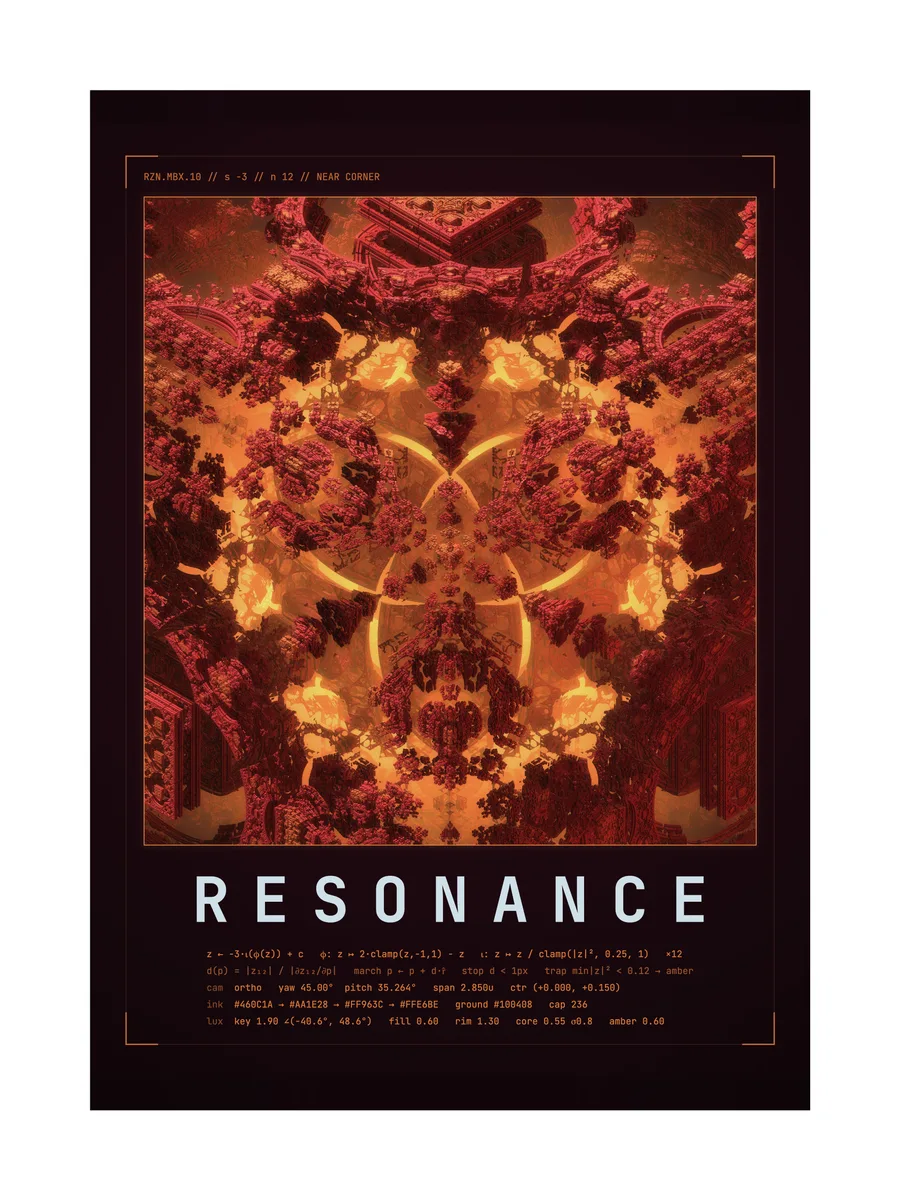
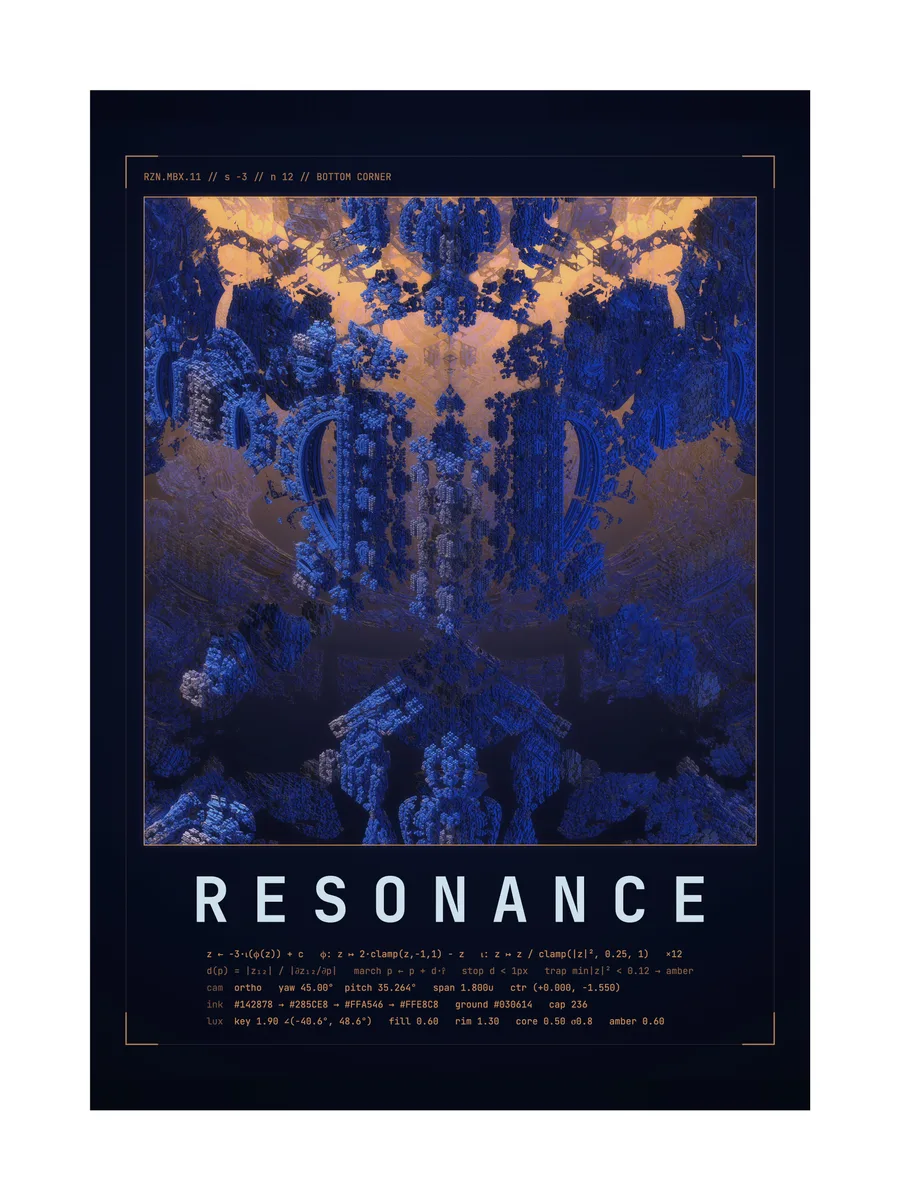
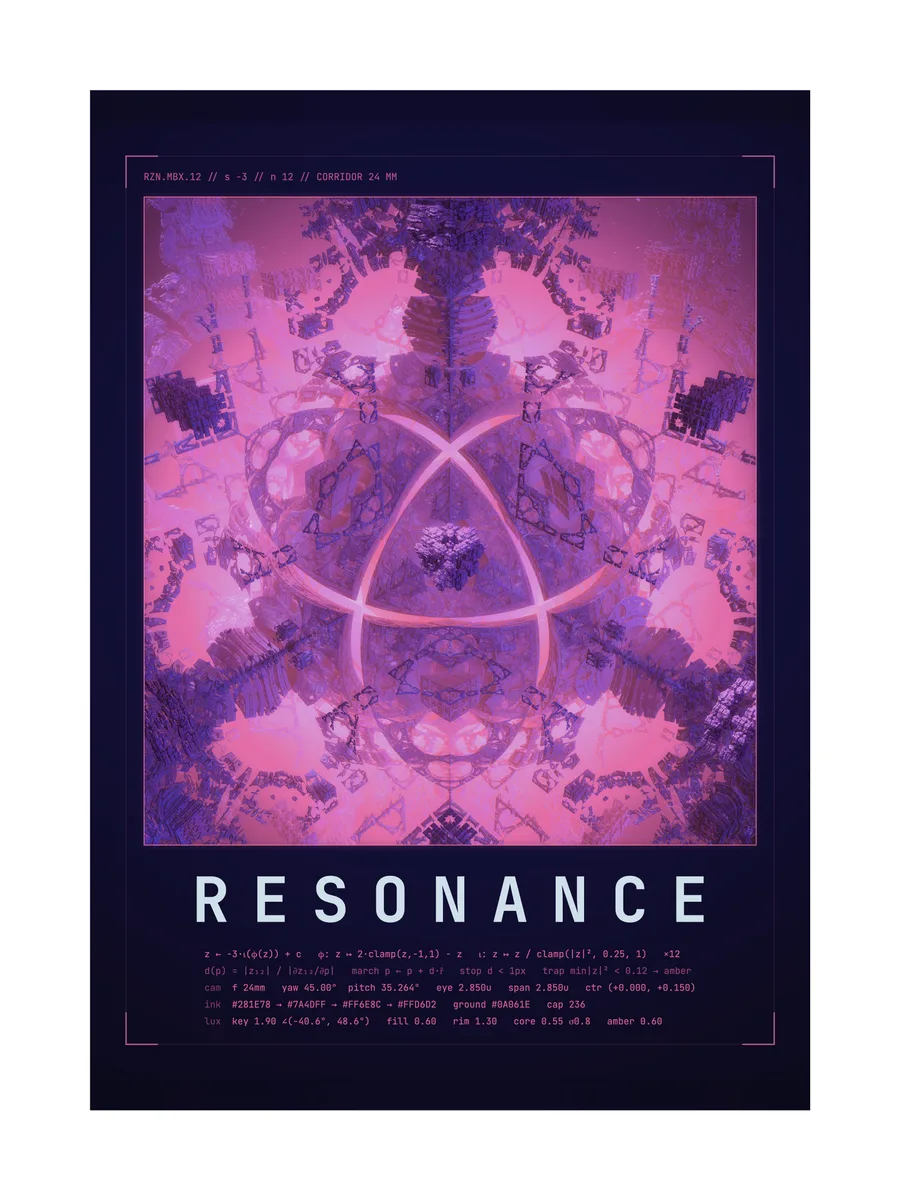
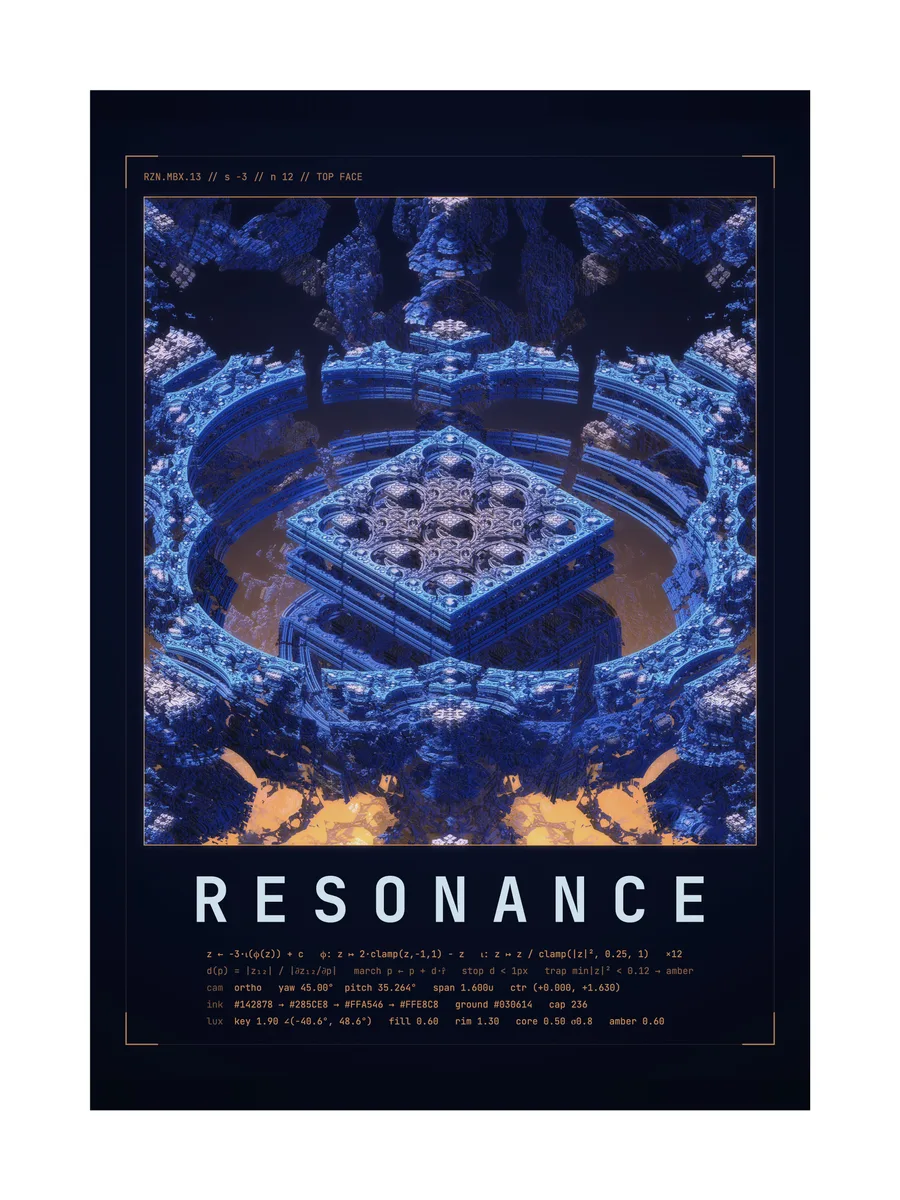
A fractal you can walk into. Space is folded into a box, turned inside out in a sphere and scaled, twelve times over, until halls, stairs and lace appear in three dimensions. Each piece is a close look at one corner of it, lit like a studio set.
Shop fractal art prints (26) →Filters Diskont
MATHEMATICS
The maths behind the picture
- 01
Fold into a box
Every point of space is reflected back into the cube from −1 to 1: the same move as folding a sheet of paper until it fits, but in three dimensions.
x, y, z → fold into [−1, 1] - 02
Turn inside out in a sphere
Points very close to the centre are pushed out, and points in a shell around it are flipped through the sphere. Then everything is scaled by s, here −2.5 or −3, and the starting point is added back.
z → s · z / clamp(|z|², 0.25, 1) + c - 03
Twelve times, then light
The two moves repeat 12 times for each point. A distance estimate says how far a point is from the surface, so a ray from the camera steps forward by that much until it touches it. Most pieces are seen with no perspective; the corridors through a 24 mm lens. A key light, a blue fill, an amber rim and a warm light inside the box do the rest.
repeat 12×, ray march to the surface
HISTORY
Where this idea comes from
- 1989
John C. Hart, Daniel Sandin and Louis Kauffman show how to ray trace 3D fractals with distance estimates, the method still used to draw them.
- 2010
Tom Lowe finds the Mandelbox while looking for a 3D cousin of the Mandelbrot set, and shares it on the Fractal Forums.
- today
Here every piece folds space 12 times for each point a ray touches, rendered in tiles and joined for print.