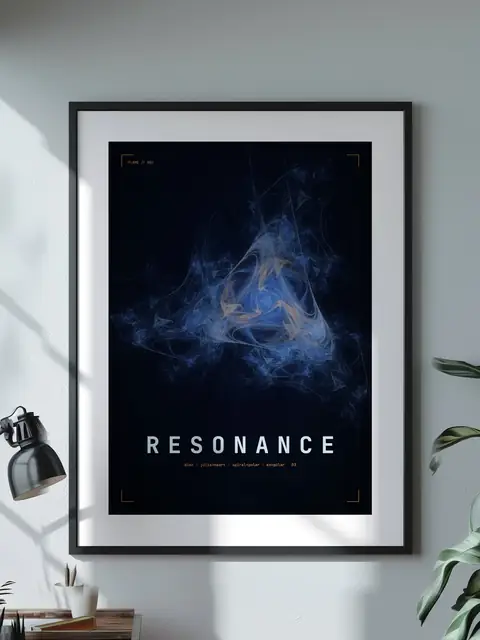
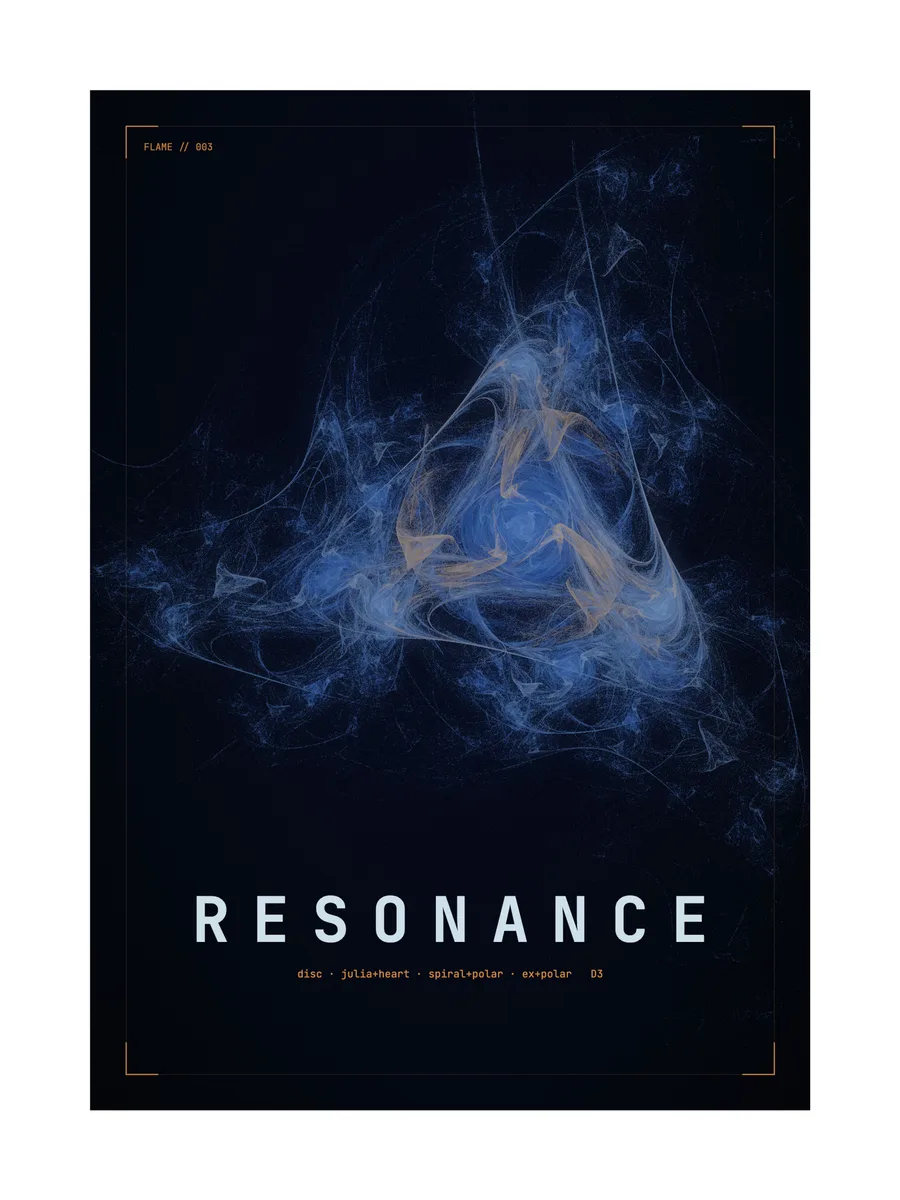
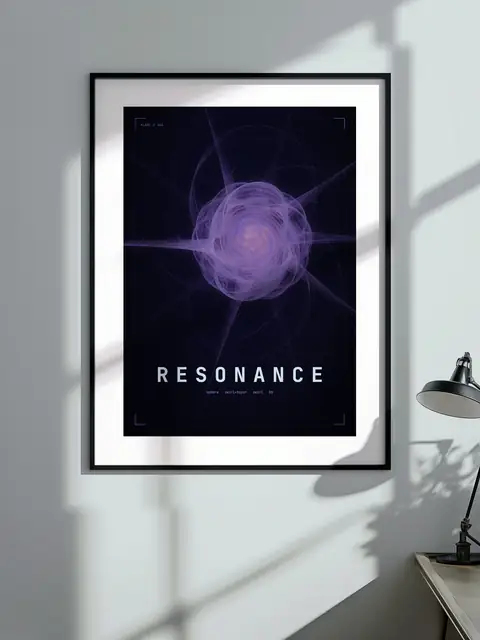
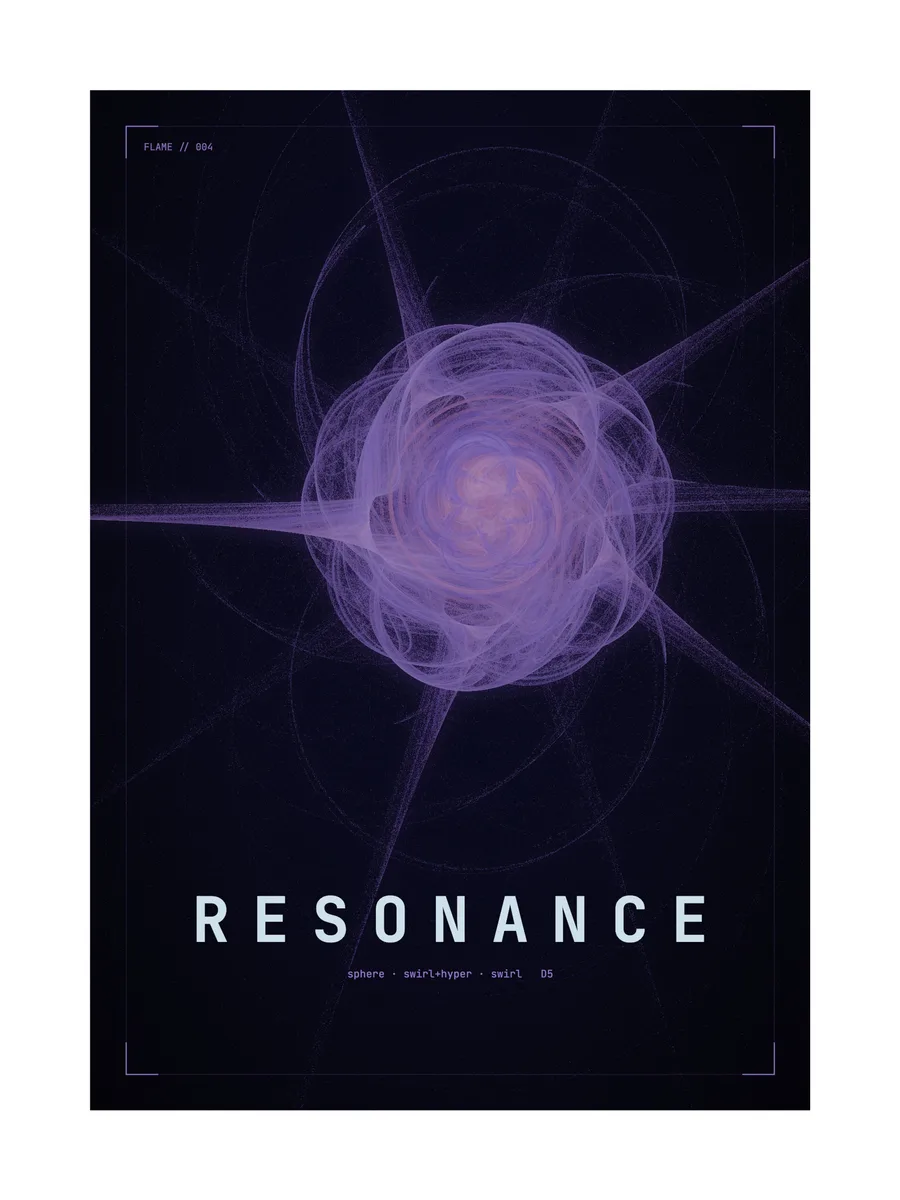
The story
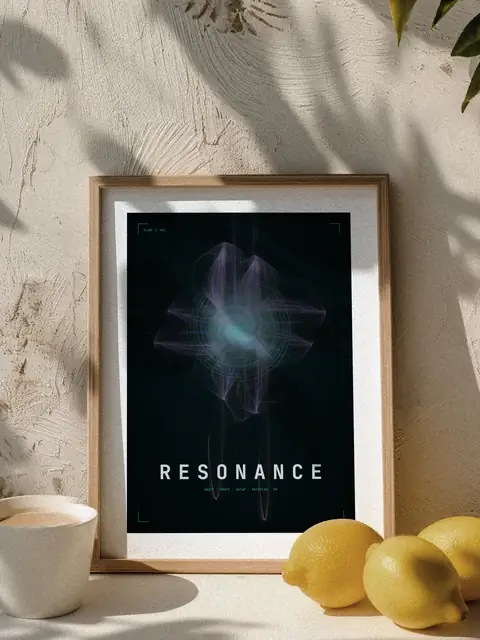
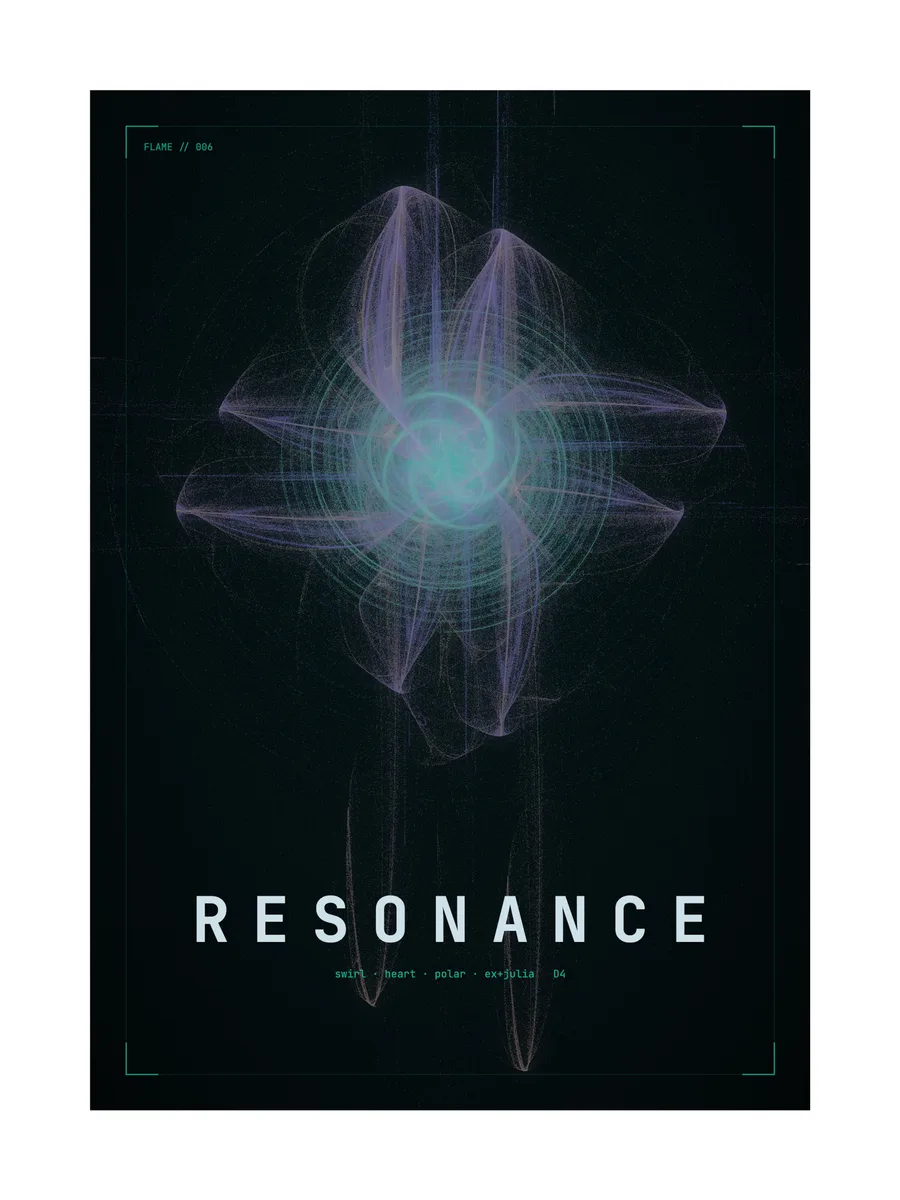
Feathers has no imposed symmetry: the shape comes from the rules and chance alone. Scott Draves, who invented the fractal flame in 1992, launched Electric Sheep in 1999, a screensaver on which thousands of computers render flames together.
200 gsm enhanced matte
Printed on thick uncoated art paper at 300 DPI. Rich colour, razor-sharp lines, no glare.
Black or natural wood
Wooden frame, 22 mm deep, with plexiglass that is lighter and safer than glass. Arrives ready to hang.
Free shipping worldwide
Each print is made for you when you order and packed to arrive flawless, wherever you are.
The story
Feathers has no imposed symmetry: the shape comes from the rules and chance alone. Scott Draves, who invented the fractal flame in 1992, launched Electric Sheep in 1999, a screensaver on which thousands of computers render flames together.
MATHEMATICS
Every piece is computed, not drawn. These are the real equations and numbers from the program that made this exact piece.
Read the guide: What is a fractal flame? →xₙ₊₁ = Fᵢ(xₙ)F(x) = Σ wⱼ·Vⱼ(Ax + b)L = log(1 + n) / log(1 + nₘₐₓ)
HISTORY
John Hutchinson describes iterated function systems: a fractal as a set of rules that repeat.
Michael Barnsley shows that a few rules and the chaos game draw ferns and clouds.
Scott Draves devises the fractal flame: non-linear variations, log density and colour from history.
The flame is one of the best-known forms of programmer art. Here every piece has its own rules and its own number.
The flame descends from Barnsley's fern of 1988: a few rules, picked at random, draw a leaf down to its last vein.
Follow along
Explore other series