Guide // Fractals
Fractal art: what it is and how it is made
Fractal art is art made from shapes that repeat at every scale, computed rather than drawn by hand. Here is what makes a shape a fractal, where the art form came from, and the main kinds of fractal art you will see on our walls and elsewhere.
01What a fractal is
A fractal is a shape whose parts look like the whole. Zoom into a fern leaf and each leaflet is a small fern; zoom into a coastline and the bays have bays. Mathematically, a fractal has detail at every scale and a dimension that isn't a whole number.
The Koch snowflake is the classic example: replace the middle third of every edge with a small triangle, forever. The outline becomes infinitely long while enclosing a finite area, and its dimension is about 1.26, more than a line and less than a surface.
D = log 4 / log 3 ≈ 1.26202Where fractal art came from
Mathematicians found fractal shapes long before anyone could see them properly: Georg Cantor's set in 1883, Helge von Koch's snowflake in 1904, Wacław Sierpiński's triangle in 1915. Without computers, they were mostly seen as curiosities.
In 1975 Benoit Mandelbrot coined the word "fractal", and his 1982 book The Fractal Geometry of Nature showed that clouds, mountains and coastlines follow the same rules. Computer images of the Mandelbrot set spread through magazines in the 1980s, and fractal art became one of the first art forms made entirely with code.
03Escape-time fractals: the Mandelbrot set
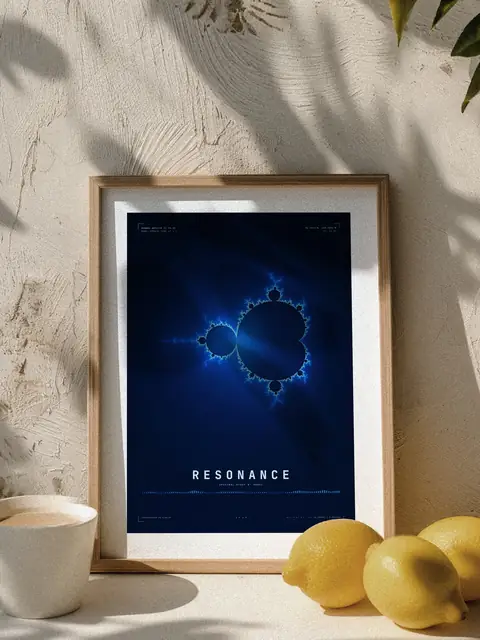
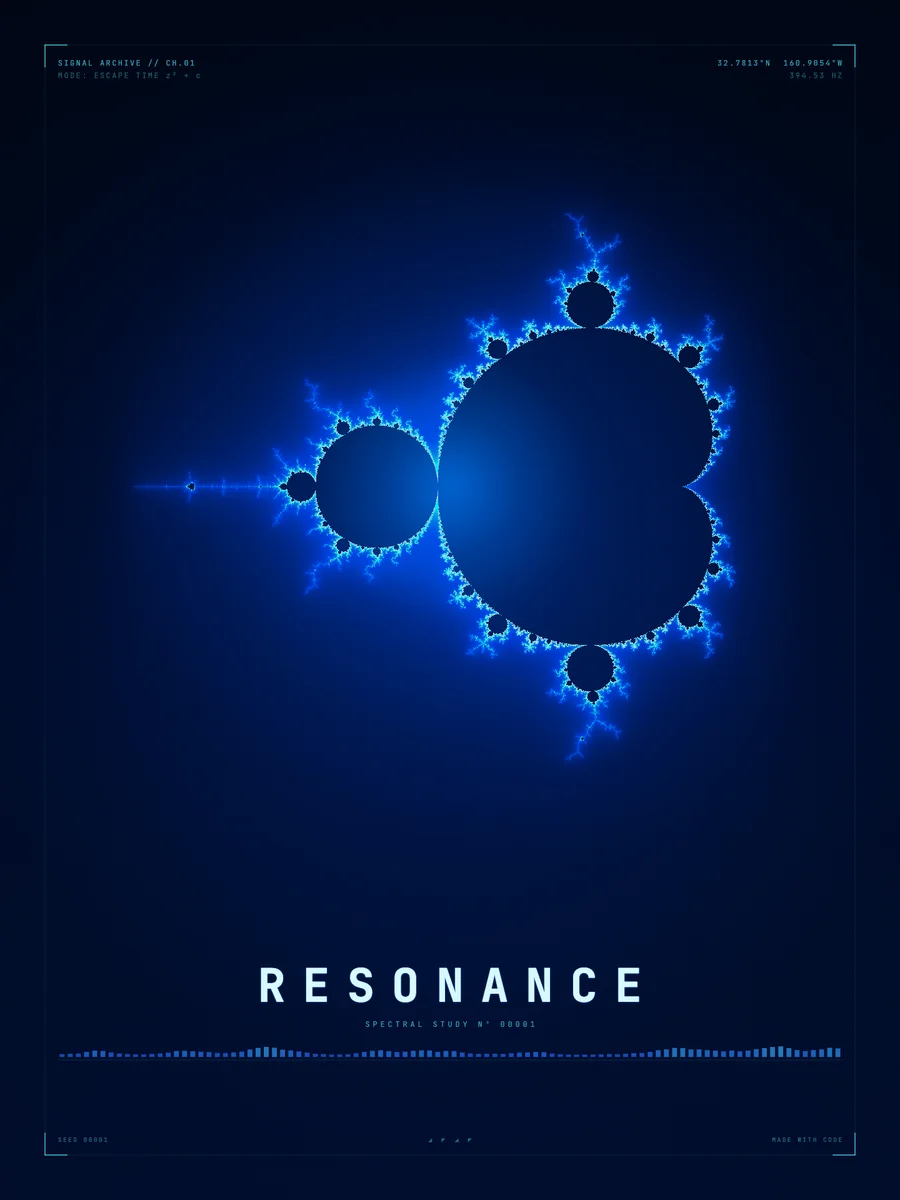
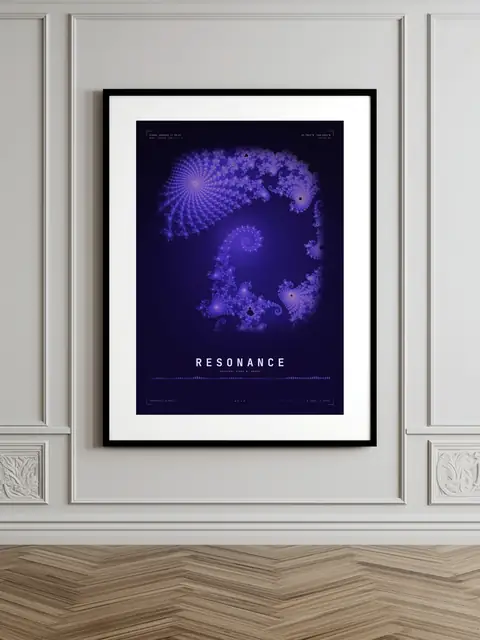
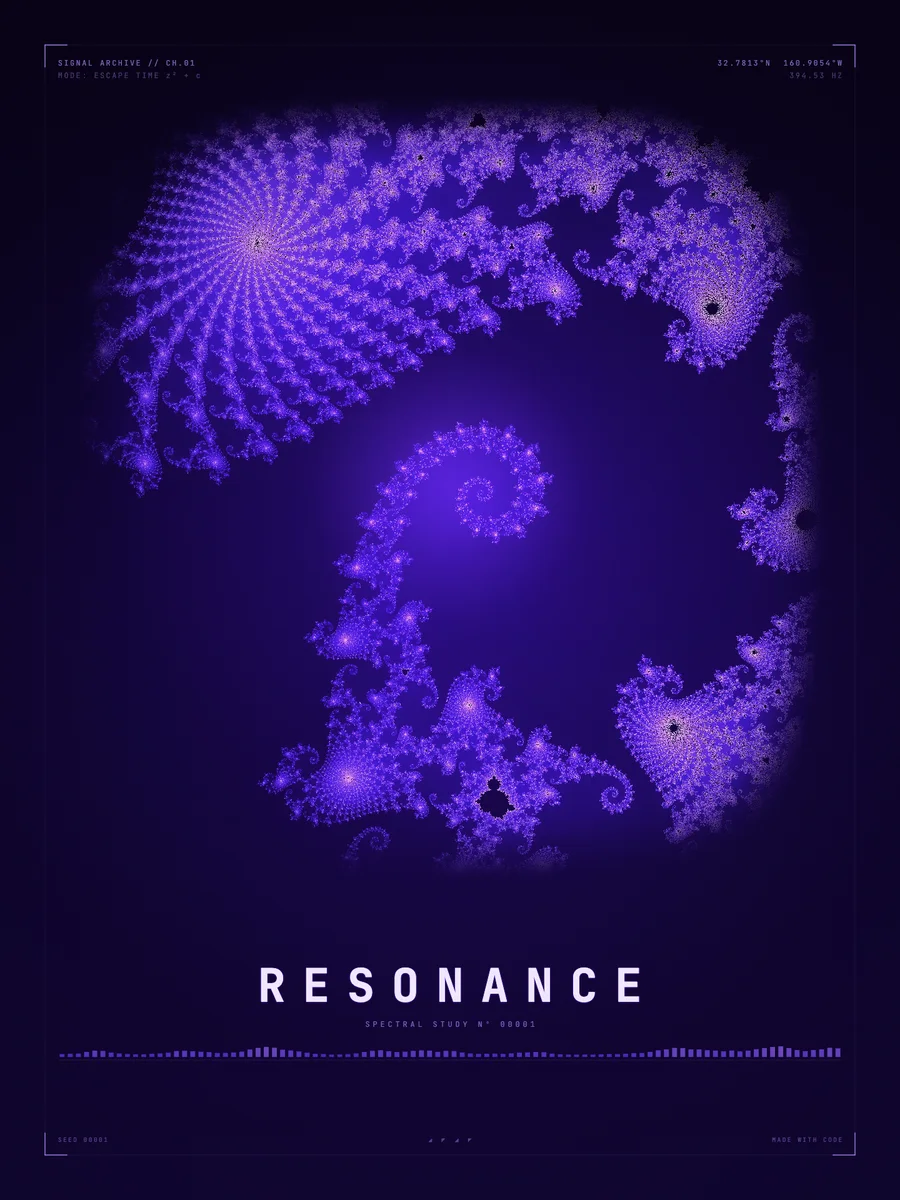
The best-known kind of fractal art comes from repeating one equation for every point of the plane and colouring each point by how quickly the numbers escape to infinity. The Mandelbrot set, z² + c, is the classic. Its edge holds endless spirals, and deep zooms show places no one has seen before.
04Fractal flames
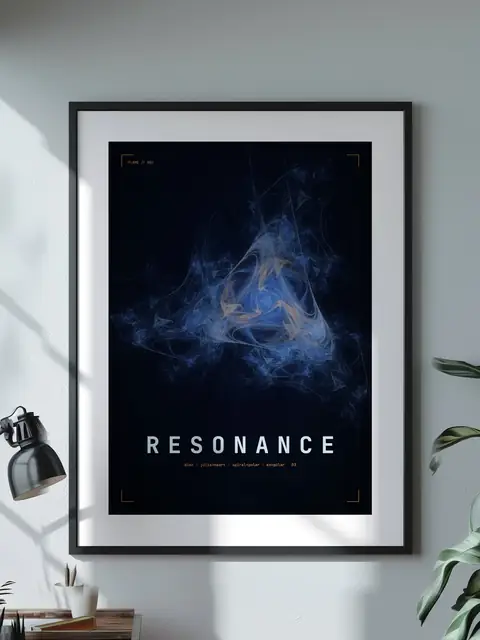
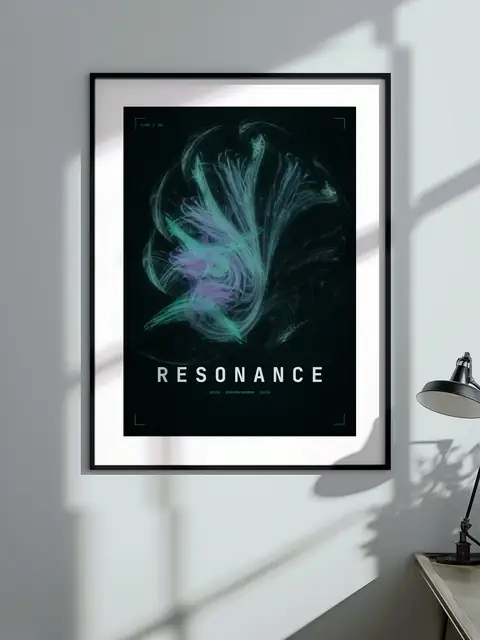
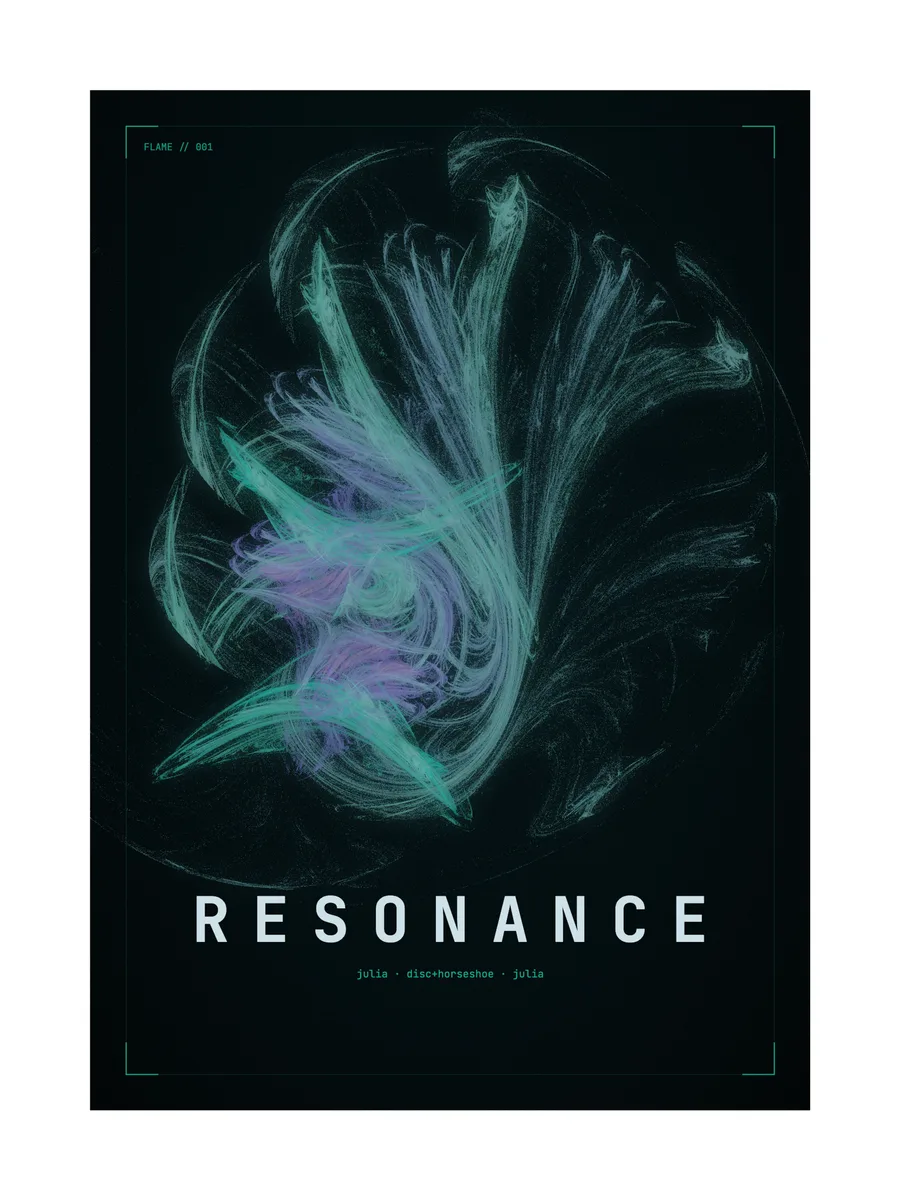
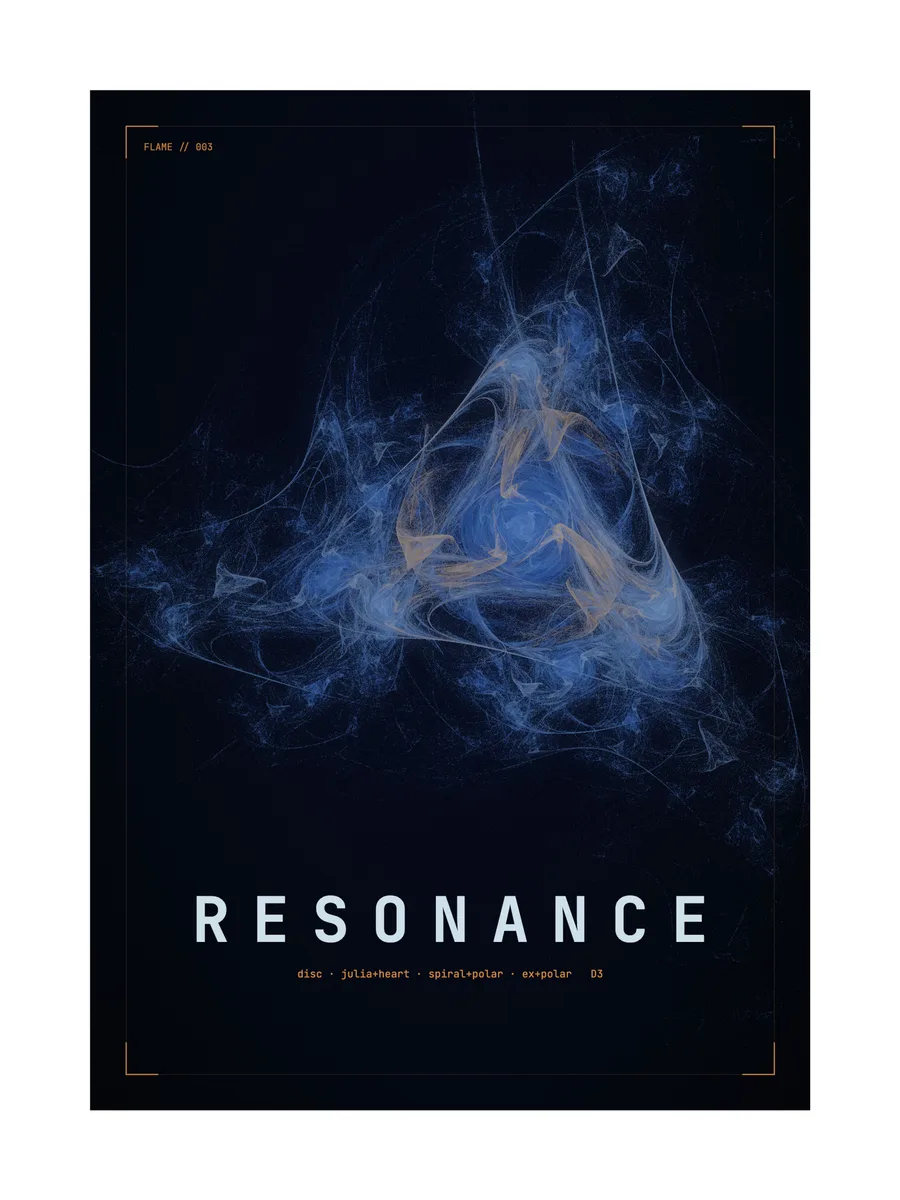
A fractal flame is drawn by a single point jumping millions of times between a few random rules. Where it lands most often, the image glows. Invented by Scott Draves in 1992, flames have a soft, smoky look quite unlike the hard edges of the Mandelbrot set.
05Strange attractors
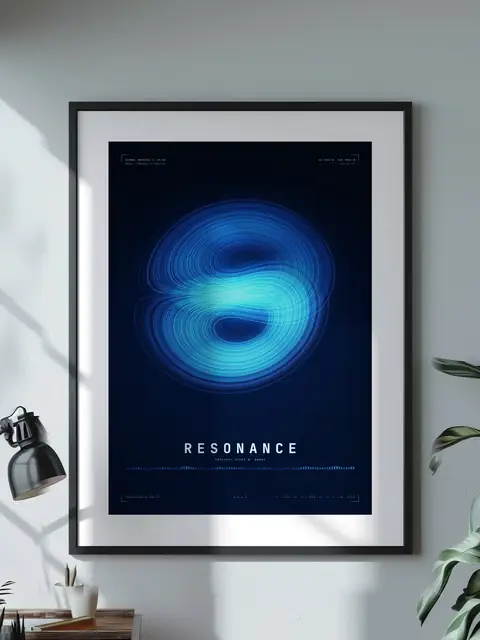
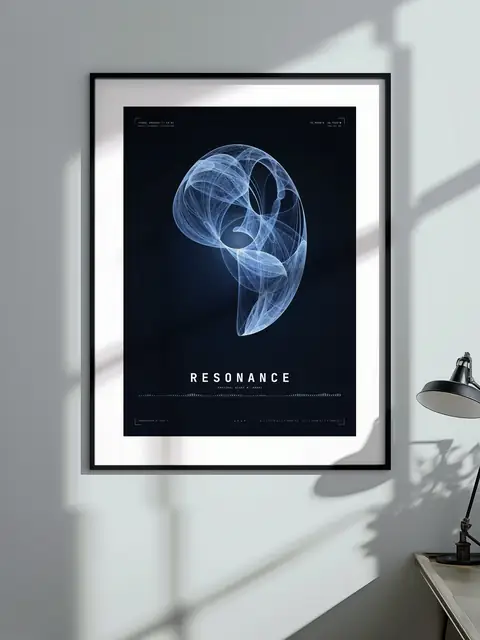
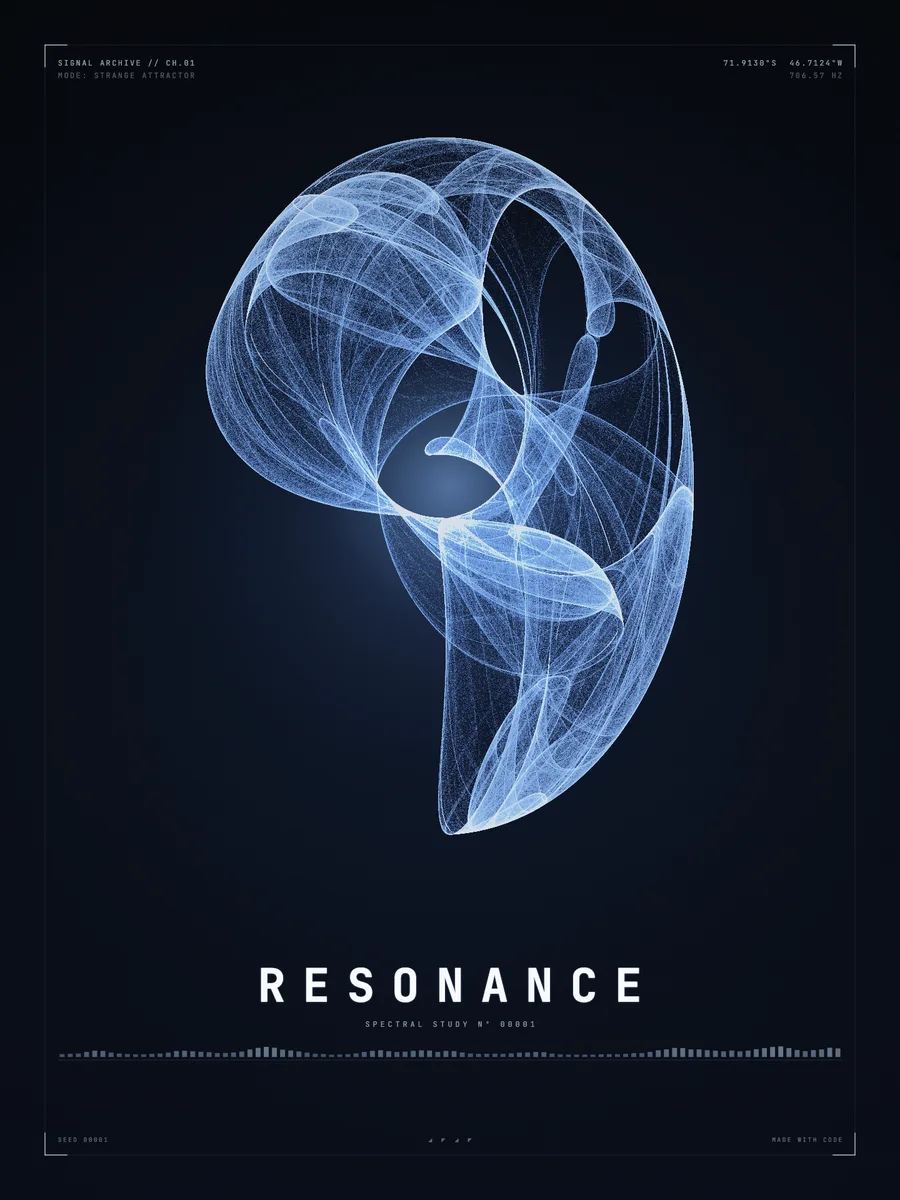
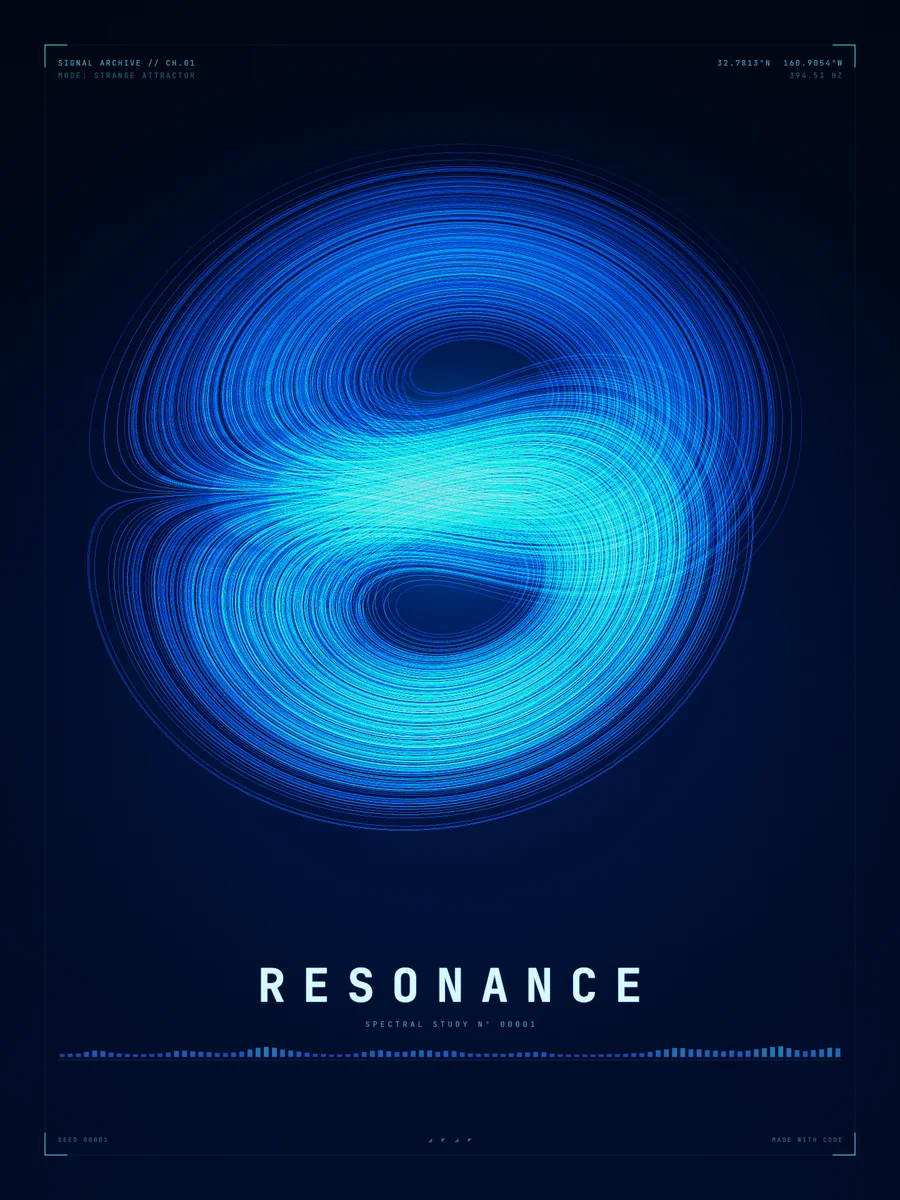
Strange attractors come from chaos theory: the path of a point moving by a set of equations, like the Lorenz system. The path never repeats and folds into layers within layers, which gives the shape a fractal dimension. The Lorenz attractor's is about 2.06.
06Recursive rules
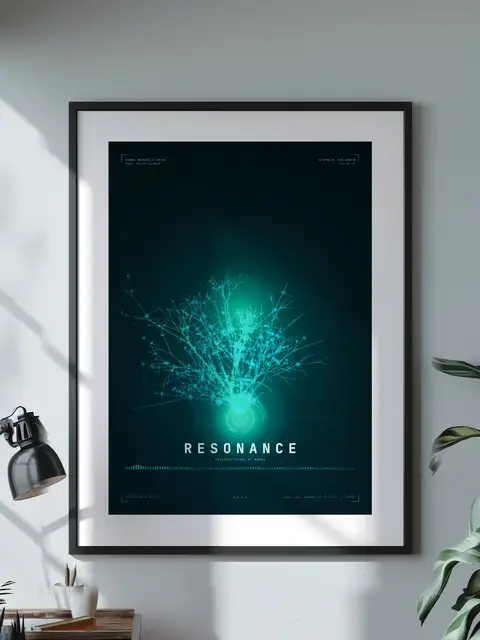
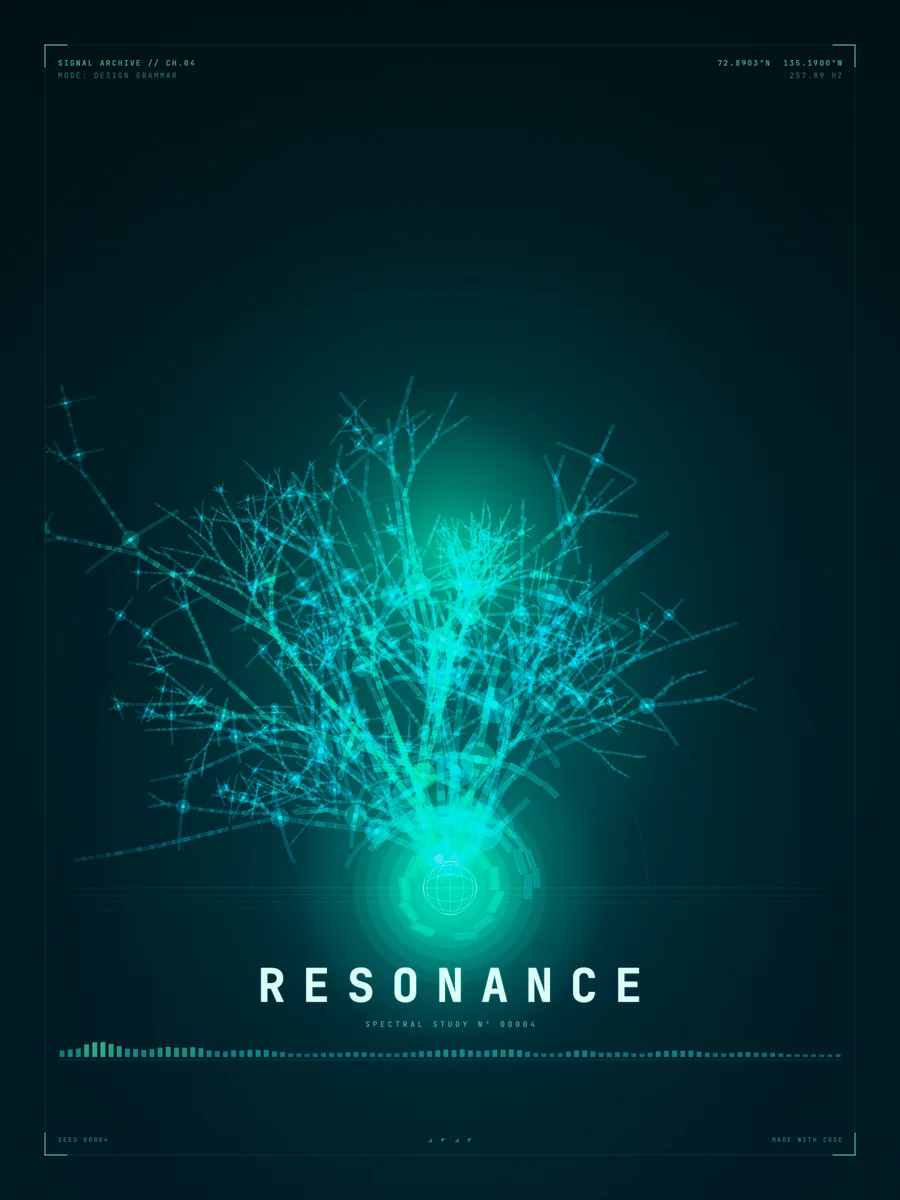
Another family grows from rules that call themselves: "a branch is a line, then two smaller branches". The biologist Aristid Lindenmayer wrote such rules for plant growth in 1968, and artists later turned them into drawing programs. Each rule is simple; applied thousands of times, it builds trees, coral and architecture.
07Is fractal art real art?
The equations are discovered, not invented, but the picture is chosen. Someone decides where to look in the Mandelbrot set, which rules to combine in a flame, which angle to view an attractor from, which colours to use and when a piece is finished. Like photography, the medium does much of the work, and the eye does the rest.
08Fractal art on a wall
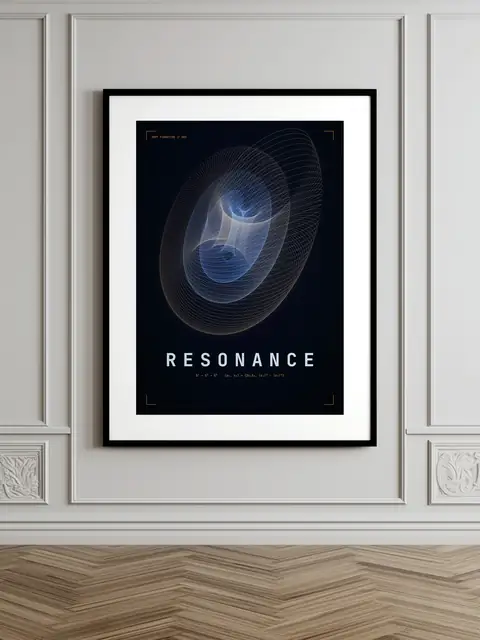
Fractals suit large prints because they reward a closer look: the detail keeps going. Our posters are printed on fine art matte paper at 300 DPI, so the fine filaments stay sharp up close. Every product page lists the exact equations and parameters behind its piece.
FAQQuestions
What is fractal art?
Art made from fractals, shapes with detail that repeats at every scale, computed from mathematical rules rather than drawn by hand. The main kinds are escape-time fractals like the Mandelbrot set, fractal flames, strange attractors and recursive rule systems.
How is fractal art made?
With a program that applies a mathematical rule many times, from thousands to millions of iterations, and turns the results into colour and brightness. The artist chooses the rule, the view, the colours and the final composition.
Who invented fractal art?
No single person. Benoit Mandelbrot coined the word "fractal" in 1975 and made the first detailed images of the Mandelbrot set around 1980; fractal art grew from the computer images that followed in the 1980s.
What is the most famous fractal?
The Mandelbrot set, defined by repeating z² + c. Its boundary is infinitely detailed and full of spirals and small copies of the whole set.