SERIES G // HEX OBJECTS
Sci-fi planet posters
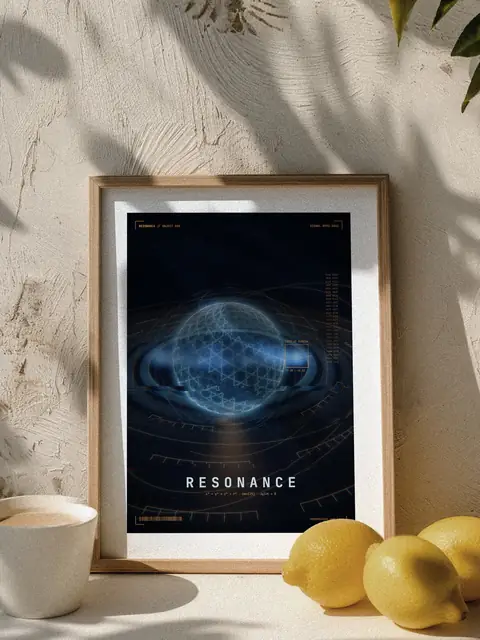
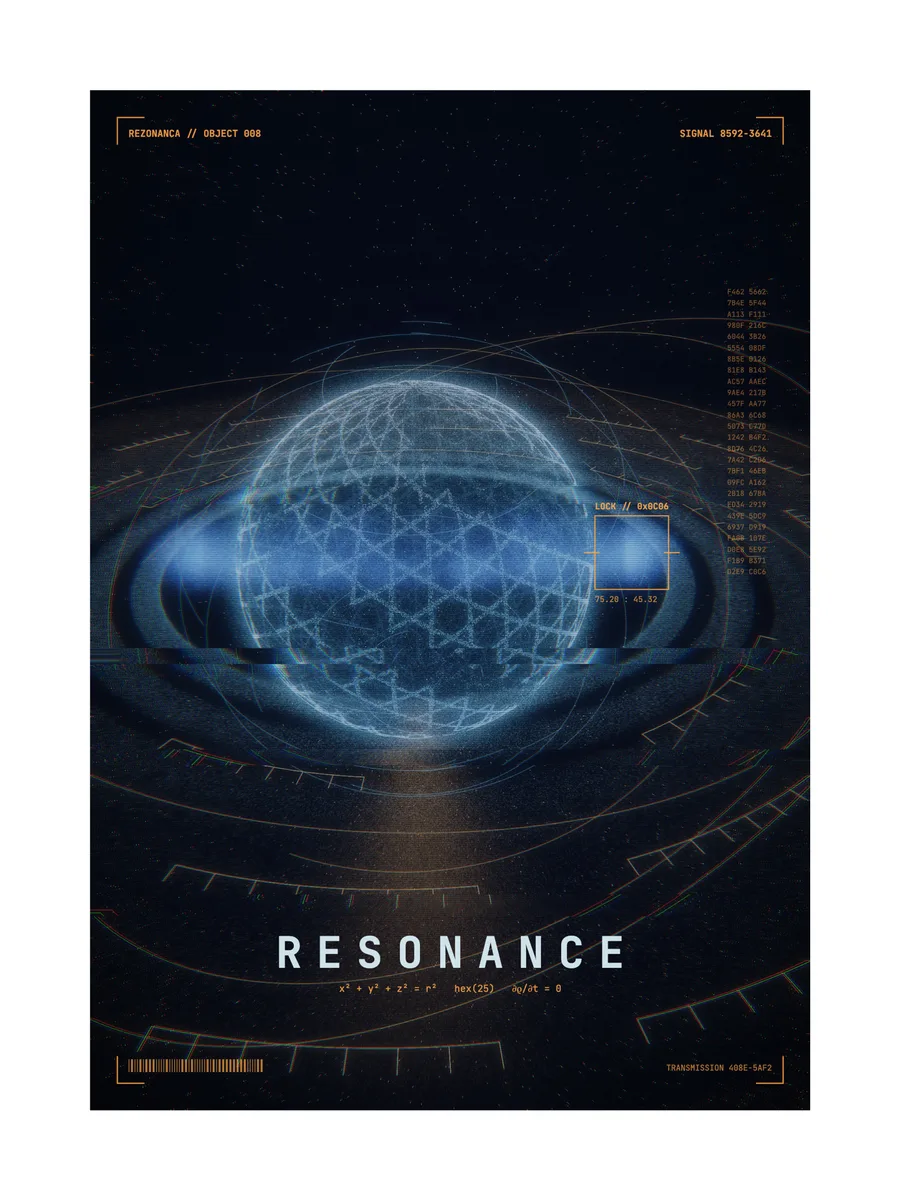
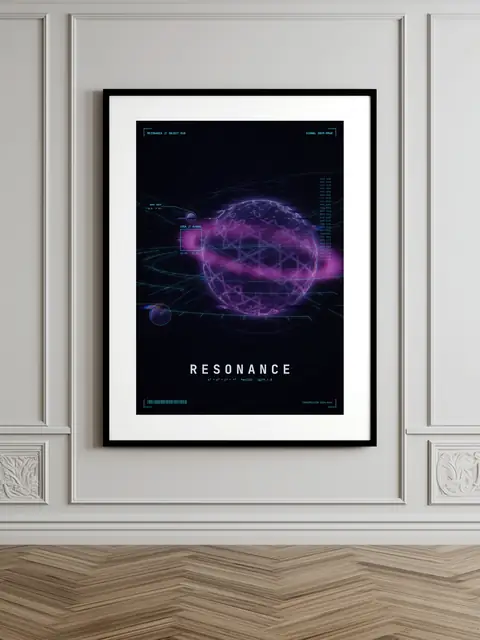
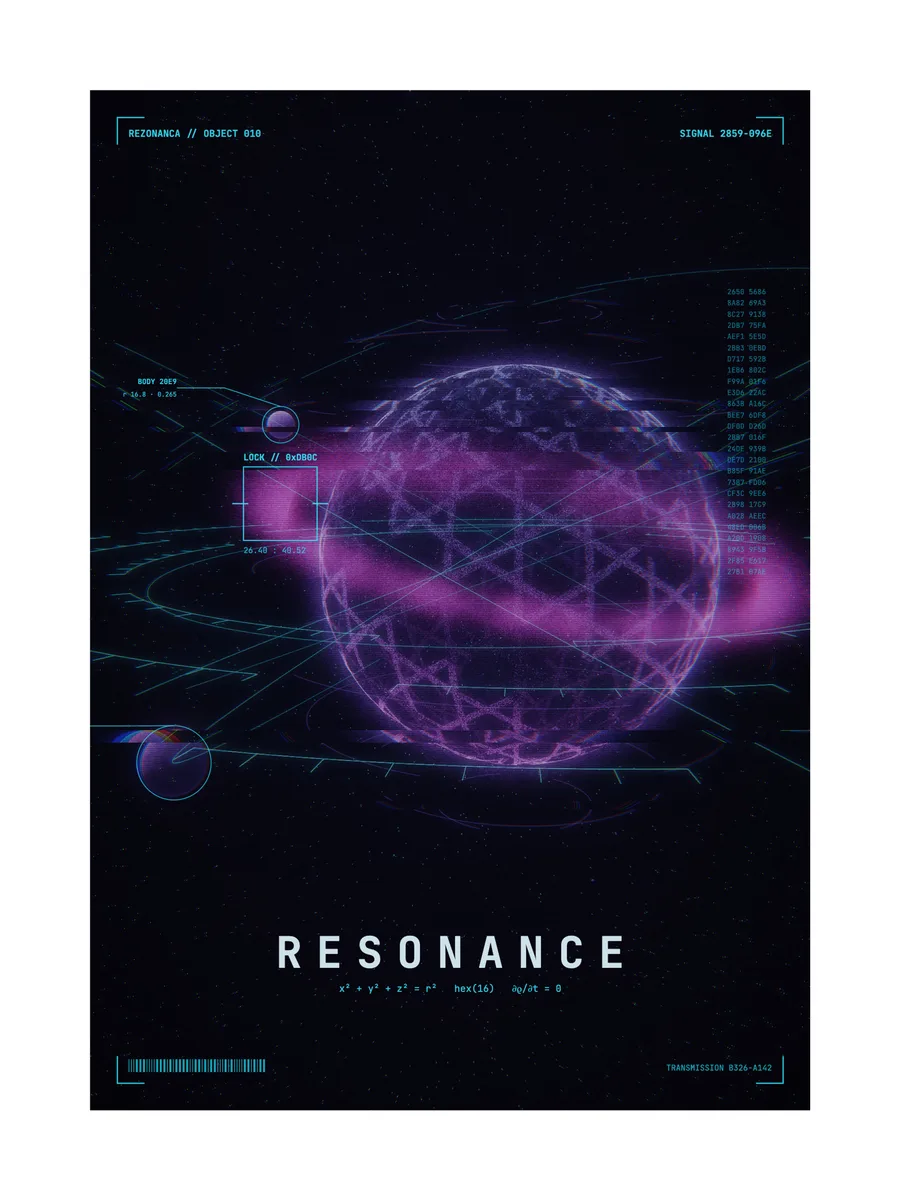
Worlds made of particles. Millions of points of light build a planet with a hexagonal shell, a ring of dust and orbits with moons, as seen by an instrument on a passing ship.
MATHEMATICS
The maths behind the picture
- 01
A world of particles
The image is not drawn with lines but with millions of particles. Each one is a tiny light, and a pixel is as bright as the sum of the particles that land on it. Where there are more, it glows. That is how the dust rings, the atmosphere and the beam below the planet appear.
L(pixel) = Σ particle light - 02
A hexagonal shell
Points are scattered across the surface of a sphere, and only those close to the edge of a hexagon are kept. A net of hexagons on a sphere is the same idea as Buckminster Fuller's geodesic dome.
x² + y² + z² = r² - 03
A view from space
Each object is three-dimensional: the program looks at it from an angle and projects it onto a plane, so nearer particles look bigger and brighter. The instrument layer on top is part of the work: moon labels, a lock-on reticle and signal data.
x' = f·x / (z + d)
HISTORY
Where this idea comes from
- 1937
Michael Goldberg describes polyhedra made of hexagons and a few pentagons, the meshes we still use to cover a sphere.
- 1954
Buckminster Fuller patents the geodesic dome: a sphere built from a net of triangles and hexagons.
- 1983
William Reeves publishes his paper on particle systems, made for the "Genesis" effect in Star Trek II: a planet exploding into hundreds of thousands of points.
- today
Film titles and science-fiction interfaces build worlds from particles and layers of data. This series does it in code, point by point.