Anomaly - sci-fi planet poster

SERIES G // Objects

Anomaly

€39

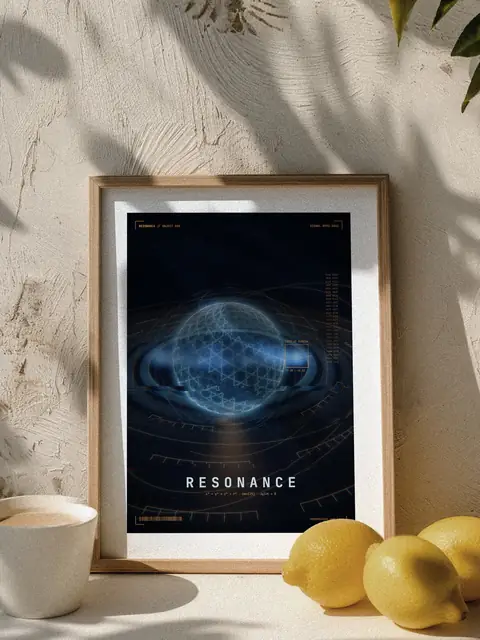
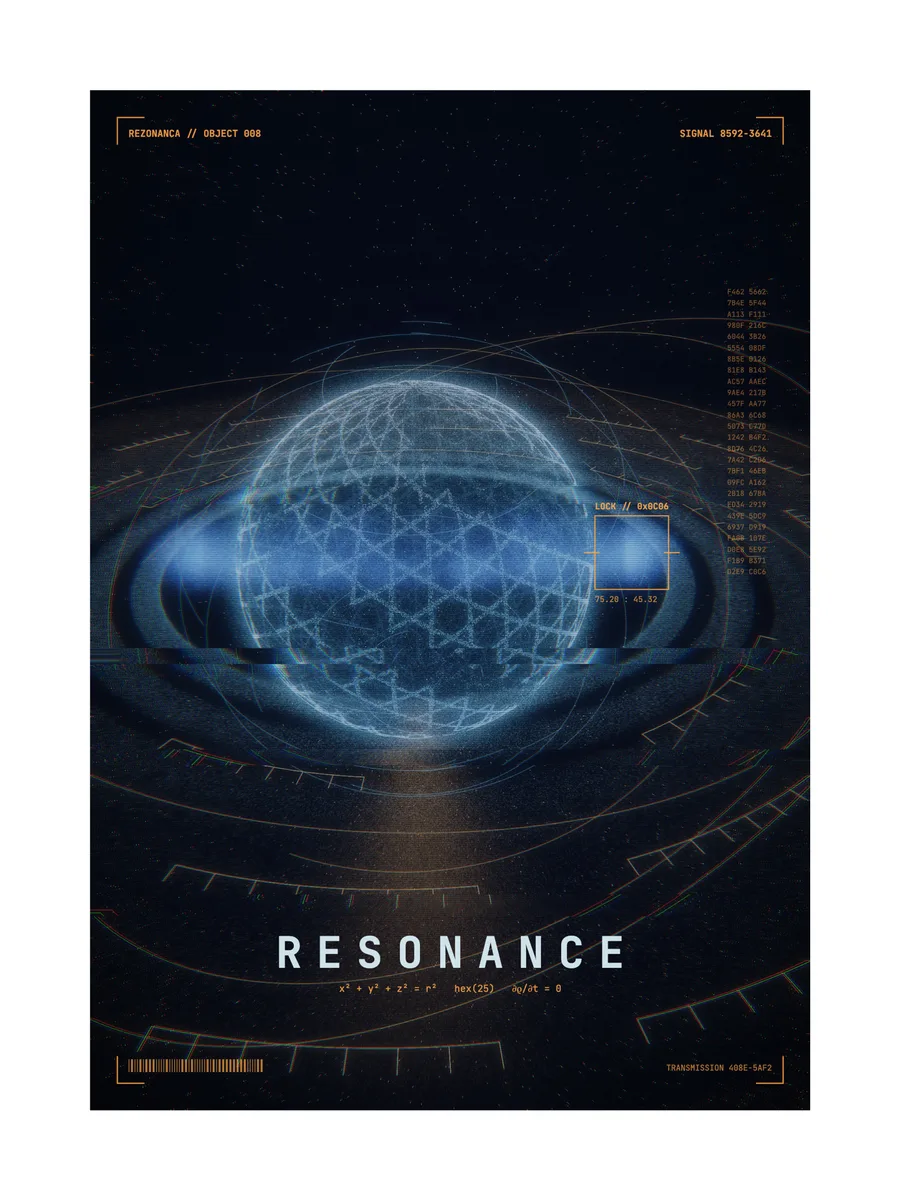
A neon planet inside a magenta ring, caught in an instrument's reticle while the signal flickers.

Colour
Format
Size

We only use your email to tell you about the sale. No spam.

About the piece

Worlds made of particles. Millions of points of light build a planet with a hexagonal shell, a ring of dust and orbits with moons, as seen by an instrument on a passing ship.

Drawn in code from seed
00010
Series
Objects
Variant
Object
Palette
Violet
Sizing

30 × 40 cm (12 × 16 in) or 45 × 60 cm (18 × 24 in), with a white border around the picture. Framed prints come in a black or natural wood frame (12 mm wide) with plexiglass, ready to hang.

Print & materials

Fine art matte paper (200 gsm) at 300 DPI, made to order. Every size is rendered natively - lines stay razor-sharp even at the largest size.

Shipping & payment

Free shipping worldwide. Every print is made to order within a few business days and shipped worldwide, packed to arrive flawless. You see the delivery estimate for your country when you order.

Also bought with

Canyon
Canyon from €39
Rössler
Rössler from €39

Fine art paper

200 gsm enhanced matte

Printed on thick uncoated art paper at 300 DPI. Rich colour, razor-sharp lines, no glare.

Real wood frames

Black or natural wood

Wooden frame, 22 mm deep, with plexiglass that is lighter and safer than glass. Arrives ready to hang.

Made to order

Free shipping worldwide

Each print is made for you when you order and packed to arrive flawless, wherever you are.

The story

The picture is built from millions of particles, like the Genesis effect in Star Trek II (1982), for which William Reeves invented particle systems. The reticle and data around the planet are the instrument layer: they show what the system is measuring.
MATHEMATICS

The maths behind the picture

Every piece is computed, not drawn. These are the real equations and numbers from the program that made this exact piece.

Equations
x² + y² + z² = r²x' = f·x / (z + d)L(p) = Σ wᵢ
Parameters
Seed
10
Camera
f = 1,25·min(W, H)
Measured while drawing
Particles
≈ 2 000 000
Layers
9

HISTORY

Where this idea comes from

  1. 1937

    Michael Goldberg describes polyhedra made of hexagons and a few pentagons, the meshes we still use to cover a sphere.

  2. 1954

    Buckminster Fuller patents the geodesic dome: a sphere built from a net of triangles and hexagons.

  3. 1983

    William Reeves publishes his paper on particle systems, made for the "Genesis" effect in Star Trek II: a planet exploding into hundreds of thousands of points.

  4. today

    Film titles and science-fiction interfaces build worlds from particles and layers of data. This series does it in code, point by point.