The story
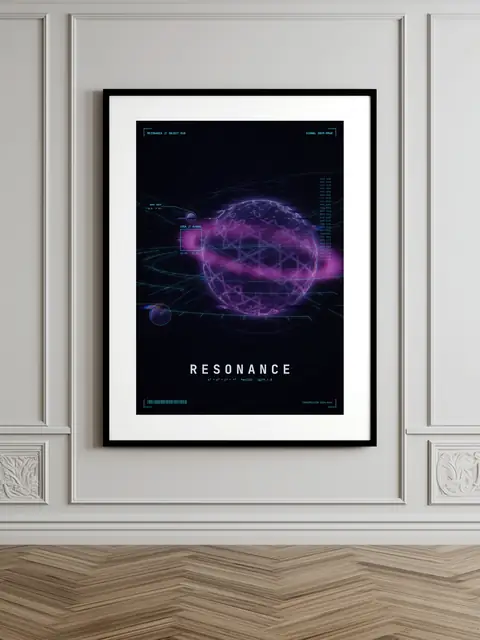
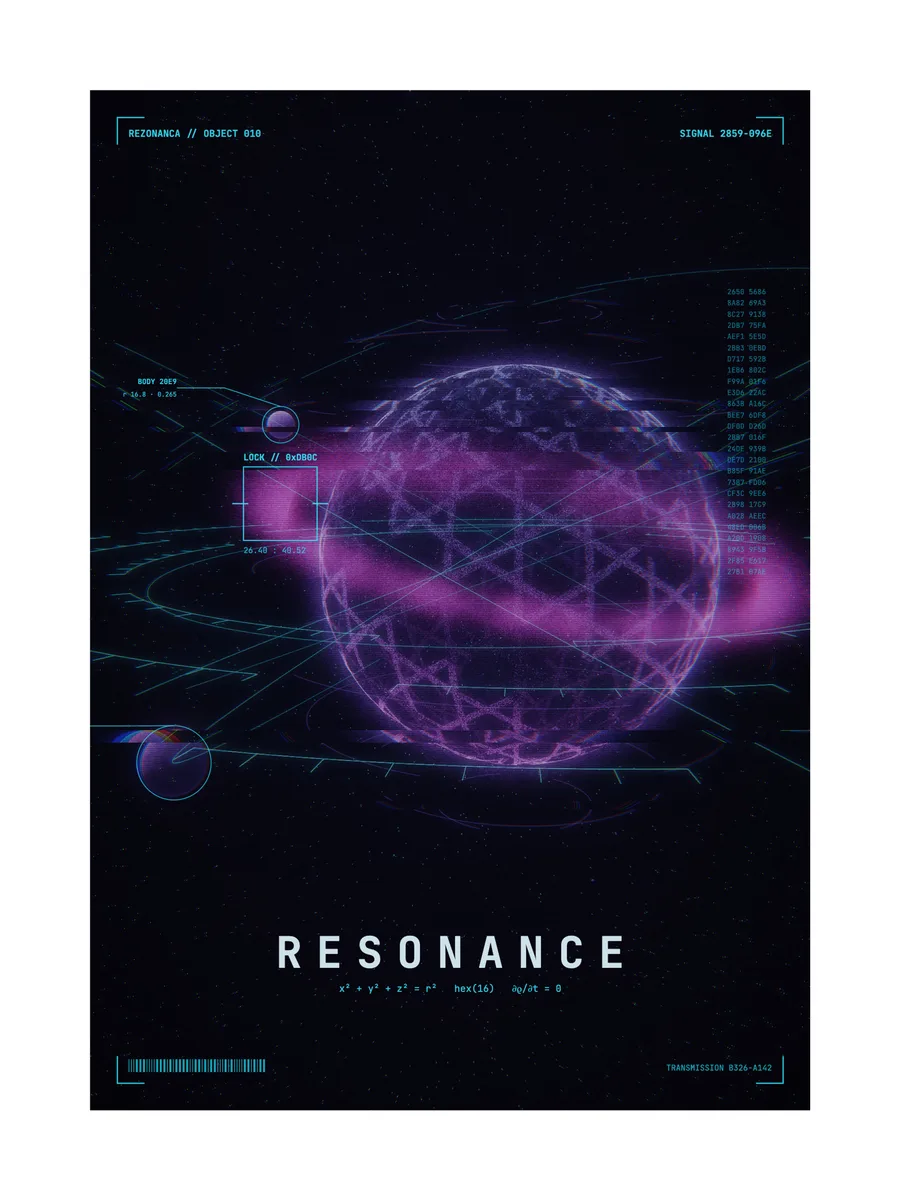
A sphere cannot be covered with hexagons alone: it always takes exactly twelve pentagons, as on a football. The rule holds for Goldberg polyhedra of 1937 and for the shells of many viruses.
200 gsm enhanced matte
Printed on thick uncoated art paper at 300 DPI. Rich colour, razor-sharp lines, no glare.
Black or natural wood
Wooden frame, 22 mm deep, with plexiglass that is lighter and safer than glass. Arrives ready to hang.
Free shipping worldwide
Each print is made for you when you order and packed to arrive flawless, wherever you are.
The story
A sphere cannot be covered with hexagons alone: it always takes exactly twelve pentagons, as on a football. The rule holds for Goldberg polyhedra of 1937 and for the shells of many viruses.
MATHEMATICS
Every piece is computed, not drawn. These are the real equations and numbers from the program that made this exact piece.
x² + y² + z² = r²x' = f·x / (z + d)L(p) = Σ wᵢ
HISTORY
Michael Goldberg describes polyhedra made of hexagons and a few pentagons, the meshes we still use to cover a sphere.
Buckminster Fuller patents the geodesic dome: a sphere built from a net of triangles and hexagons.
William Reeves publishes his paper on particle systems, made for the "Genesis" effect in Star Trek II: a planet exploding into hundreds of thousands of points.
Film titles and science-fiction interfaces build worlds from particles and layers of data. This series does it in code, point by point.
Follow along


Explore other series