The story
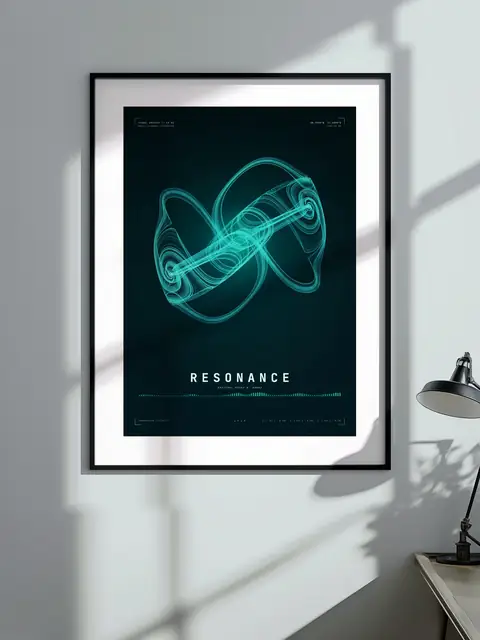
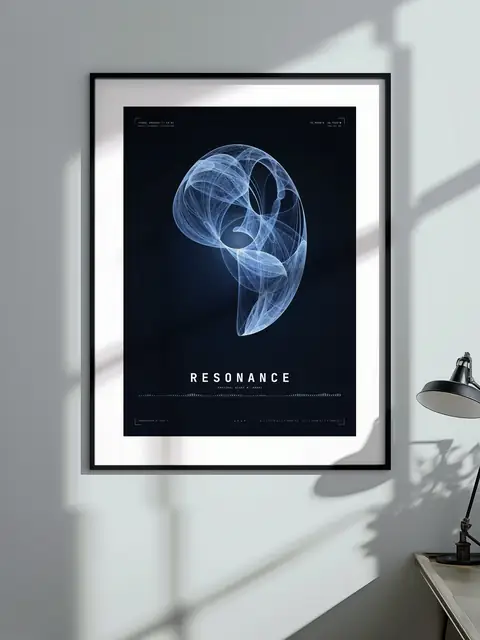
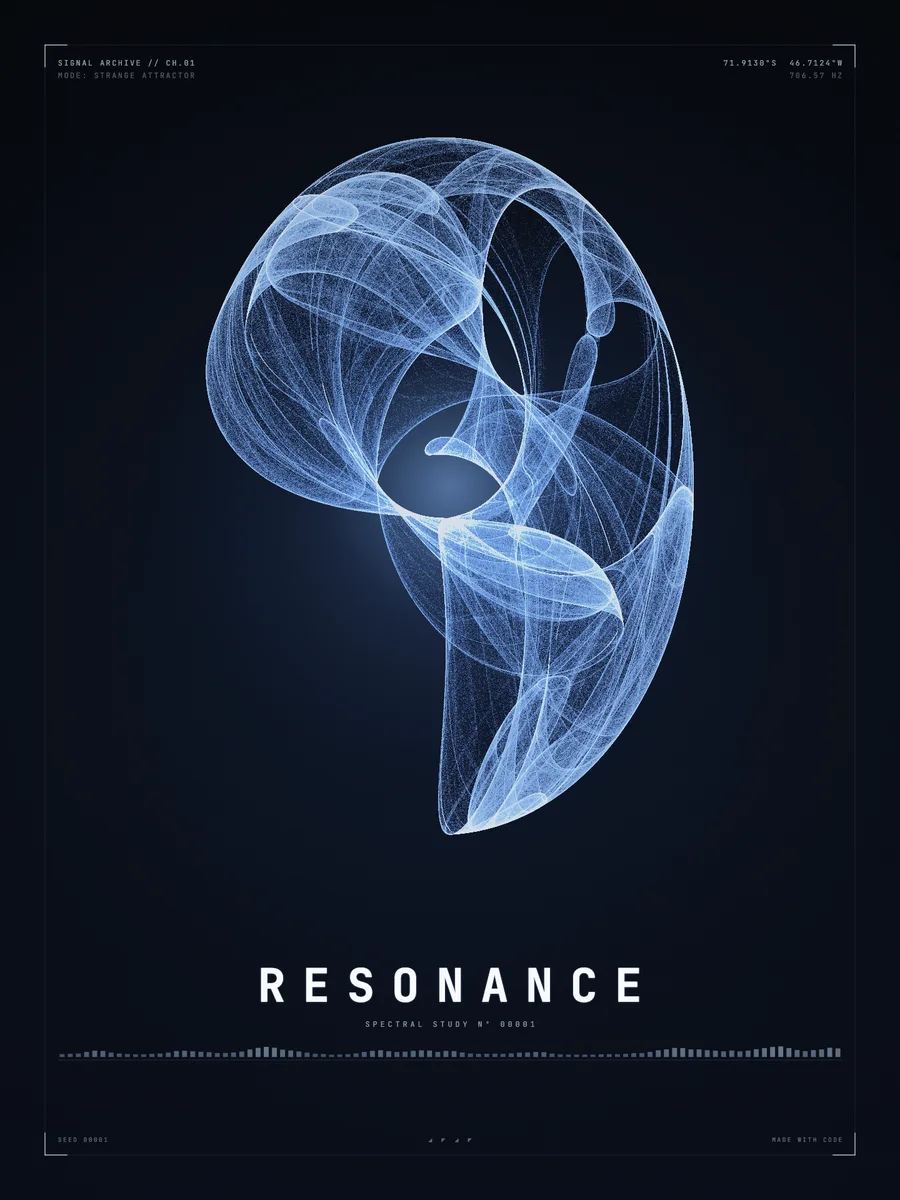
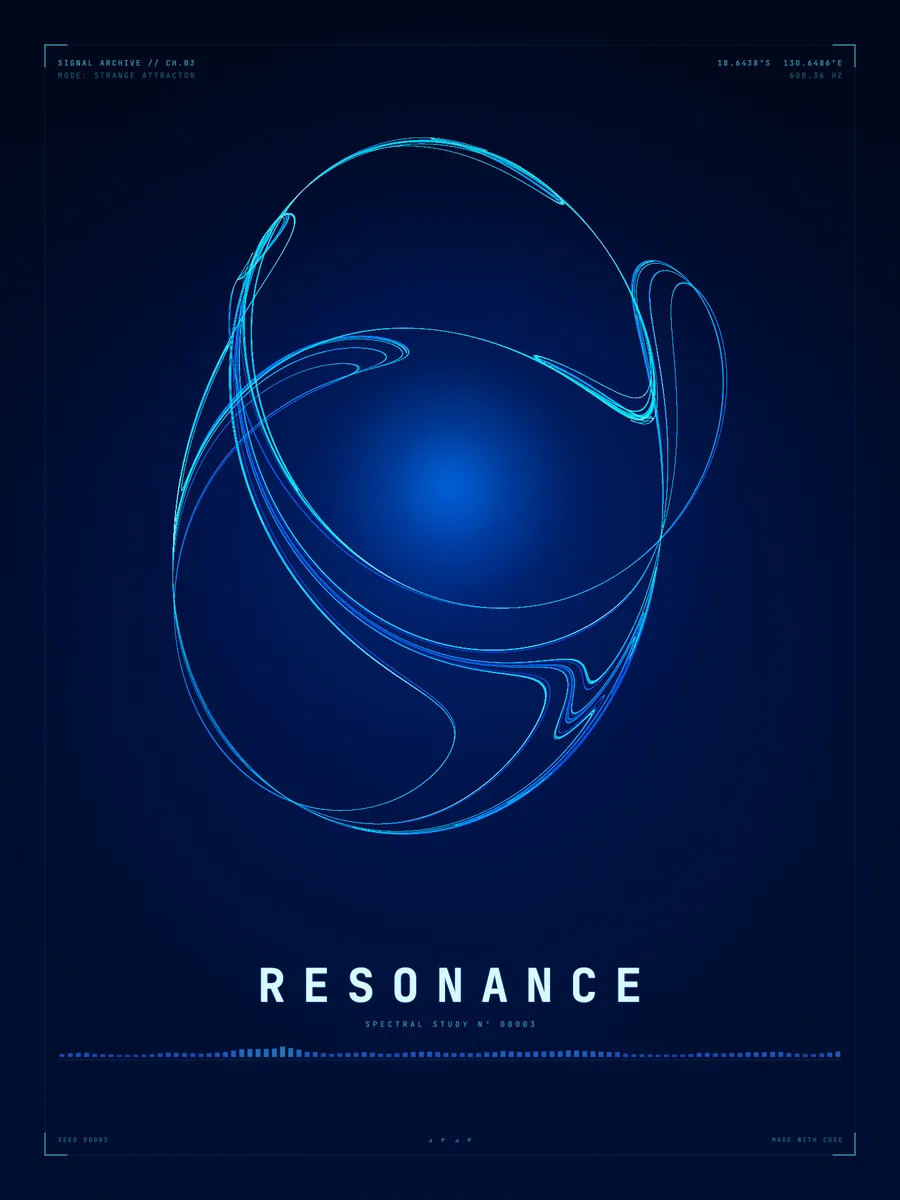
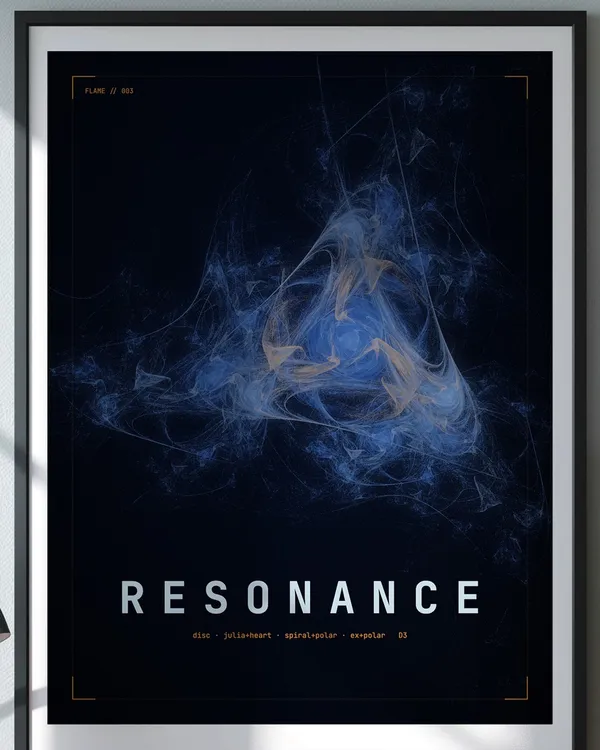
Named after Arne Halvorsen, the system reached chaos textbooks through physicist Julien Sprott's catalogue. Each variable pushes the next in a circle, x on y, y on z, z back on x, so the shape has threefold symmetry, like a clover leaf.
200 gsm enhanced matte
Printed on thick uncoated art paper at 300 DPI. Rich colour, razor-sharp lines, no glare.
Black or natural wood
Wooden frame, 22 mm deep, with plexiglass that is lighter and safer than glass. Arrives ready to hang.
Free shipping worldwide
Each print is made for you when you order and packed to arrive flawless, wherever you are.
The story
Named after Arne Halvorsen, the system reached chaos textbooks through physicist Julien Sprott's catalogue. Each variable pushes the next in a circle, x on y, y on z, z back on x, so the shape has threefold symmetry, like a clover leaf.
MATHEMATICS
Every piece is computed, not drawn. These are the real equations and numbers from the program that made this exact piece.
Read the guide: What is a strange attractor? →dx/dt = −ax − 4y − 4z − y²dy/dt = −ay − 4z − 4x − z²dz/dt = −az − 4x − 4y − x²
λ = 0.694 > 0 means chaos: two paths starting 0.00000001 apart separate by a factor of e^(0.694·t). Their distance doubles every 1 time units, so very soon they have nothing in common.
HISTORY
Henri Poincaré, working on the three-body problem, first glimpses chaos: a tiny change at the start changes the whole outcome.
Edward Lorenz at MIT reduces a model of the atmosphere to three equations and finds that weather cannot be predicted far ahead.
David Ruelle and Floris Takens coin the term "strange attractor".
Lorenz's talk "Does the flap of a butterfly's wings in Brazil set off a tornado in Texas?" gives the butterfly effect its name.
Lorenz's equations describe warm air rising, cooling and falling, the same motion that builds storm clouds in summer.
Follow along

Explore other series