MATHEMATICS
The maths behind the picture
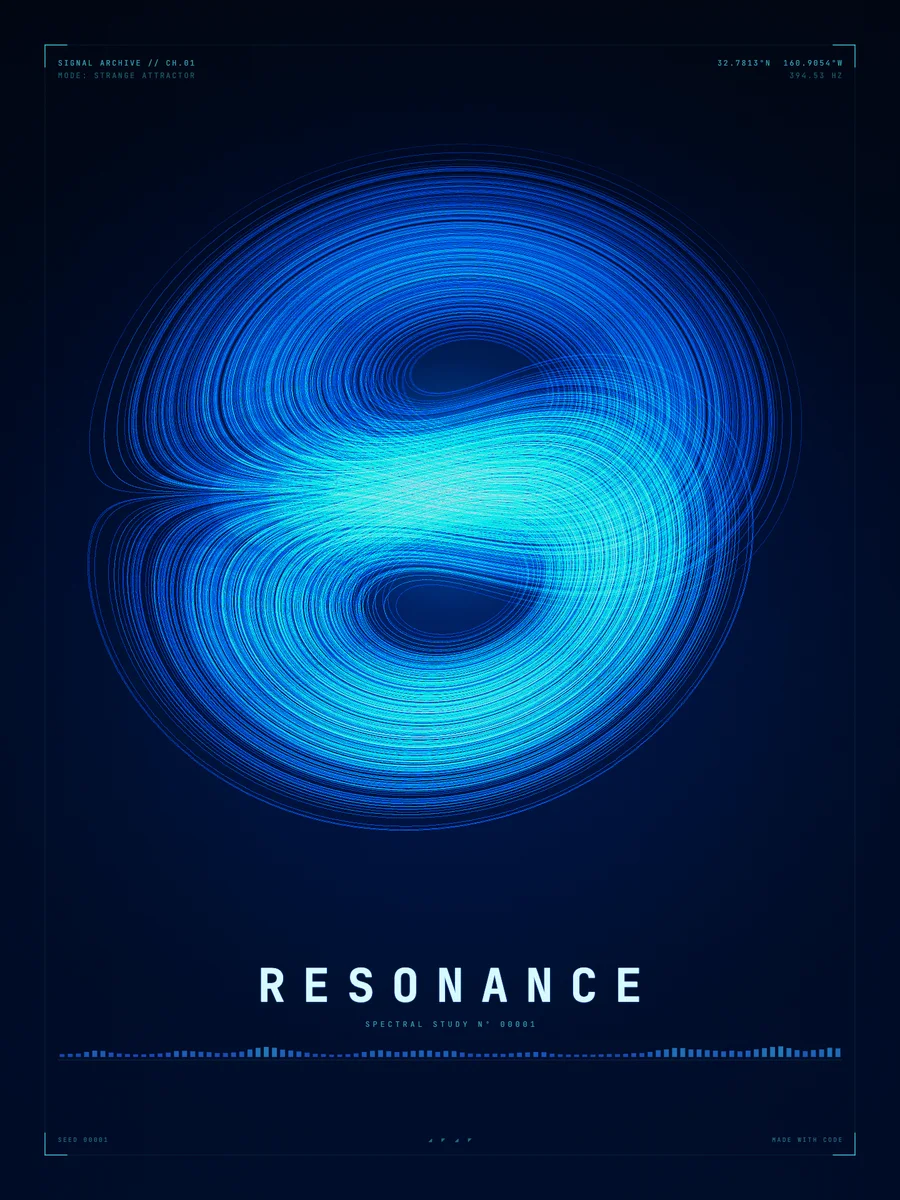
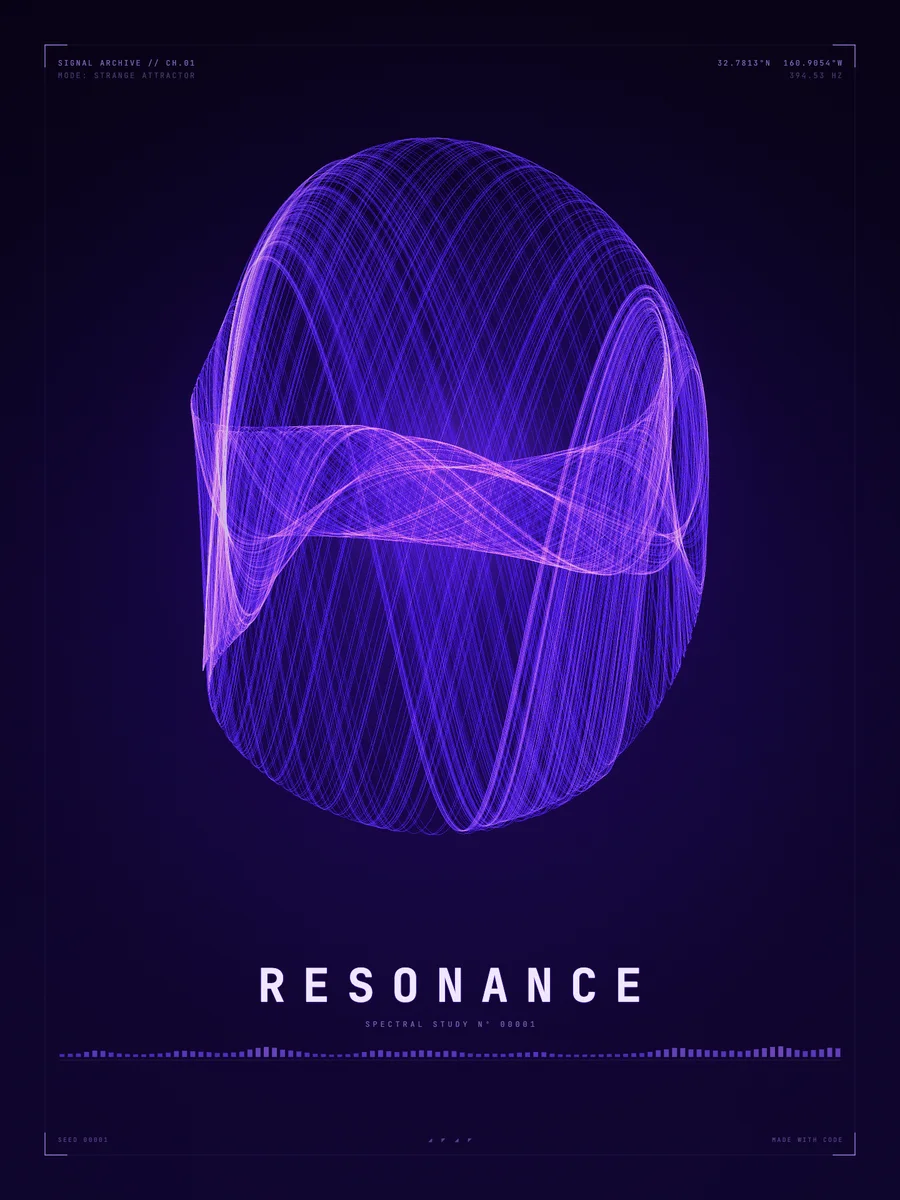
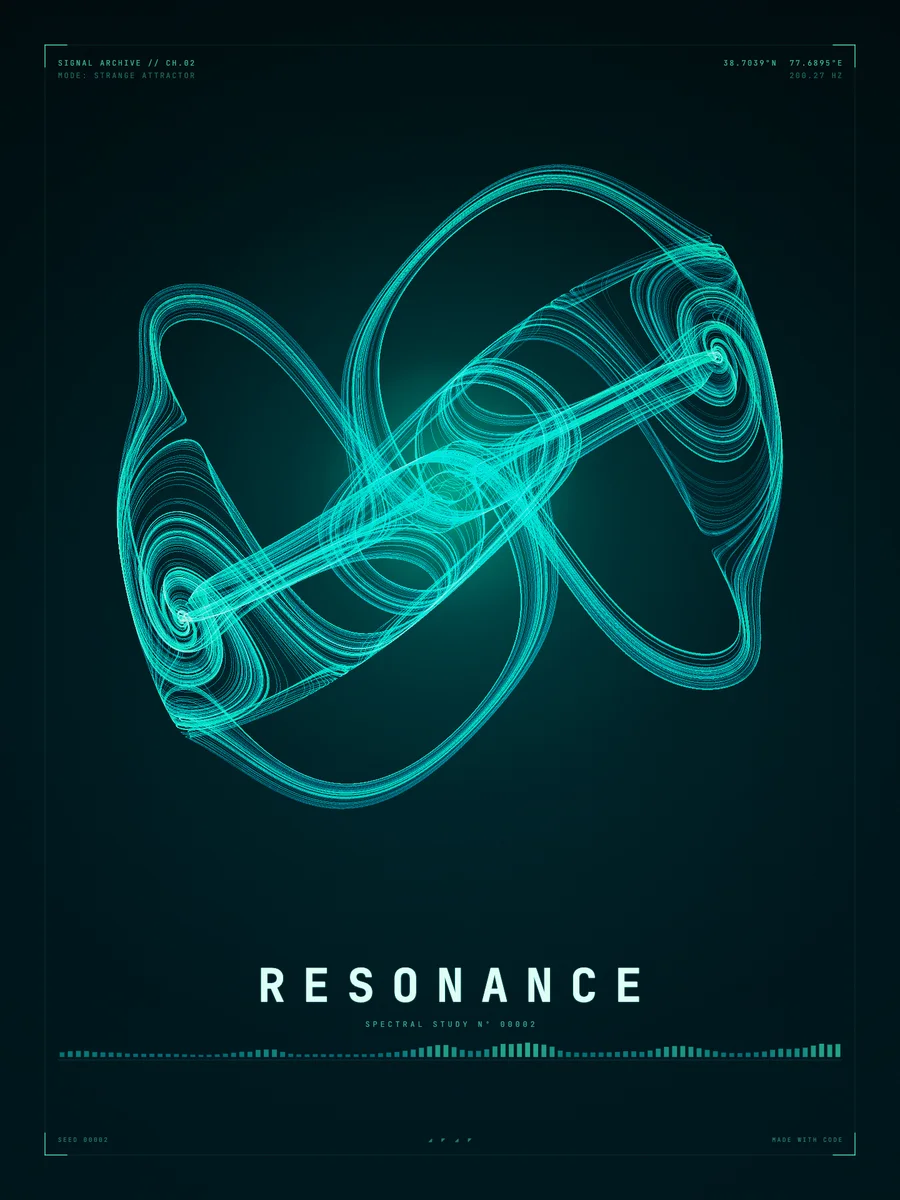
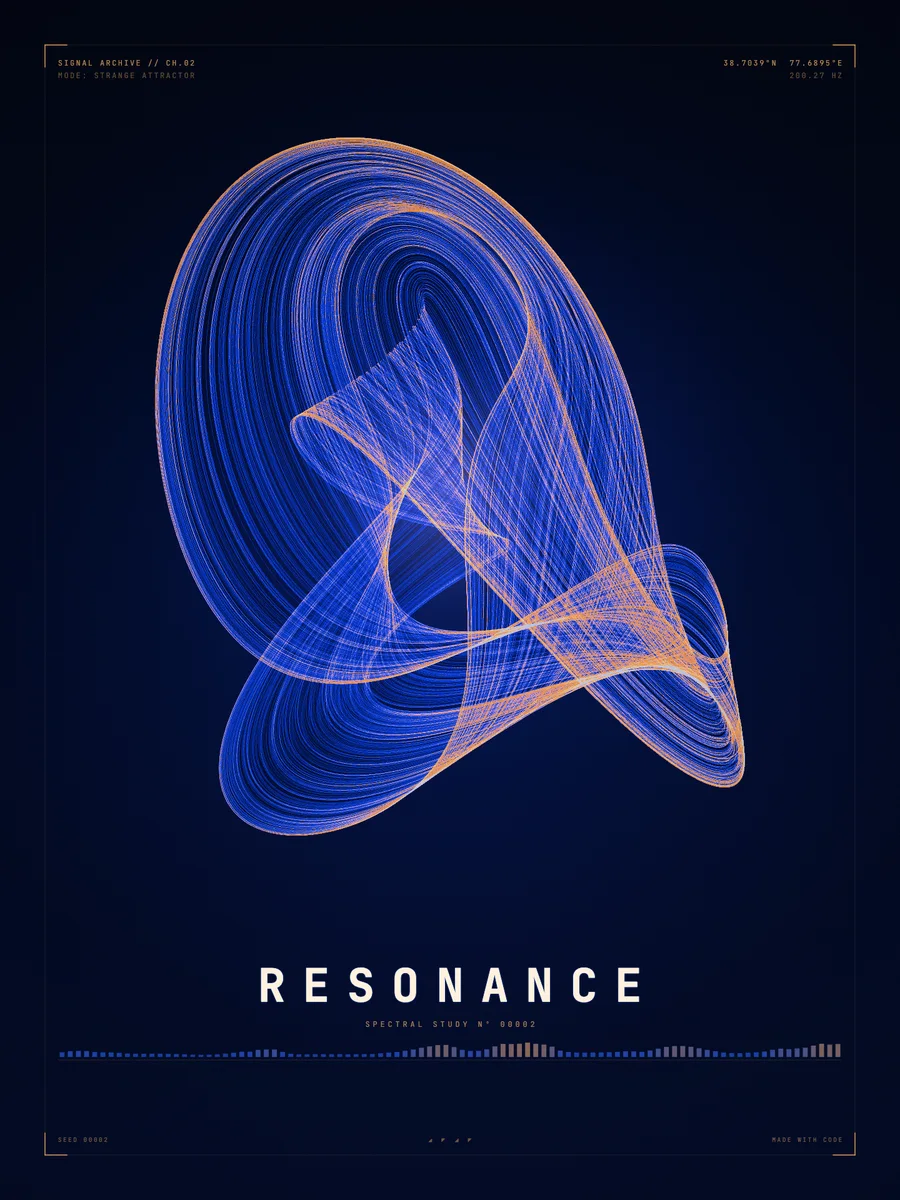
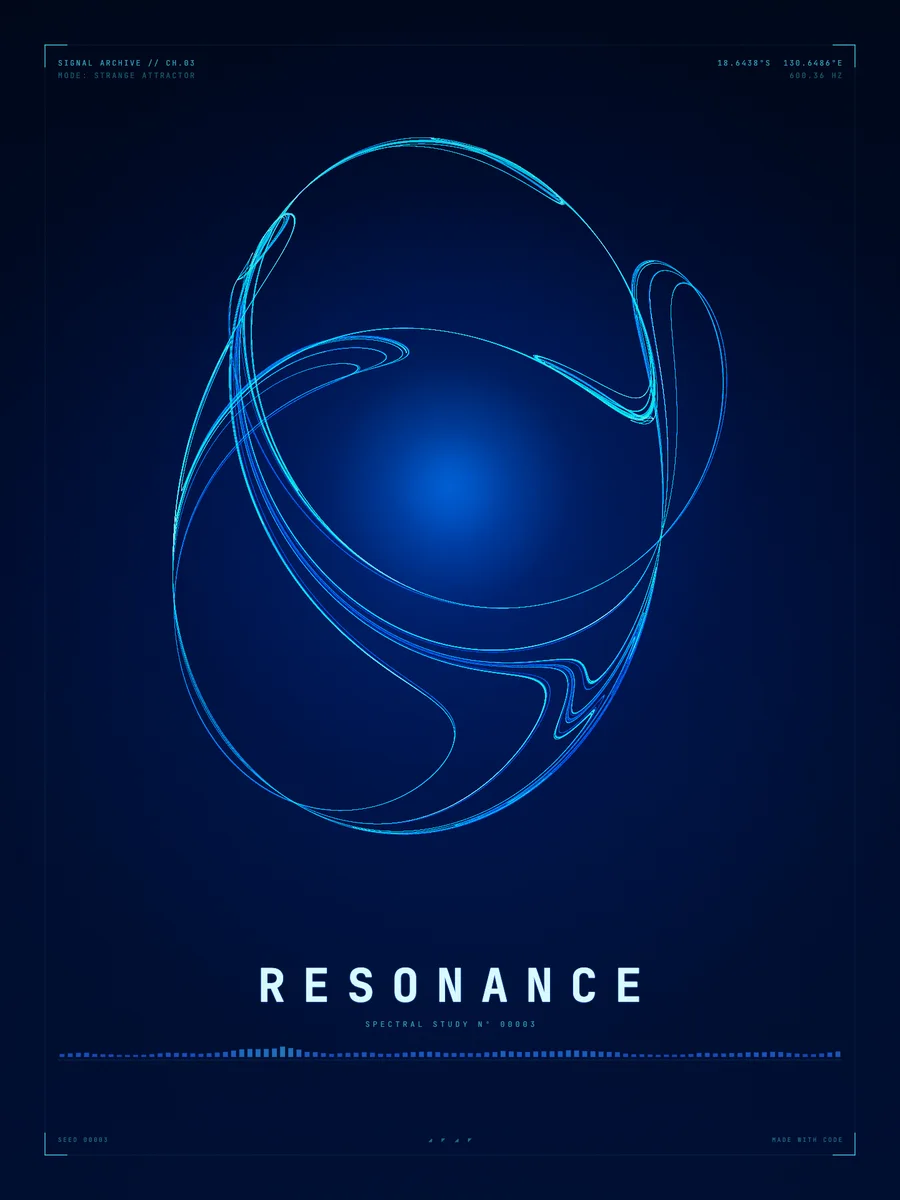
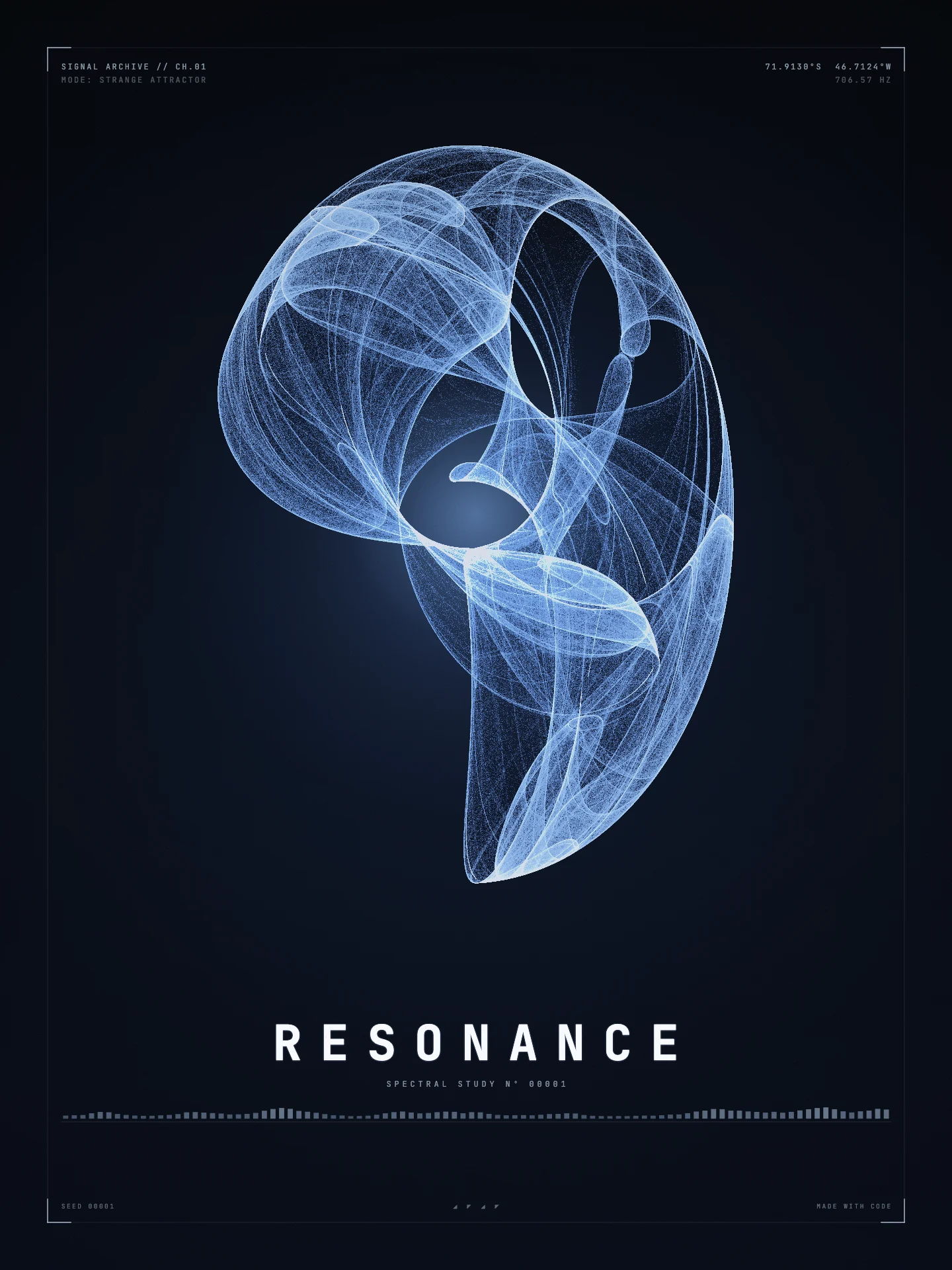
Every piece is computed, not drawn. These are the real equations and numbers from the program that made this exact piece.
Equations
xₙ₊₁ = sin(a·yₙ) + c·cos(a·xₙ)yₙ₊₁ = sin(b·xₙ) + d·cos(b·yₙ)Parameters
- System
- Clifford
- a
- 1.7
- b
- 1.7
- c
- 0.6
- d
- 1.2
Measured while drawing
- Iterations
- 3,372,754
- Lyapunov exponent λ
- 0.349
- Coverage (%)
- 25.4
What these numbers mean
λ = 0.349 per iteration: each new point multiplies any error about 1.42 times. That's why the shape can only be drawn step by step, never predicted ahead.
HISTORY
Where this idea comes from
Attractors
- 1890
Henri Poincaré, working on the three-body problem, first glimpses chaos: a tiny change at the start changes the whole outcome.
- 1963
Edward Lorenz at MIT reduces a model of the atmosphere to three equations and finds that weather cannot be predicted far ahead.
- 1971
David Ruelle and Floris Takens coin the term "strange attractor".
- 1972
Lorenz's talk "Does the flap of a butterfly's wings in Brazil set off a tornado in Texas?" gives the butterfly effect its name.