SERIES A // STRANGE ATTRACTORS
Атрактори · Attractors
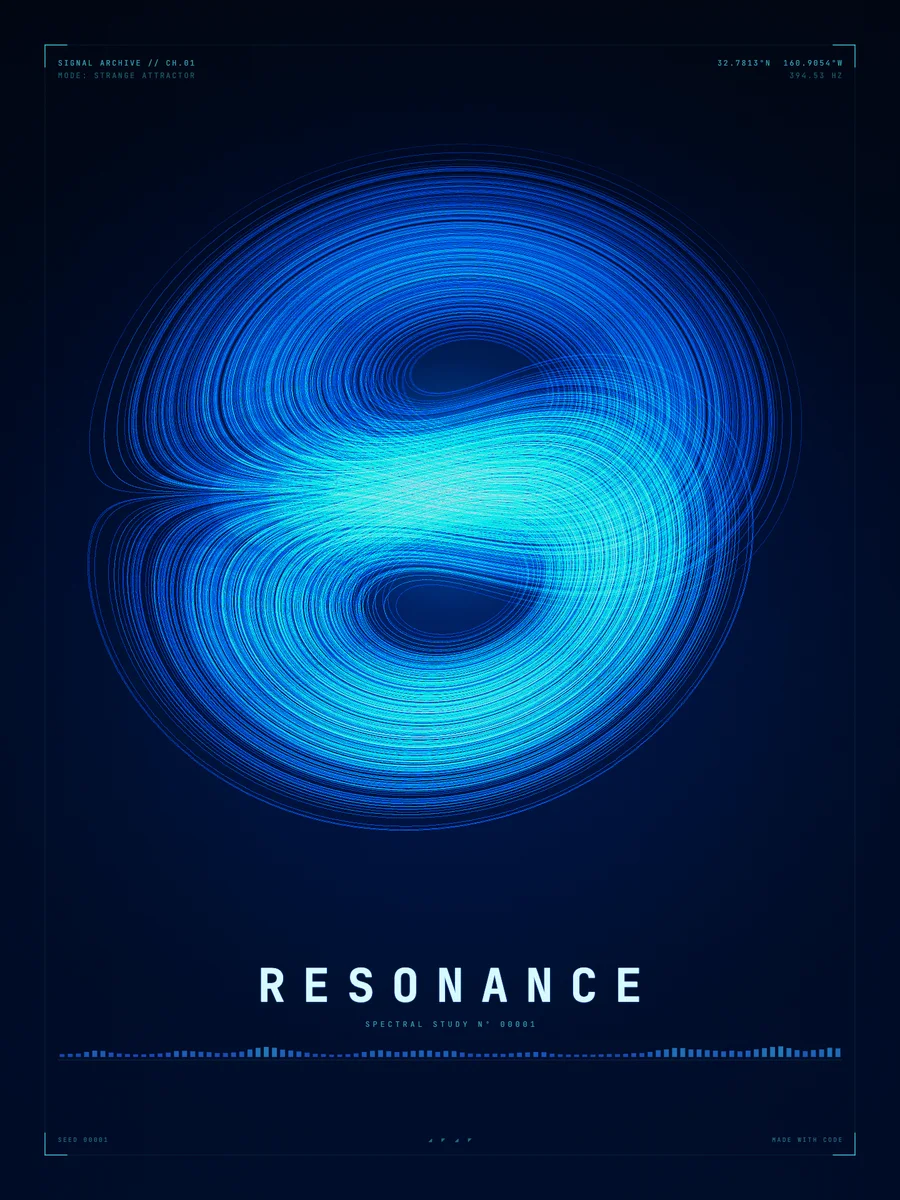
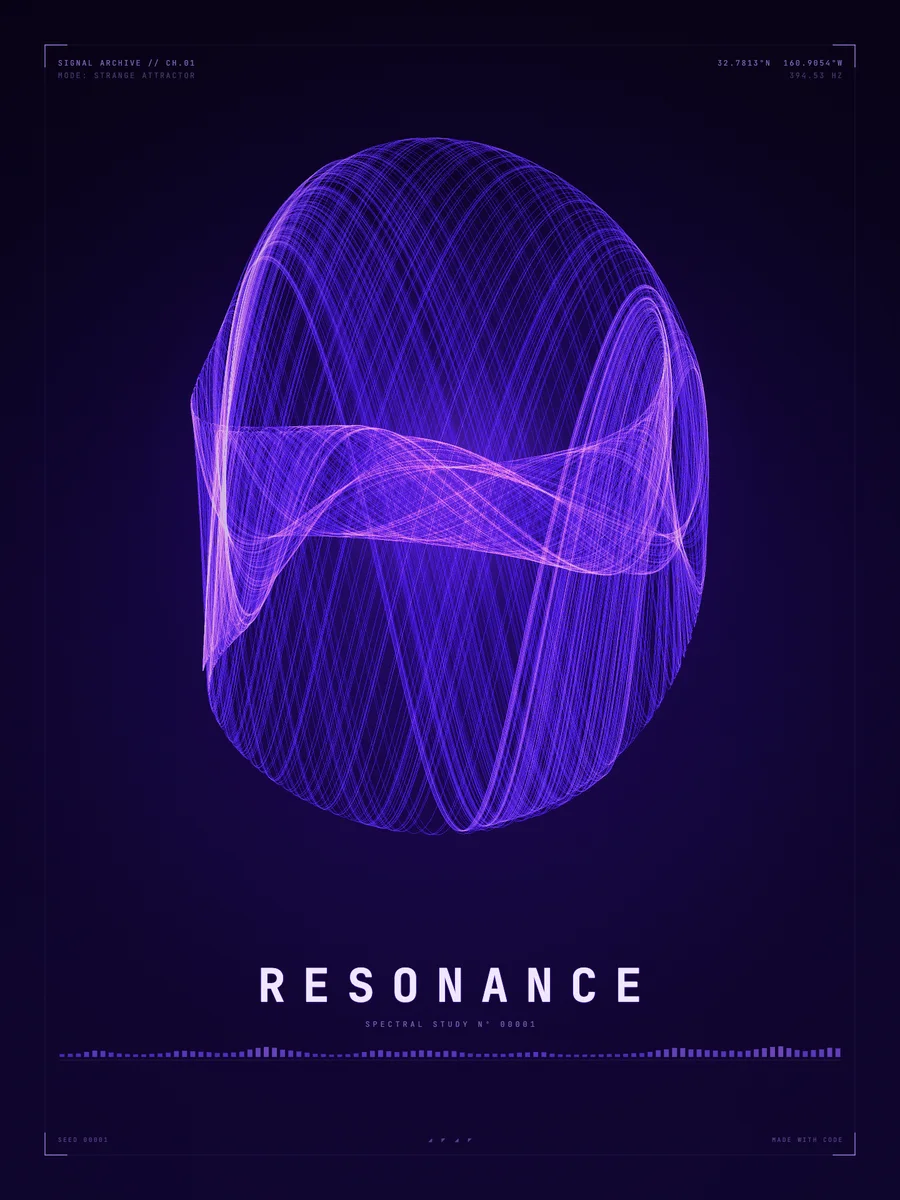
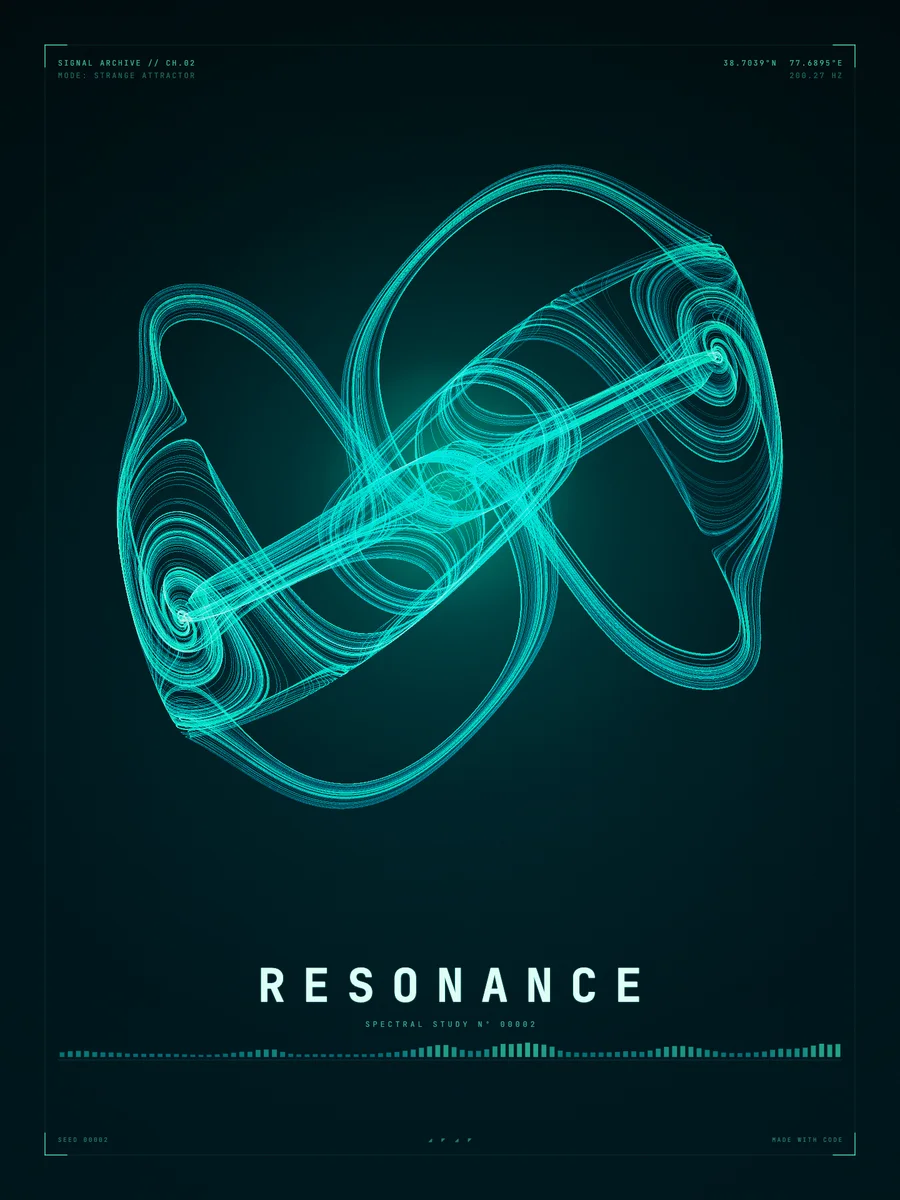
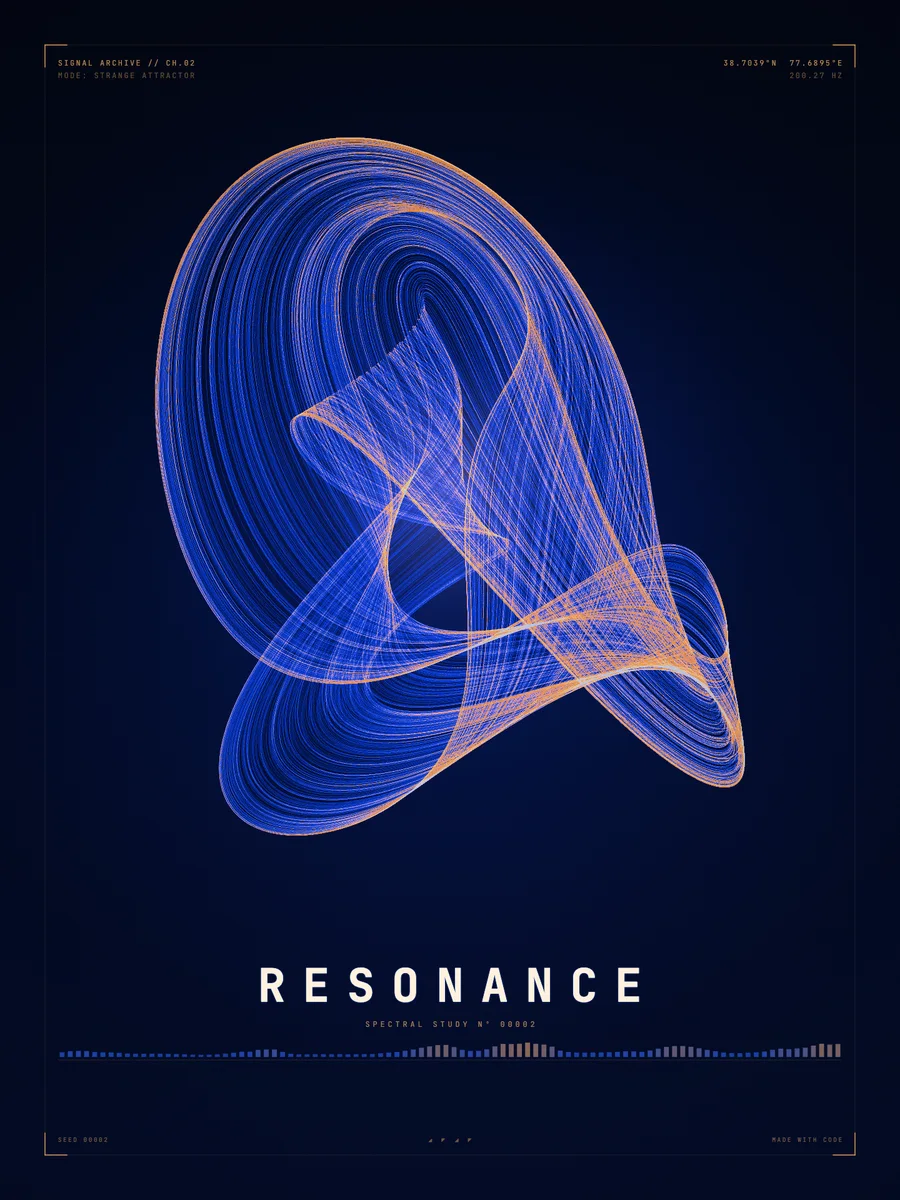
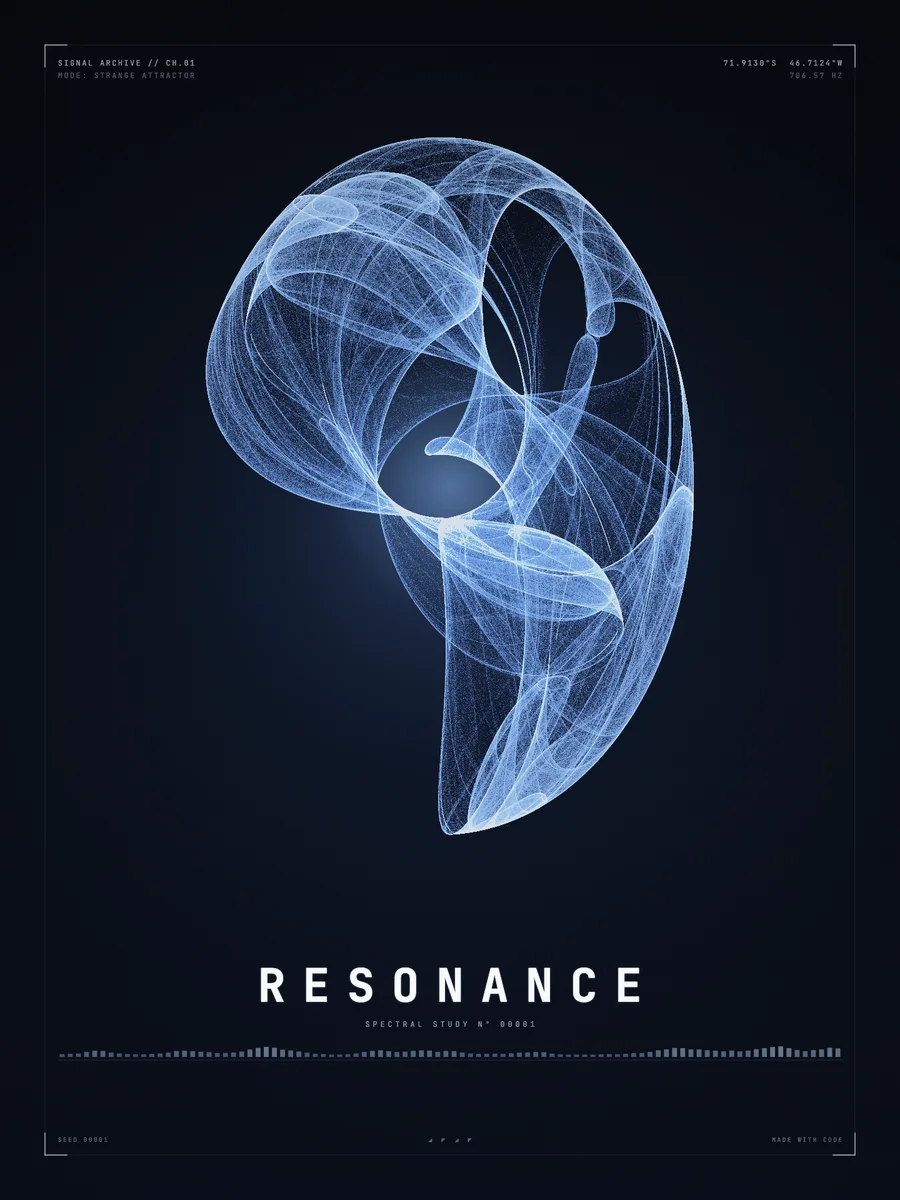
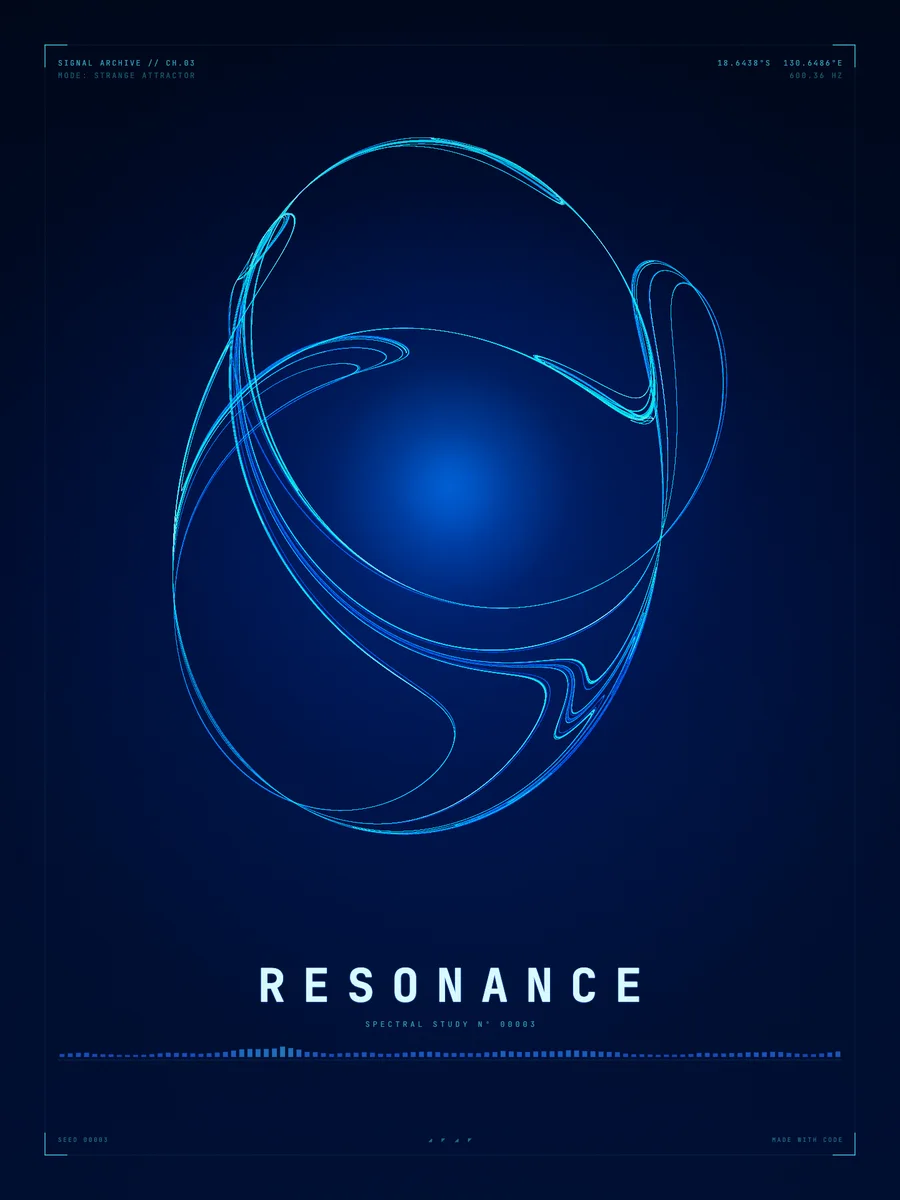
Chaos has a shape. Each picture is the path of a single point through space, computed hundreds of thousands of times by equations that never let the path repeat.
MATHEMATICS
The maths behind the picture
- 01
What an attractor is
Imagine a point that moves by a rule: its velocity depends only on where it is. Wherever it starts, it soon falls into a particular shape in space and never leaves it. That shape is the attractor.
dx/dt = f(x) - 02
Why "strange"
On a strange attractor the path never repeats, yet it stays on the same shape. Two points that start almost together quickly drift apart. This is the butterfly effect, which Edward Lorenz discovered in 1963 in a simplified model of the atmosphere.
|δ(t)| ≈ |δ₀|·e^(λt), λ > 0 - 03
How the picture forms
The program solves the equations with the fourth-order Runge-Kutta method hundreds of thousands of times and records every step. The light in the picture is density: where the path passes more often, it glows brighter. The two-equation attractors (Clifford, De Jong) aren't solved but iterated: each point is computed from the previous one.
xₙ₊₁ = sin(a·yₙ) + c·cos(a·xₙ)
HISTORY
Where this idea comes from
Attractors
- 1890
Henri Poincaré, working on the three-body problem, first glimpses chaos: a tiny change at the start changes the whole outcome.
- 1963
Edward Lorenz at MIT reduces a model of the atmosphere to three equations and finds that weather cannot be predicted far ahead.
- 1971
David Ruelle and Floris Takens coin the term "strange attractor".
- 1972
Lorenz's talk "Does the flap of a butterfly's wings in Brazil set off a tornado in Texas?" gives the butterfly effect its name.