MATHEMATICS
The maths behind the picture
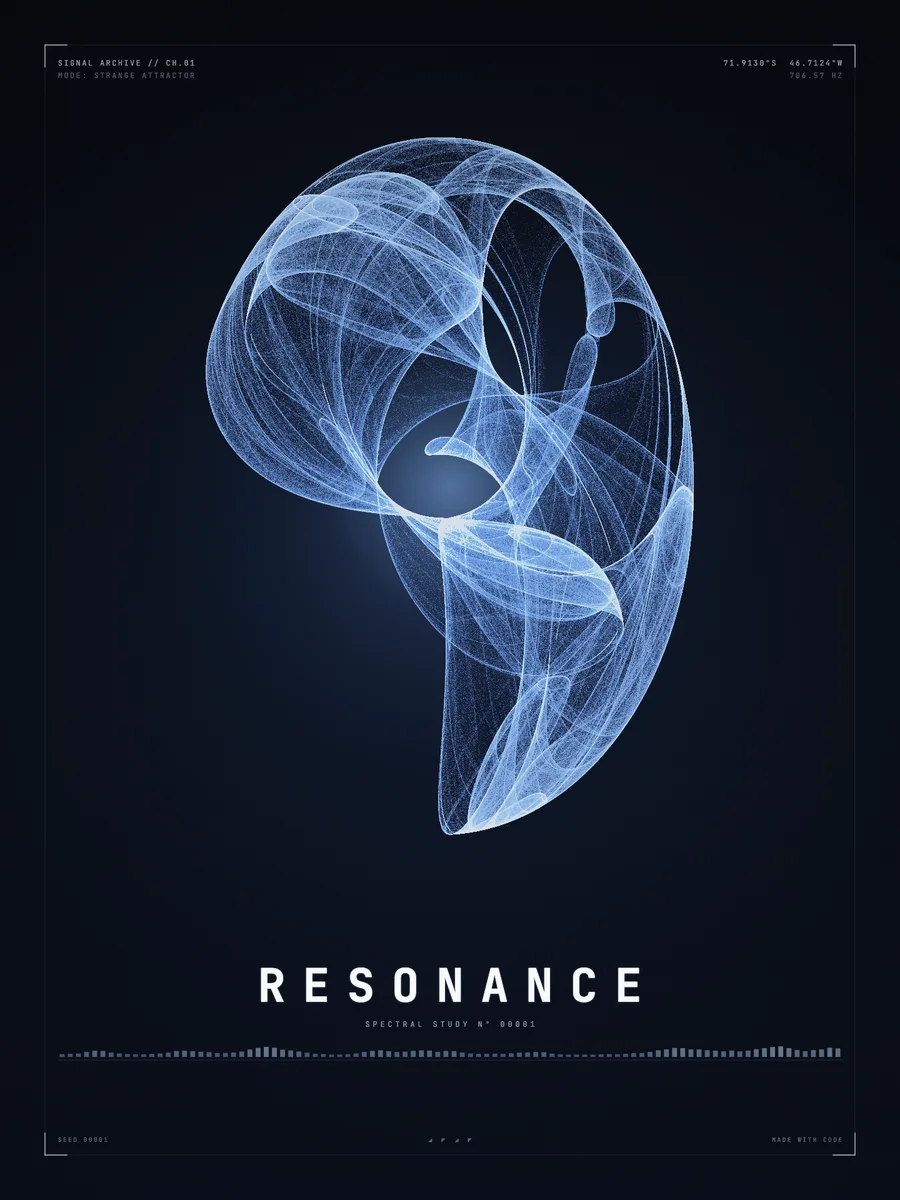
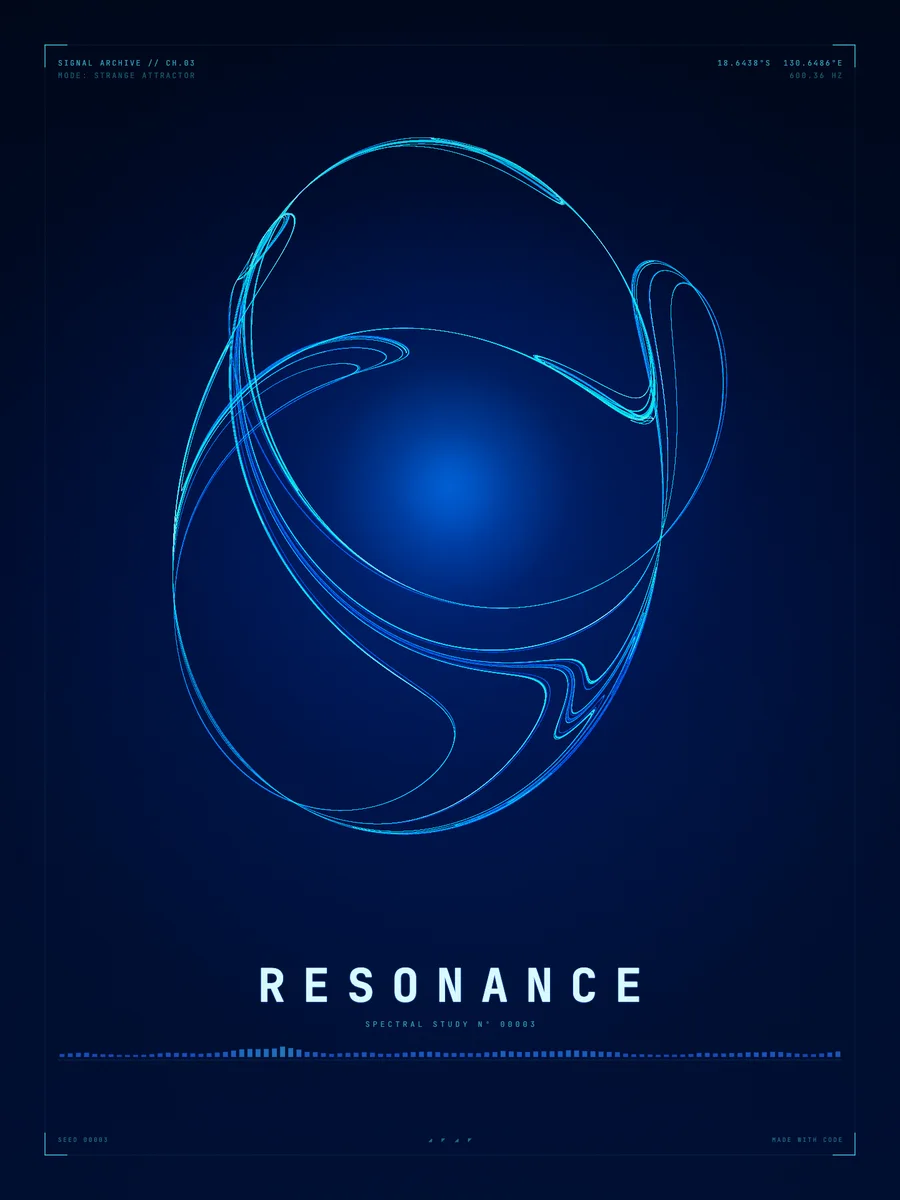
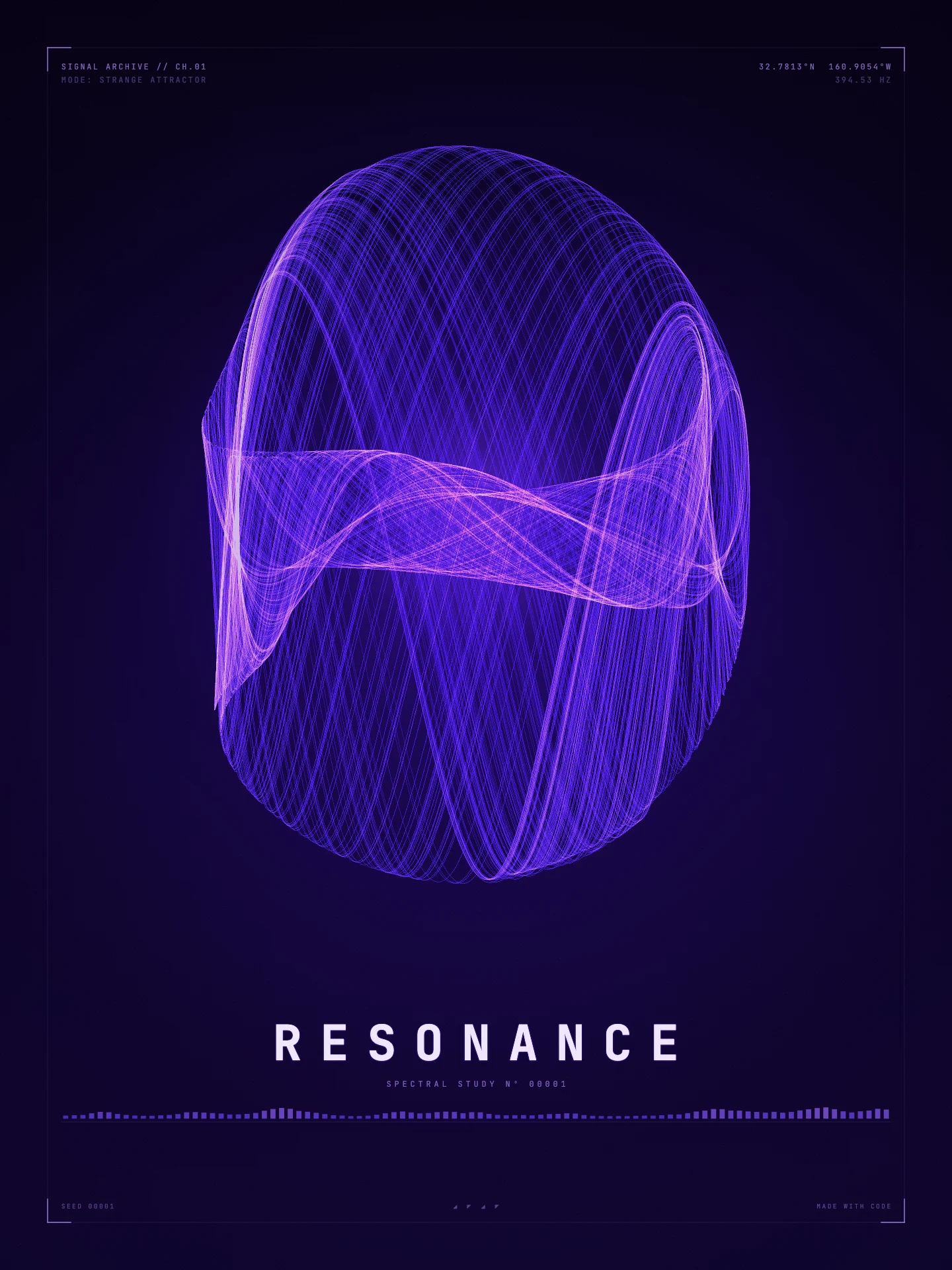
Every piece is computed, not drawn. These are the real equations and numbers from the program that made this exact piece.
dx/dt = (z − b)x − dydy/dt = dx + (z − b)ydz/dt = c + az − z³/3 − (x² + y²)(1 + ez) + fzx³- System
- Aizawa
- a
- 0.95
- b
- 0.7
- c
- 0.6
- d
- 3.5
- e
- 0.25
- f
- 0.1
- Start point
- 1.204, 0.204, 0.099
- Time step
- 0.006
- Integration steps
- 300,000
- Method
- RK4
- Lyapunov exponent λ
- 0.088
- View angle
- 85.1° / -13.5° / 0.2°
- Coverage (%)
- 30.3
λ = 0.088 > 0 means chaos: two paths starting 0.00000001 apart separate by a factor of e^(0.088·t). Their distance doubles every 7.88 time units, so very soon they have nothing in common.
HISTORY
Where this idea comes from
Attractors
- 1890
Henri Poincaré, working on the three-body problem, first glimpses chaos: a tiny change at the start changes the whole outcome.
- 1963
Edward Lorenz at MIT reduces a model of the atmosphere to three equations and finds that weather cannot be predicted far ahead.
- 1971
David Ruelle and Floris Takens coin the term "strange attractor".
- 1972
Lorenz's talk "Does the flap of a butterfly's wings in Brazil set off a tornado in Texas?" gives the butterfly effect its name.