SERIES B // THE SET z² + c
Манделброт · Mandelbrot
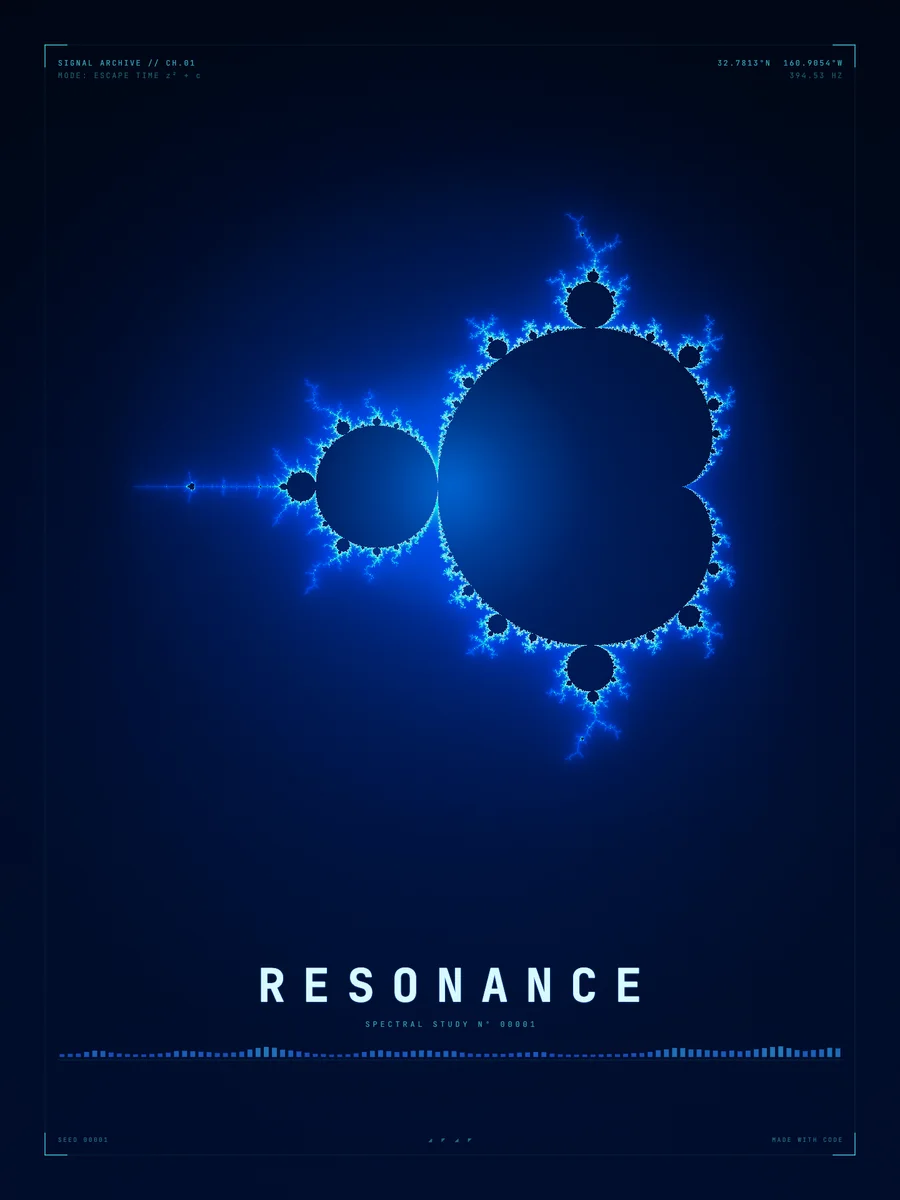
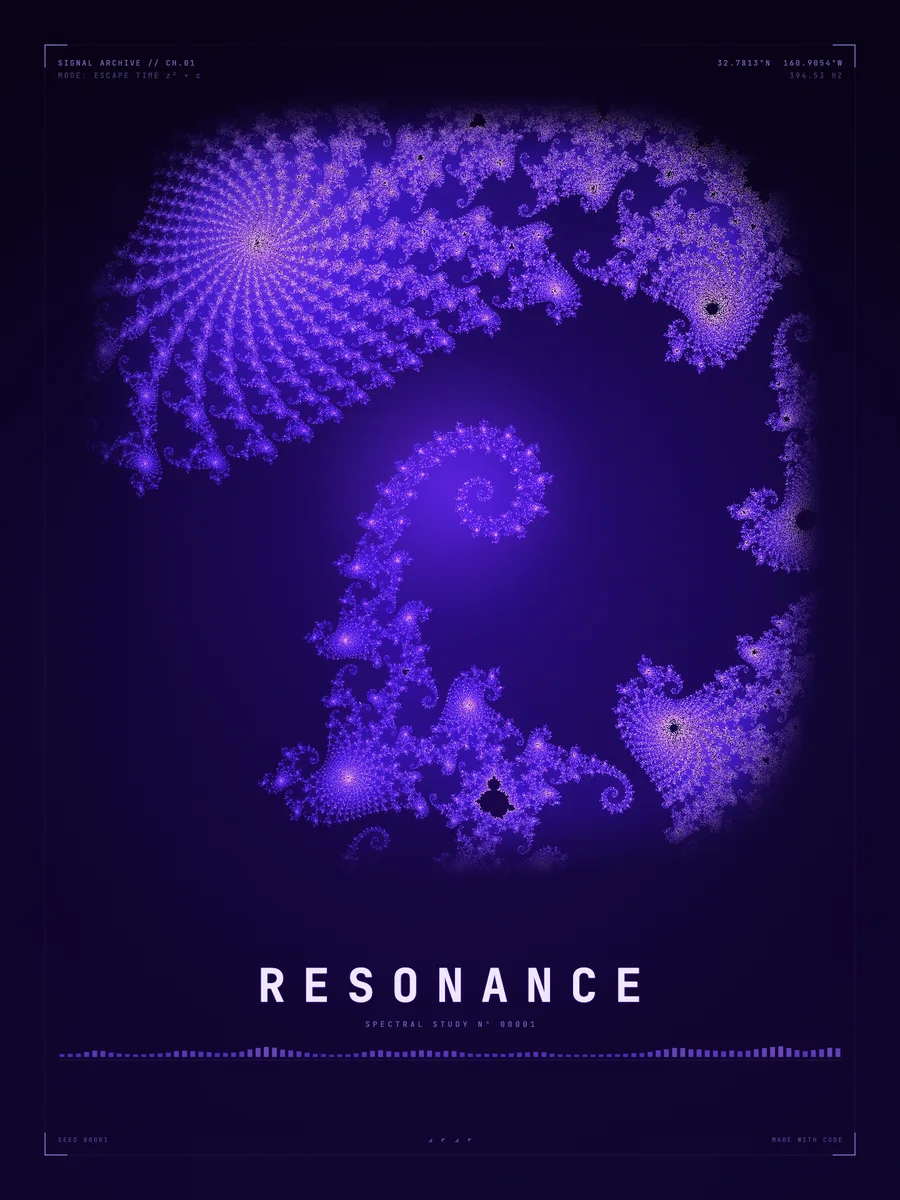
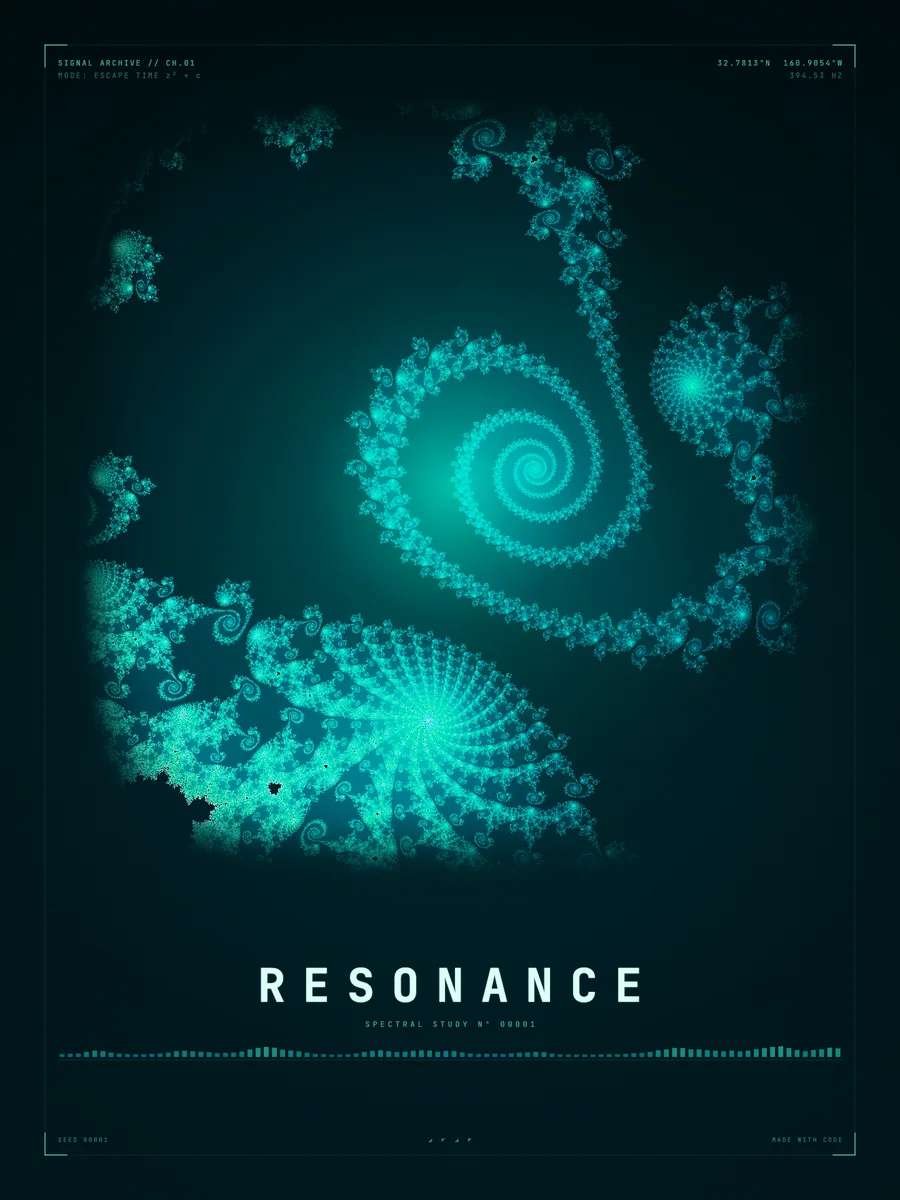
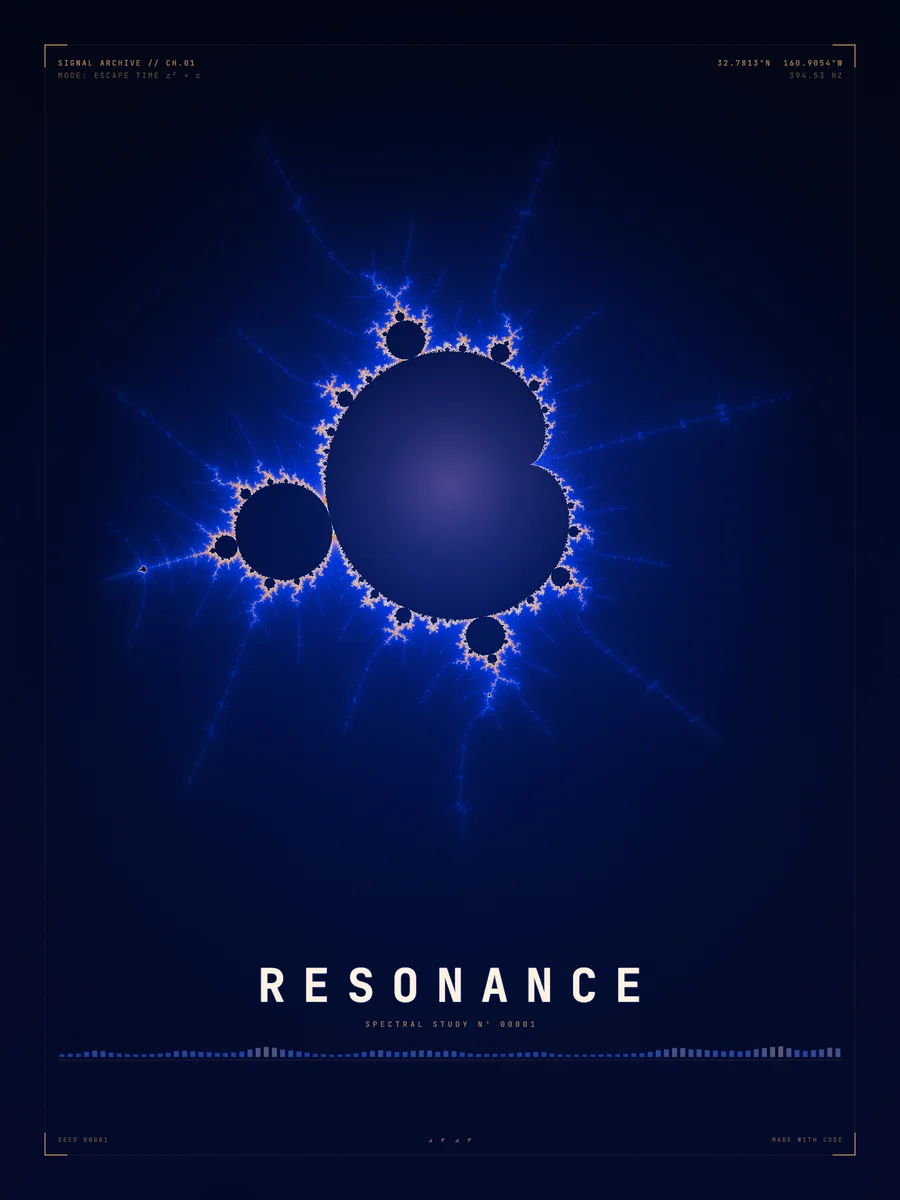
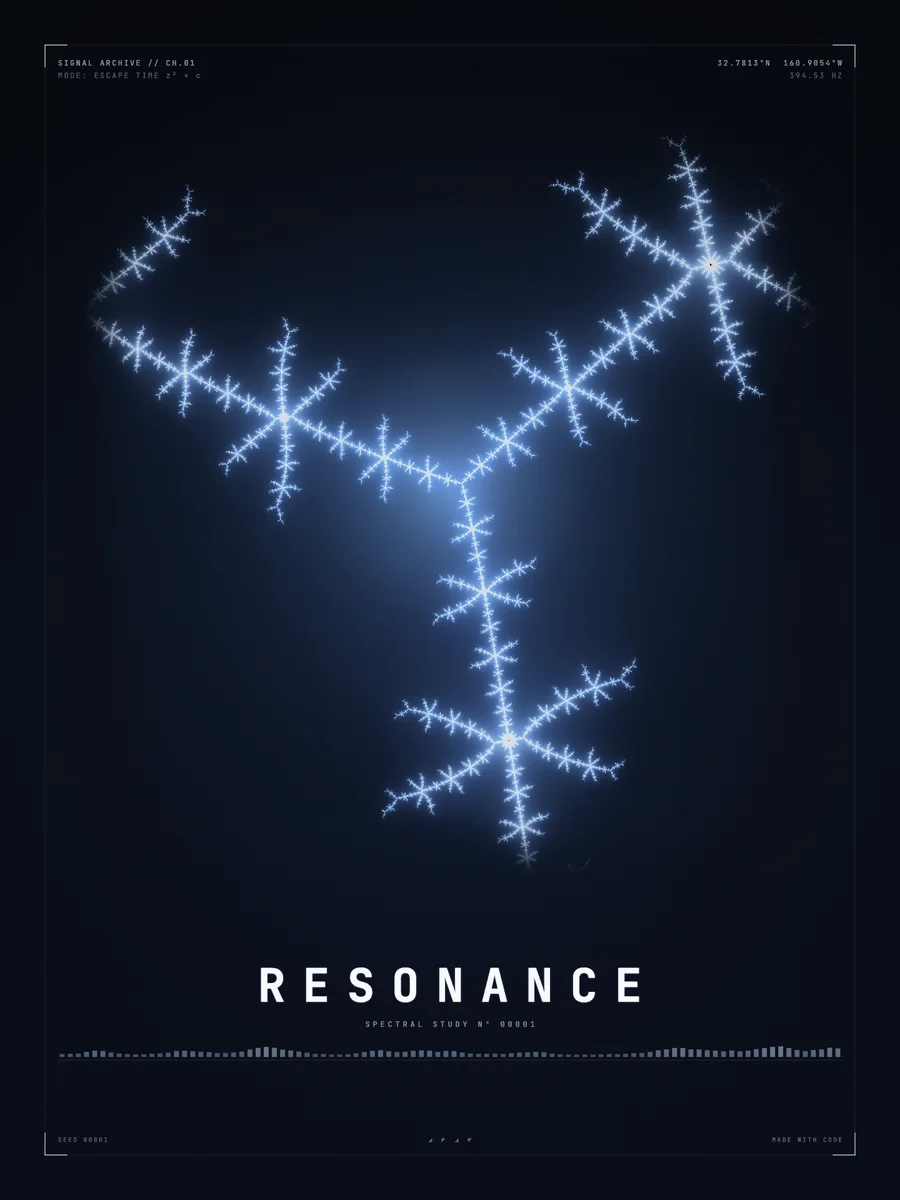
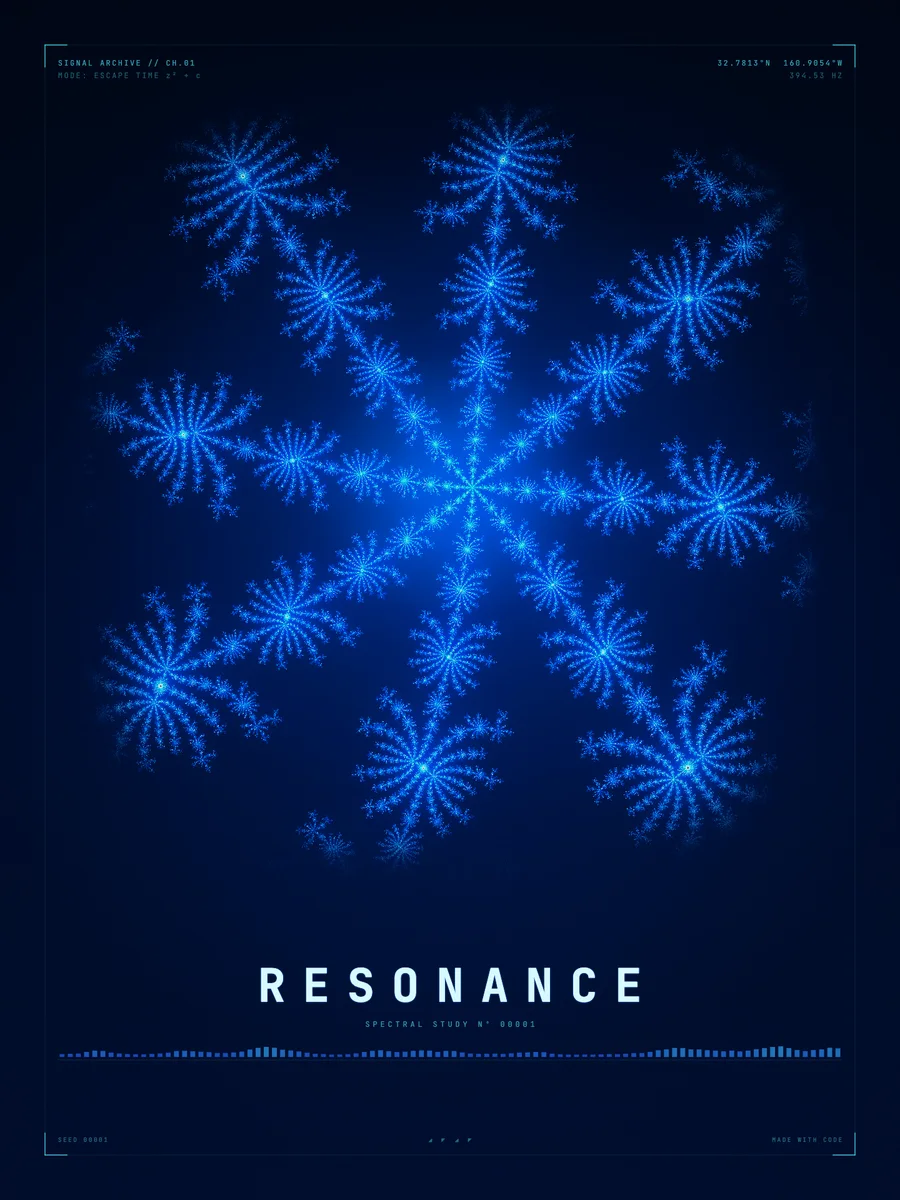
One equation, infinitely many coastlines. Each picture is a window into the Mandelbrot set, magnified to places no eye has looked before.
MATHEMATICS
The maths behind the picture
- 01
One equation
Take a complex number c. Start from zero and repeat: square it, then add c. If the numbers stay small forever, c belongs to the set. If they run off to infinity, it doesn't. That is the whole definition.
zₙ₊₁ = zₙ² + c, z₀ = 0 - 02
The escape radius
It's proven that once |z| passes 2, it never comes back. So for every point the program counts how many steps it takes to escape. That number becomes the colour: points near the set escape slowly and glow.
|zₙ| > 2 ⇒ c ∉ M - 03
An infinite coastline
The boundary of the set is a fractal: however far you zoom in, new spirals, tendrils and tiny copies of the whole set appear. The set is named after Benoit Mandelbrot, who studied it around 1980 at IBM. Its boundary has Hausdorff dimension 2 (Shishikura, 1998).
dim_H(∂M) = 2
HISTORY
Where this idea comes from
Mandelbrot
- 1918
Gaston Julia and Pierre Fatou study the iteration of complex functions, with no computers, only pencil and paper.
- 1978
Robert Brooks and Peter Matelski publish the first picture of the set, printed in characters on a line printer.
- 1980
Benoit Mandelbrot at IBM explores the set by computer and reveals its infinite complexity. He had coined the word "fractal" in 1975.
- 1982
Adrien Douady and John Hubbard prove the set is connected and name it after Mandelbrot.