SERIES A // Attractors

Thomas

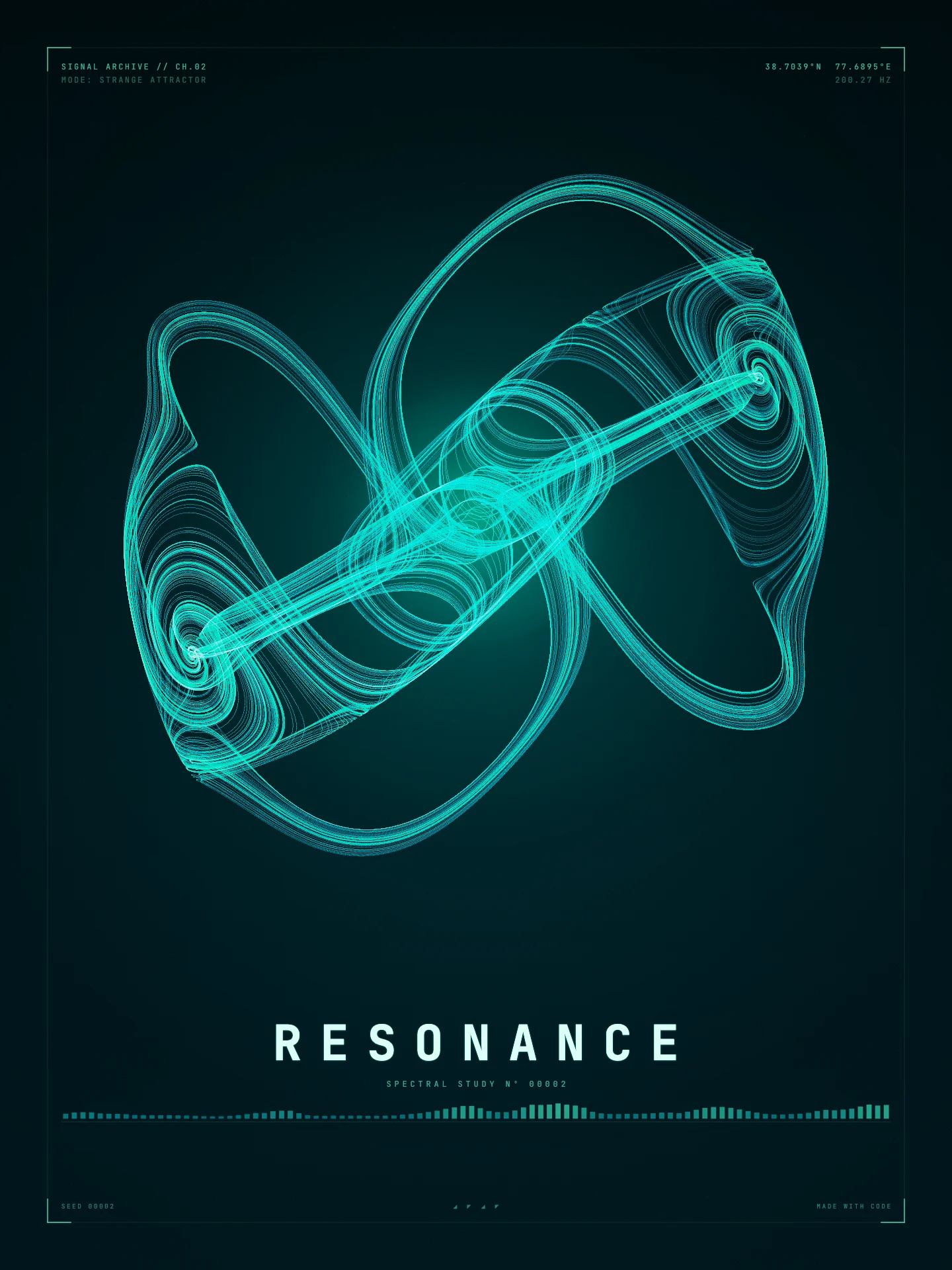
NO. 00002 · Thomas · Aurora

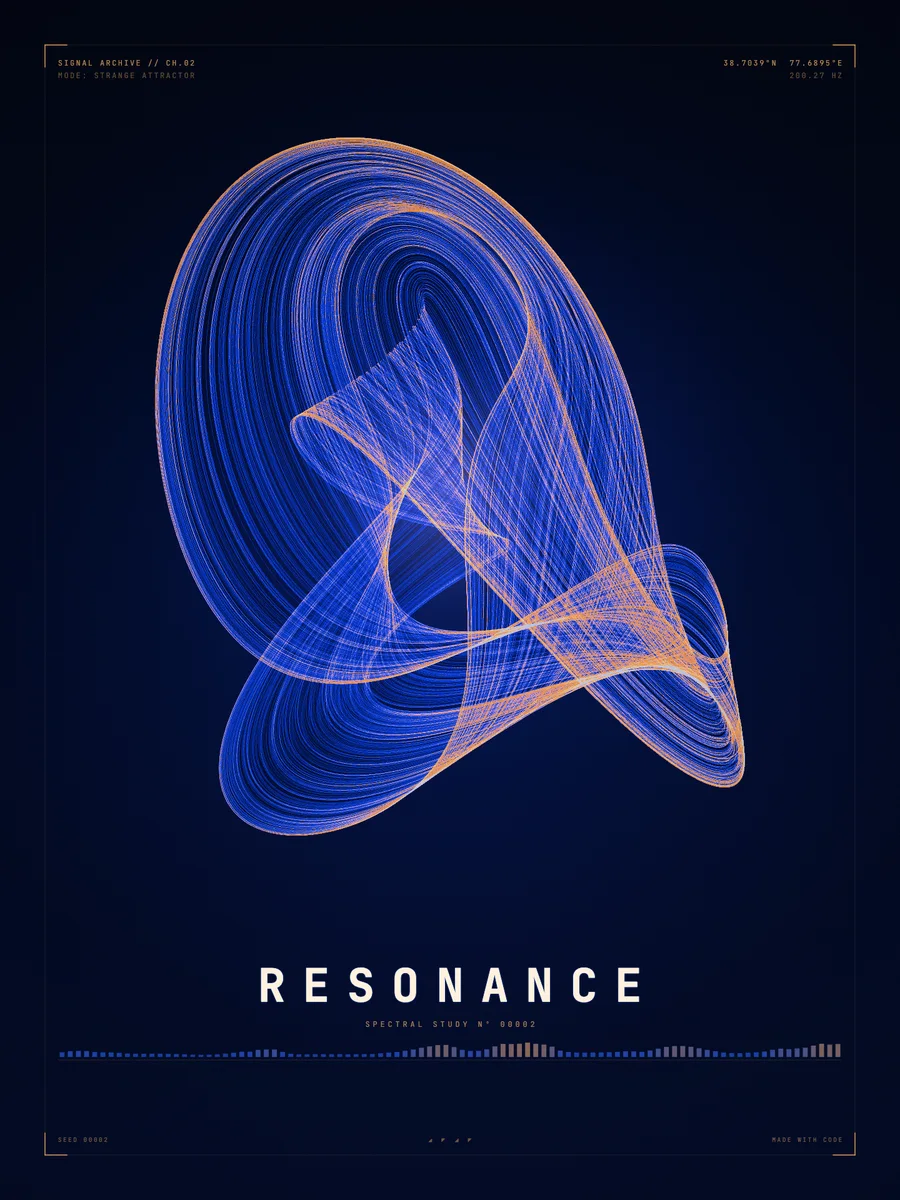
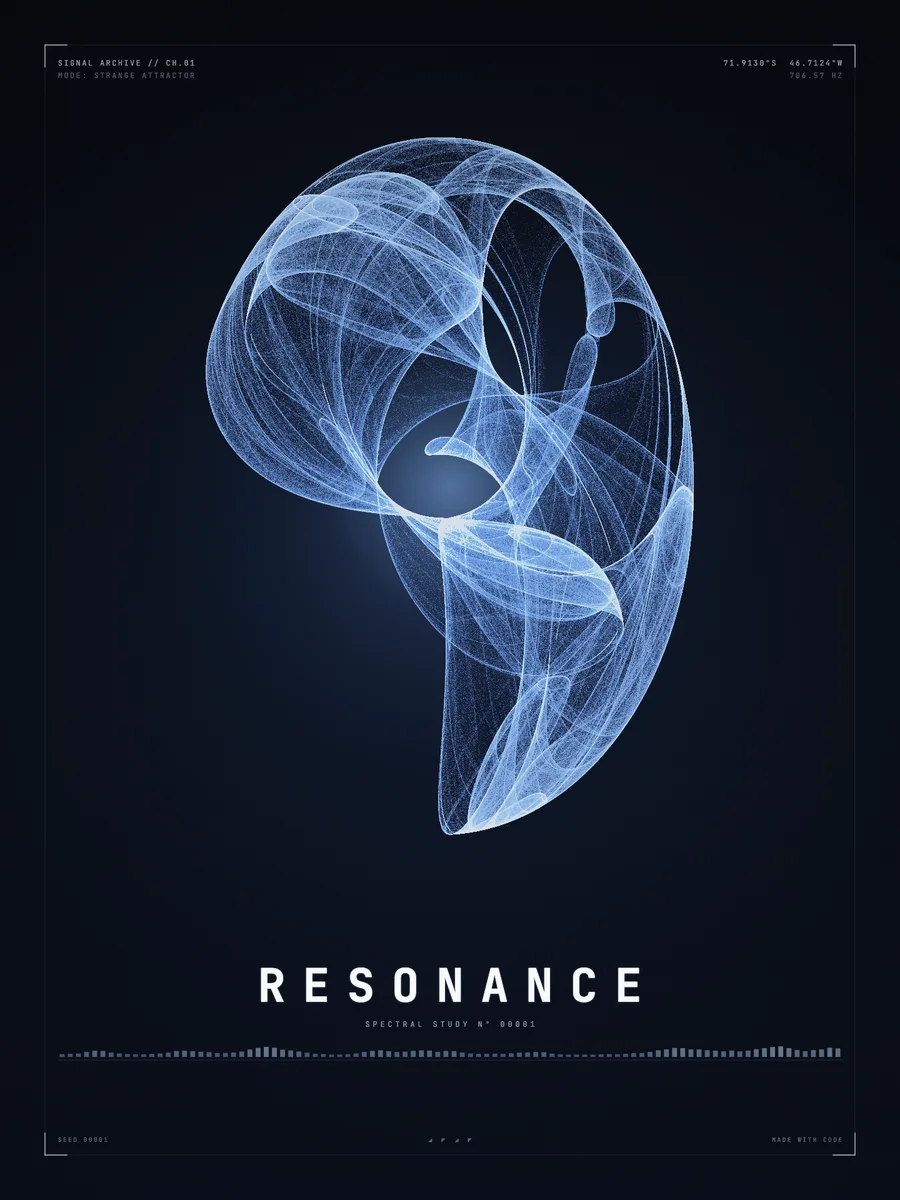
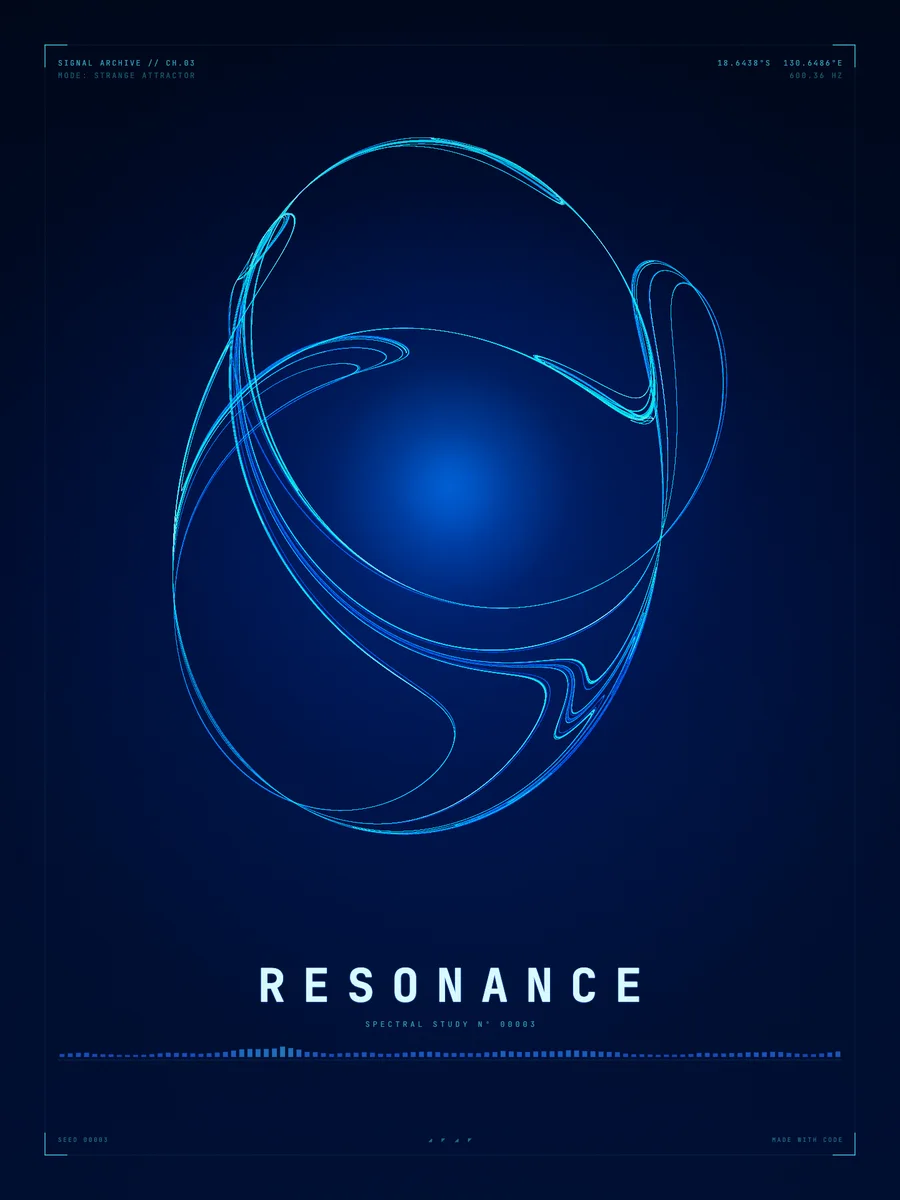
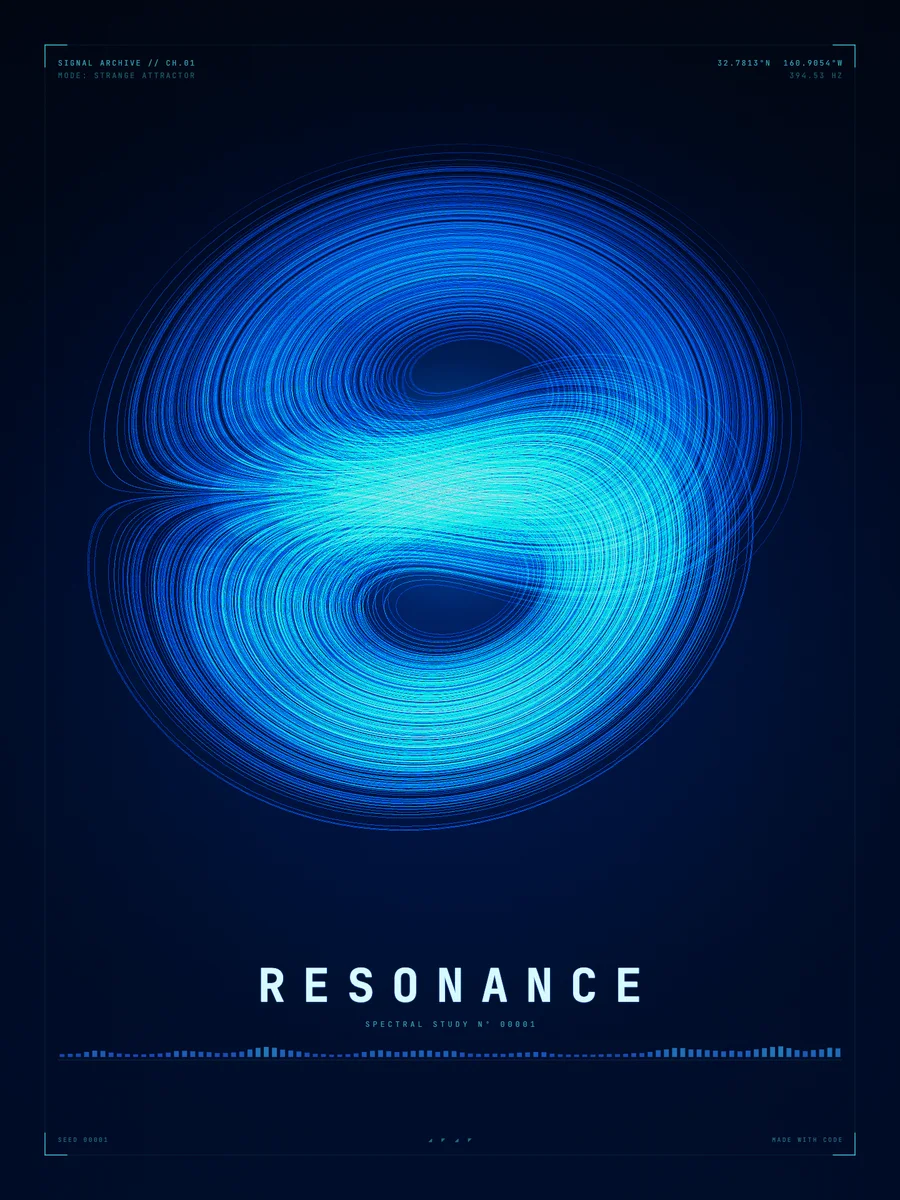
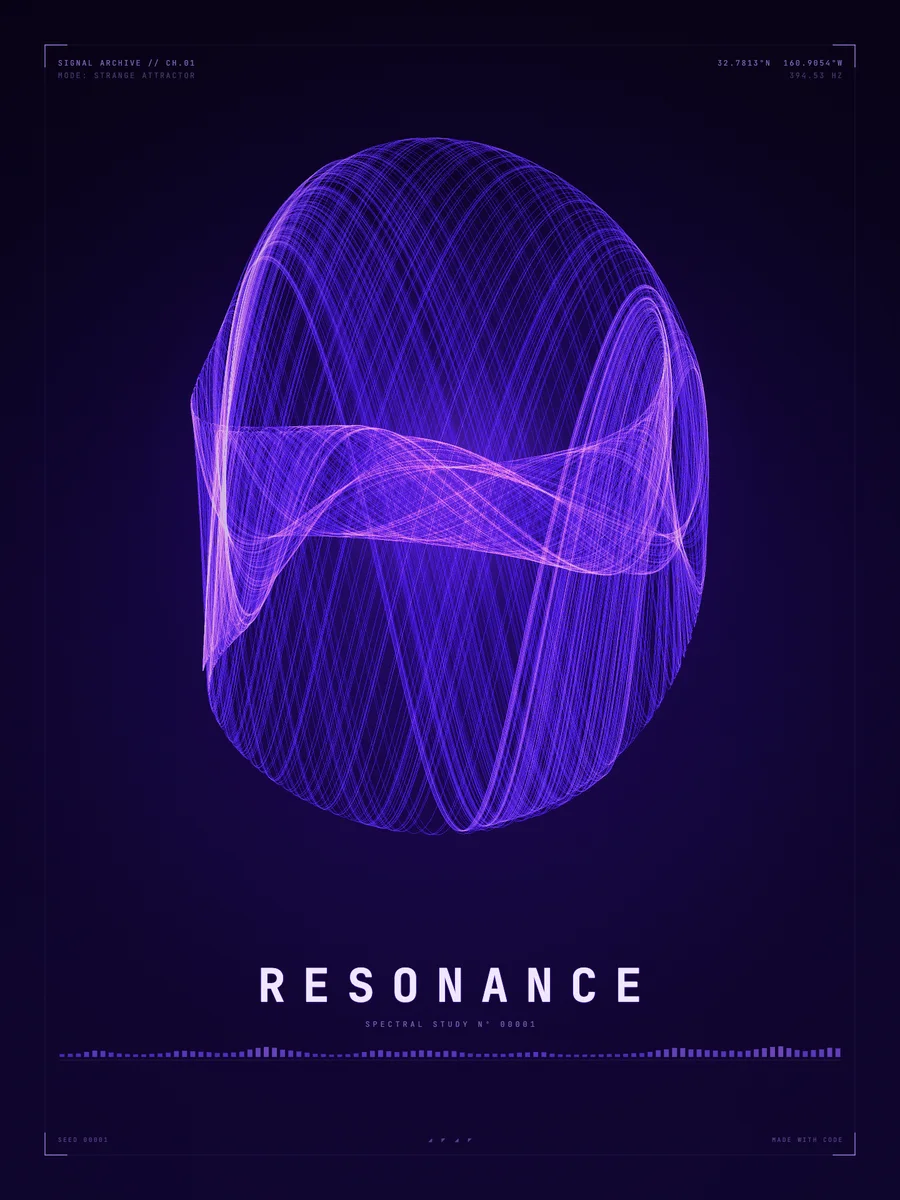
A particle in a labyrinth of sine waves. The simplest possible equations, the most tangled possible path.

2,900 RSD + 500 RSD shipping. No payment on the site - pay on delivery or by bank transfer after we confirm.
Format
Size
  • Pay on delivery
  • Printed in Serbia
  • 300 DPI giclée
  • Safe packaging
About the piece

Chaos has a shape. Each picture is the path of a single point through space, computed hundreds of thousands of times by equations that never let the path repeat.

Drawn in code from seed
00002
Series
Attractors
Variant
Thomas
Palette
Aurora
Print & materials

Matte giclée with pigment inks on archival fine-art paper (230 gsm), at 300 DPI. Every size is rendered natively - lines stay razor-sharp even at 61 × 91 cm. Metal and acrylic: deep, saturated colour on a floating mount.

Shipping & payment

Prints arrive in 3–5 business days, framed and metal in 7–10. We ship by courier across Serbia and the region. Pay on delivery or by bank transfer once we confirm your order - no card details are ever entered on the site.

MATHEMATICS

The maths behind the picture

Every piece is computed, not drawn. These are the real equations and numbers from the program that made this exact piece.

Equationsdx/dt = sin y − bxdy/dt = sin z − bydz/dt = sin x − bz
Parameters
System
Thomas
b
0.18
Measured while drawing
Start point
4.107, 0.76, -1.164
Time step
0.03
Integration steps
420,000
Method
RK4
Lyapunov exponent λ
0.034
View angle
85.3° / -4.1° / -14.3°
Coverage (%)
19.4
What these numbers mean

λ = 0.034 > 0 means chaos: two paths starting 0.00000001 apart separate by a factor of e^(0.034·t). Their distance doubles every 20.39 time units, so very soon they have nothing in common.

HISTORY

Where this idea comes from

Attractors

  1. 1890

    Henri Poincaré, working on the three-body problem, first glimpses chaos: a tiny change at the start changes the whole outcome.

  2. 1963

    Edward Lorenz at MIT reduces a model of the atmosphere to three equations and finds that weather cannot be predicted far ahead.

  3. 1971

    David Ruelle and Floris Takens coin the term "strange attractor".

  4. 1972

    Lorenz's talk "Does the flap of a butterfly's wings in Brazil set off a tornado in Texas?" gives the butterfly effect its name.
TRANSMISSION // NEW ORDER

Order

Total - Includes 500 RSD courier shipping. You only pay on delivery.
Payment