SERIES C // DESIGN GRAMMAR
Структура · Structure
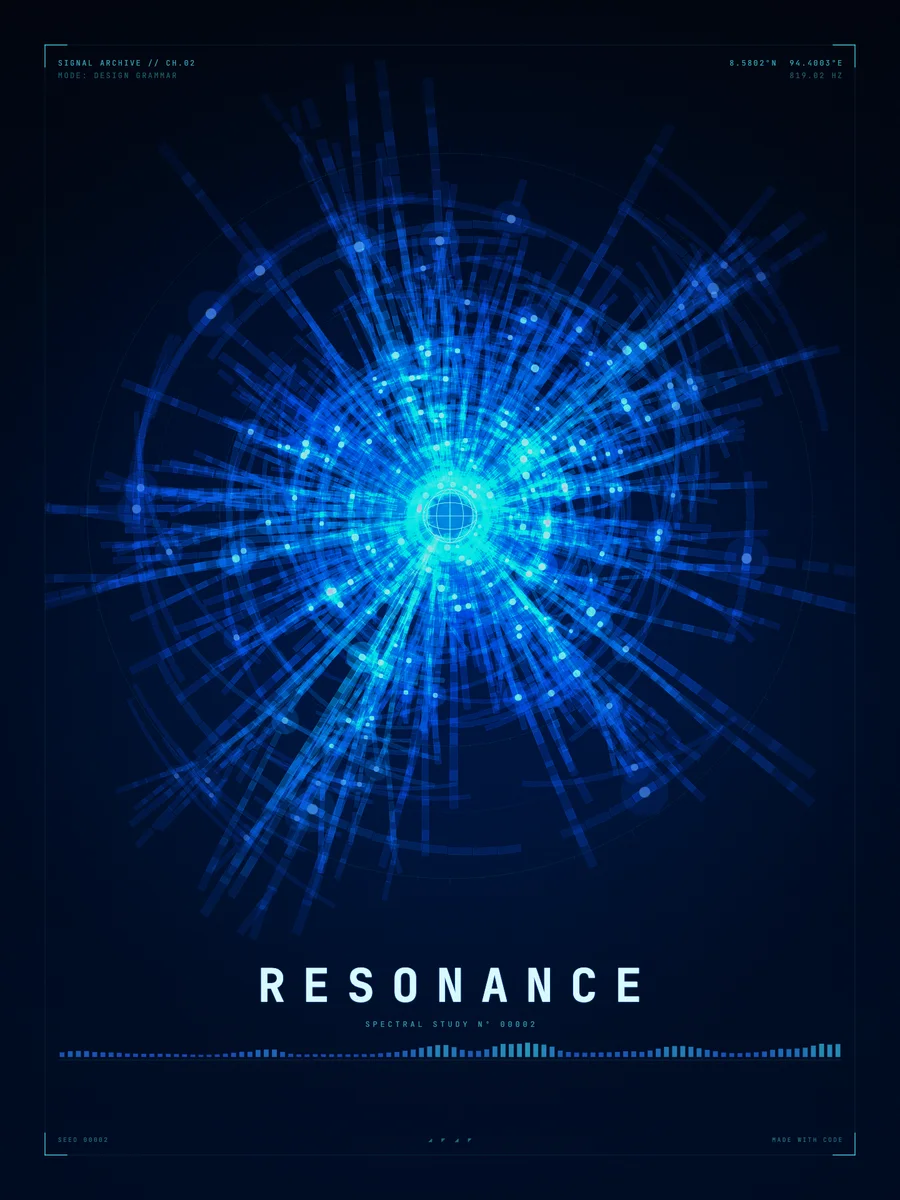
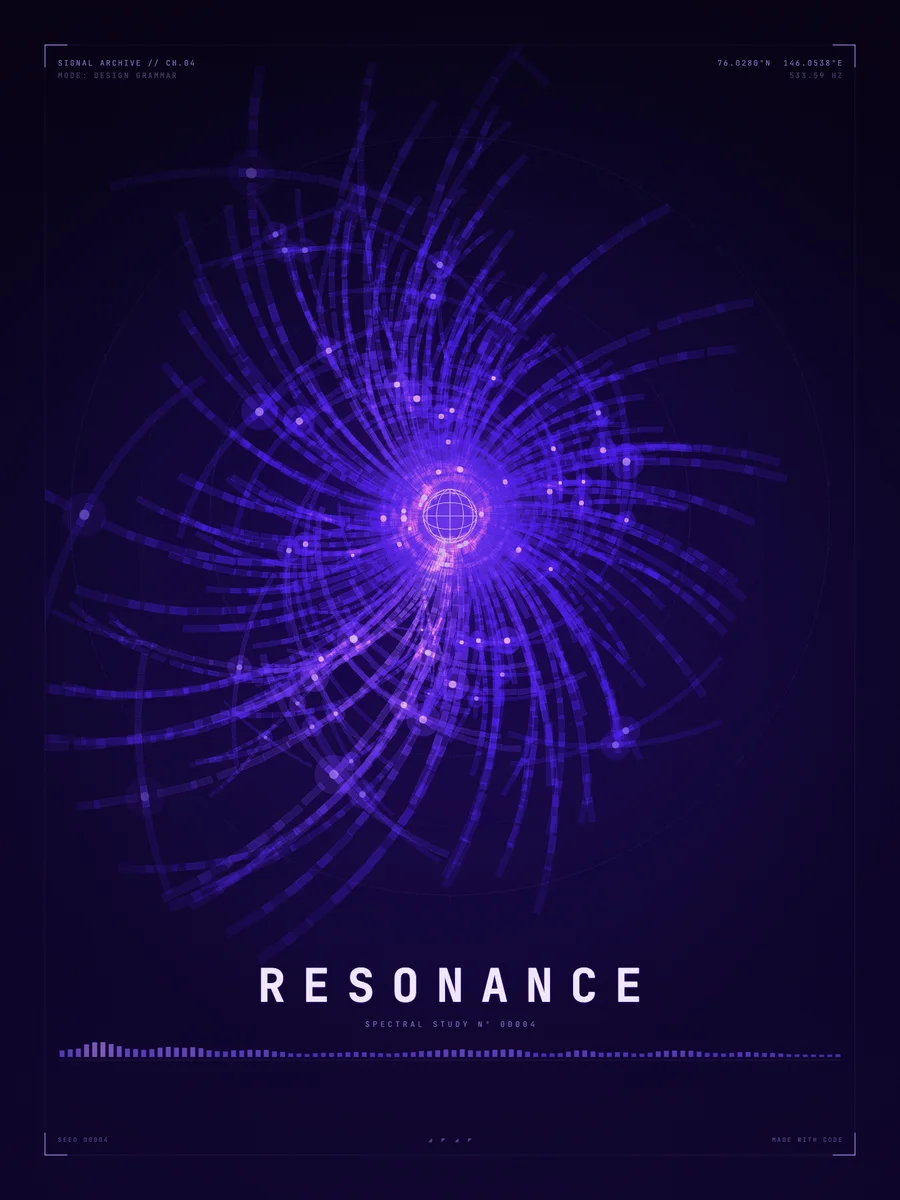
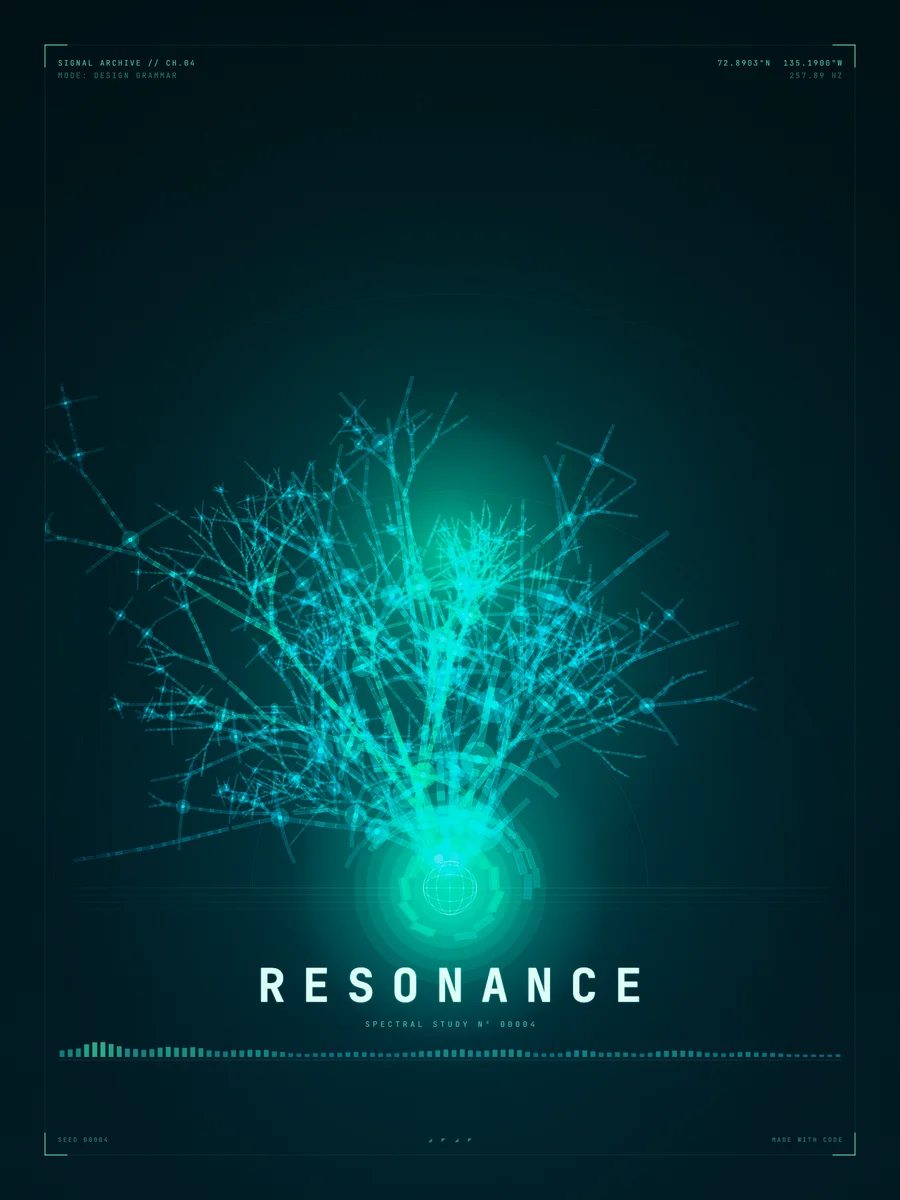
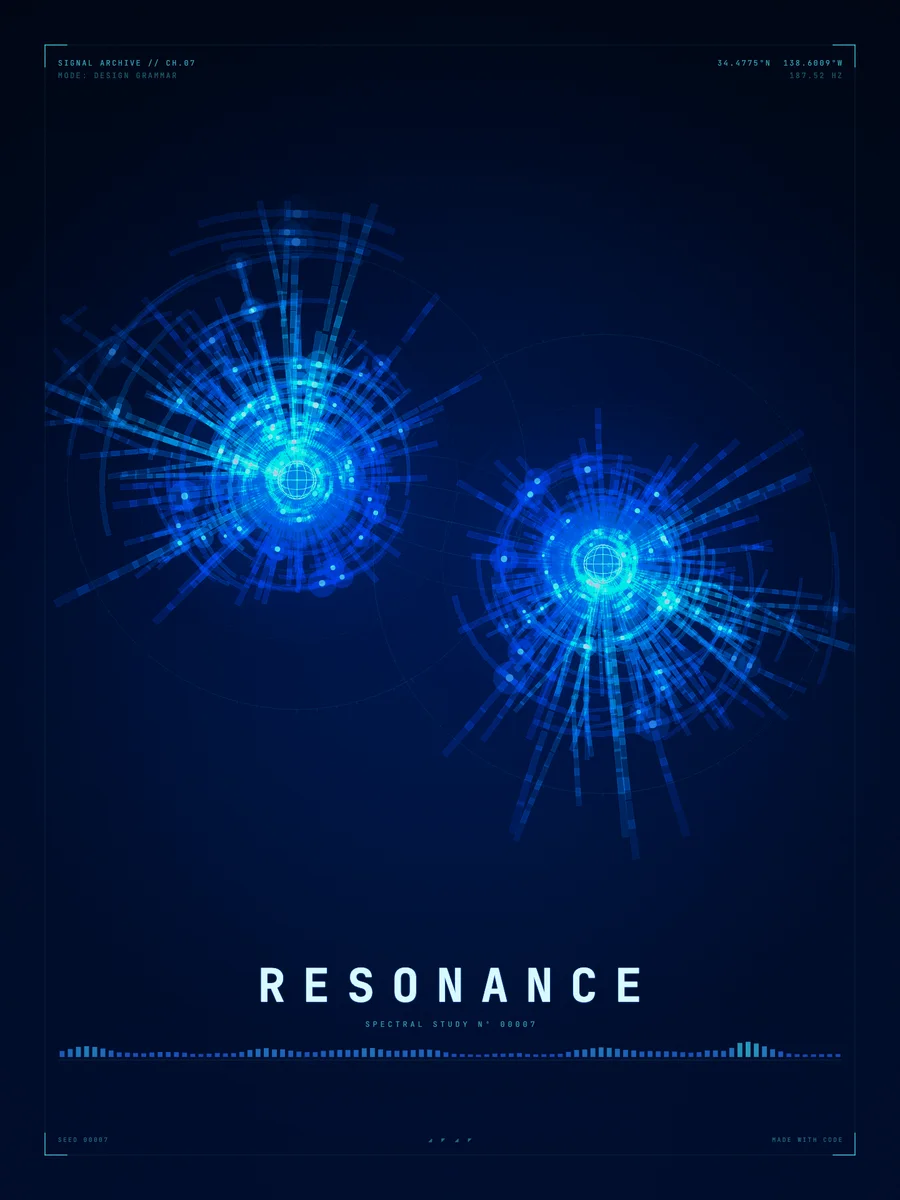
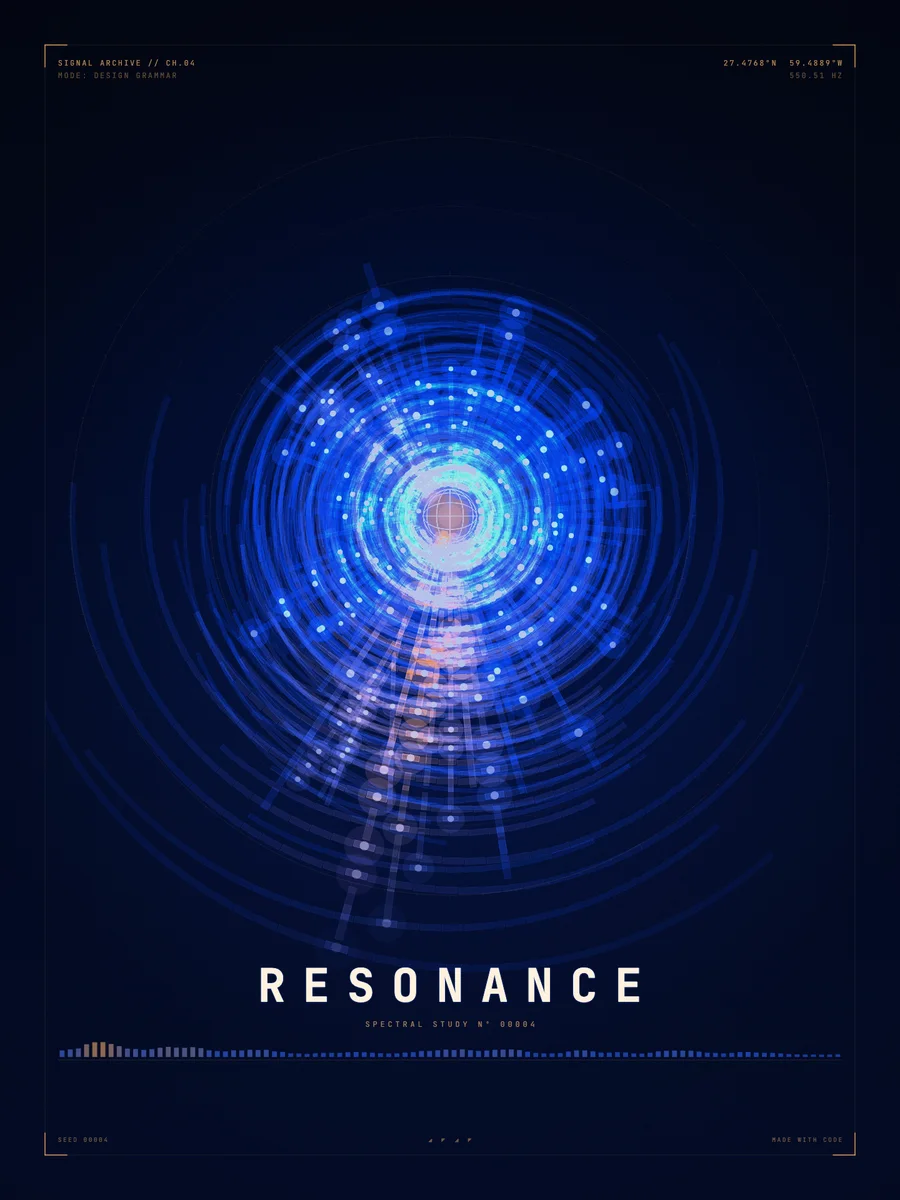
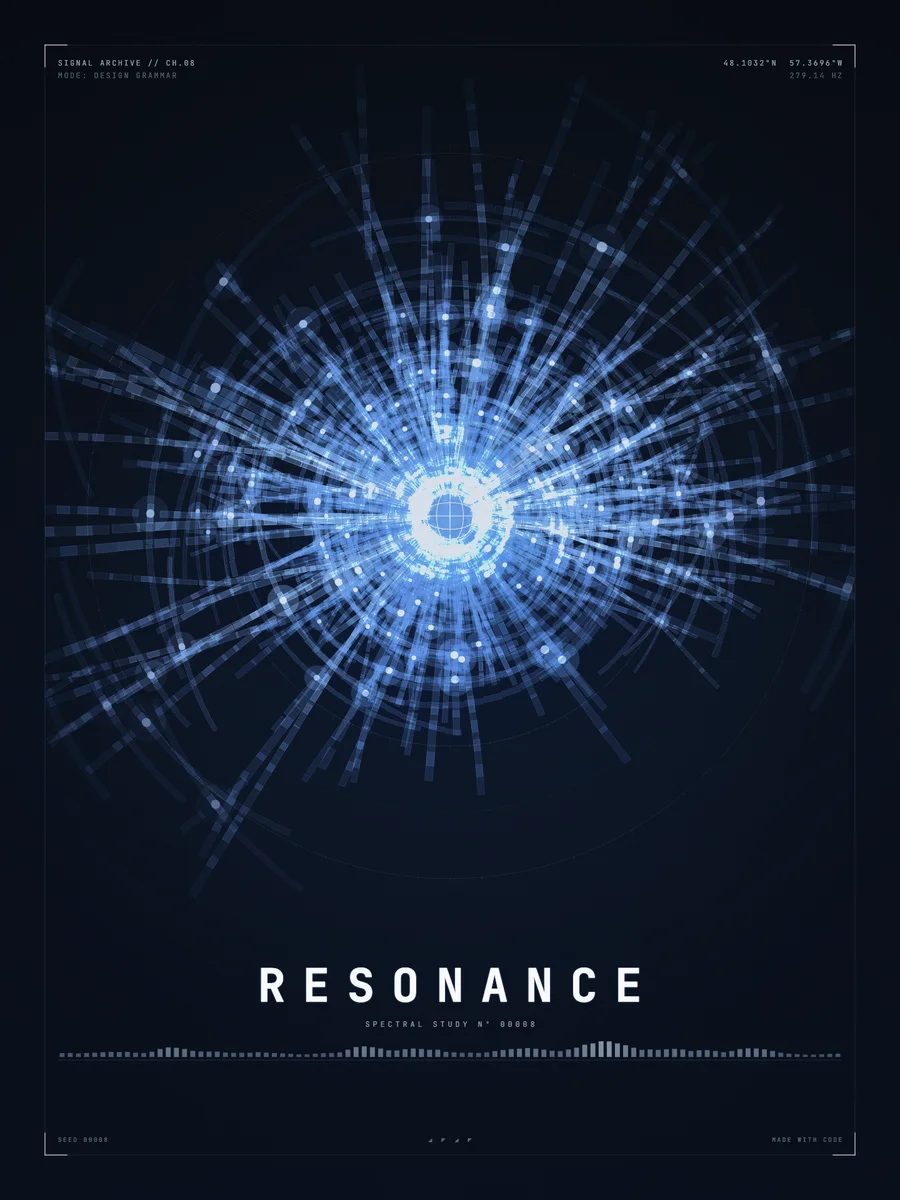
Sound that builds. Thousands of blocks of light grow by the rules of a design grammar - branching, bending and repeating until the signal fades. The architecture of a single moment.
MATHEMATICS
The maths behind the picture
- 01
A grammar instead of a drawing
No hand draws the picture, a set of rules does: "a ray is a block, then a new ray a little further and a little bigger". The program applies the rules over and over, like a sentence that writes itself. The idea comes from Context Free Art and Structure Synth.
ray → block · ray(x + 2, s × 1.045) - 02
Chance with rules
Each rule has a probability: most of the time a ray simply extends, sometimes it forks in two, sometimes it places a node that grows arcs. The same seed always makes the same choices, so every piece is reproducible and unique.
p(extend) ≈ 84% · p(fork) ≈ 9% · p(node) ≈ 5% - 03
Sound sets the reach
How many steps each ray lives depends on a sound signal s(t): a sum of sine waves under swells of loudness. Loud parts of the signal become long rays, quiet parts stay short.
s(t) = Σ aₖ·sin(2π·fₖ·t + φₖ) · envelope(t) - 04
Perlin noise
Nature is neither perfectly smooth nor completely random: clouds, mountains and waves are somewhere in between. In 1983 Ken Perlin invented a noise that looks like nature: a smooth function that gives random but gentle changes. The program adds four layers (octaves) of this noise, each half as strong and twice as fine as the last. That is what gives the lines life, so they don't look like they were drawn with a ruler.
noise(x) = Σₖ 0.5ᵏ · perlin(2ᵏ·x), k = 0…3
HISTORY
Where this idea comes from
Structure
- 1956
Noam Chomsky describes formal grammars: a finite set of rules that can generate infinitely many sentences.
- 1968
Biologist Aristid Lindenmayer applies the same idea to plants. His L-systems describe how branches grow using rewriting rules.
- 2005
Context Free Art brings grammars into art: a picture is a program of a few rules that call themselves.
- 2007
Mikael Hvidtfeldt Christensen releases Structure Synth, extending grammars into three dimensions. This series grows from there.
Perlin noise
- 1982
Ken Perlin works on the effects for the film Tron and is frustrated that computer images look too "machine-like".
- 1983
Perlin invents his noise and publishes it in 1985 at SIGGRAPH, in the paper "An Image Synthesizer".
- 1997
Perlin receives an Academy Award for Technical Achievement: his noise becomes the basis of smoke, fire and cloud textures in film.
- 2001
Perlin publishes an improved version and "simplex" noise. Today games, films and code art all over the world use it.