MATHEMATICS
The maths behind the picture
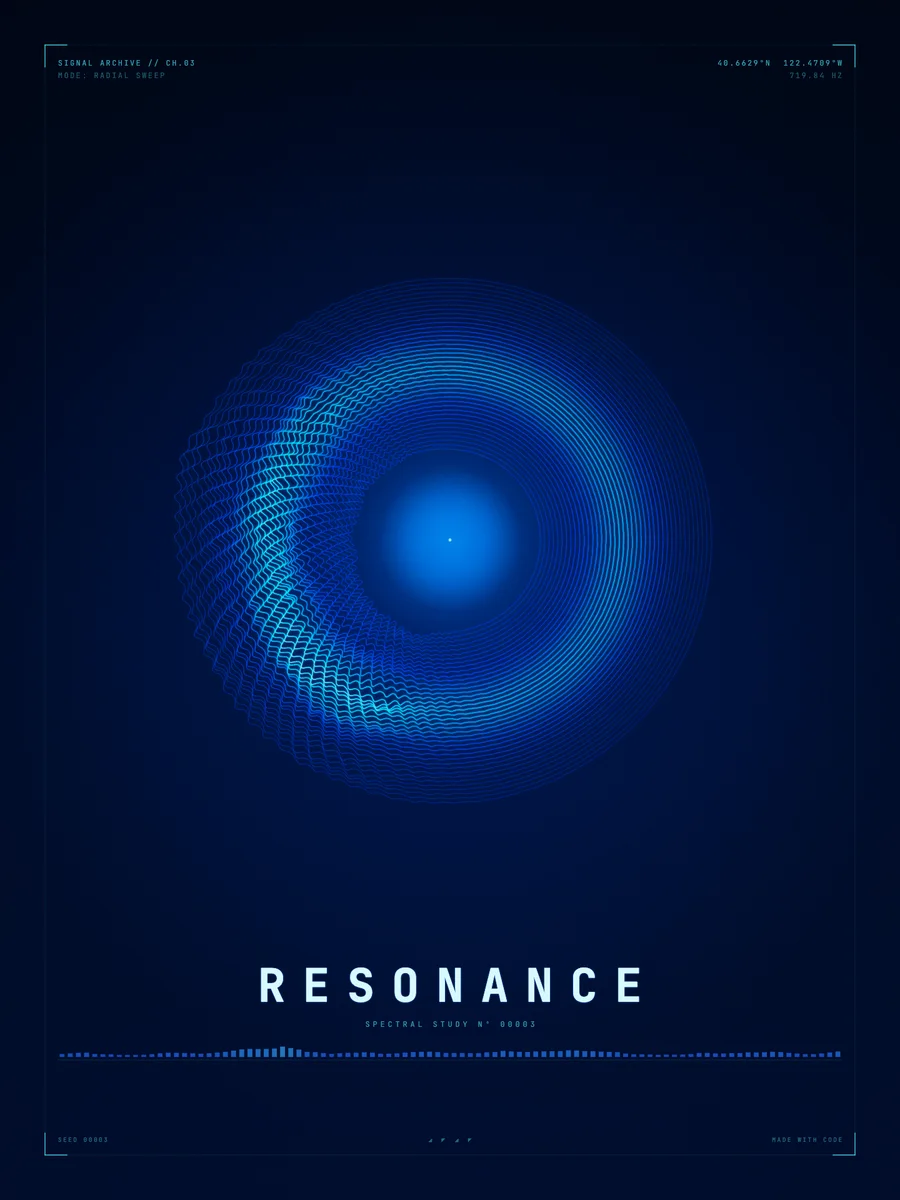
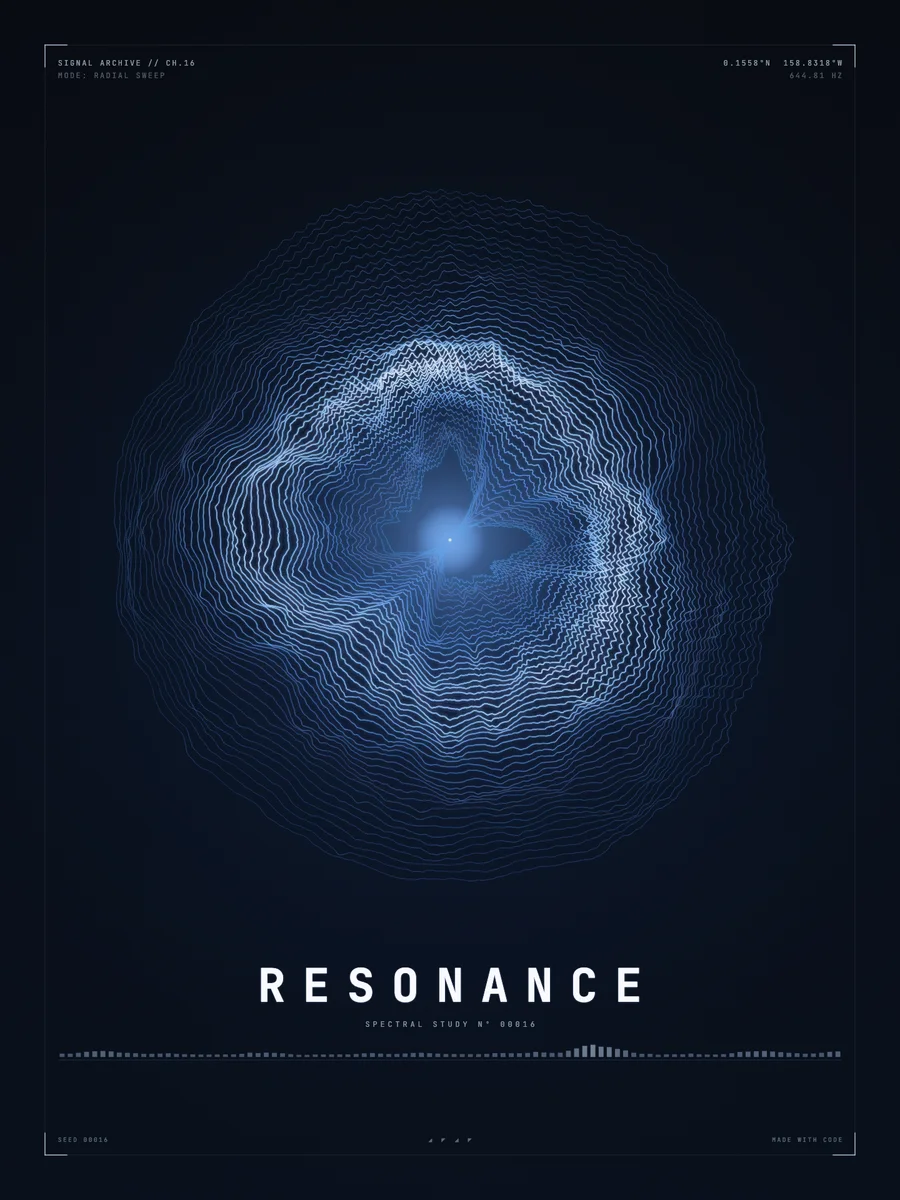
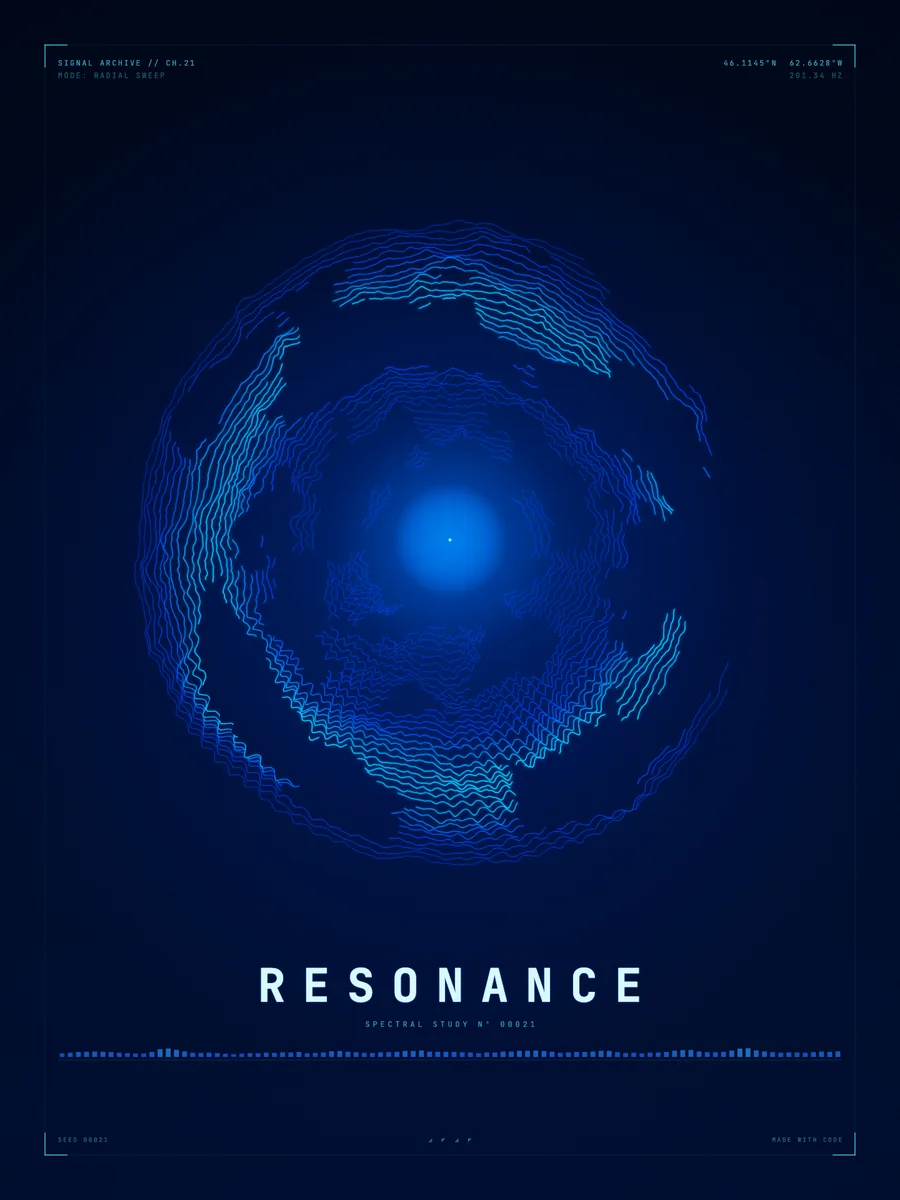
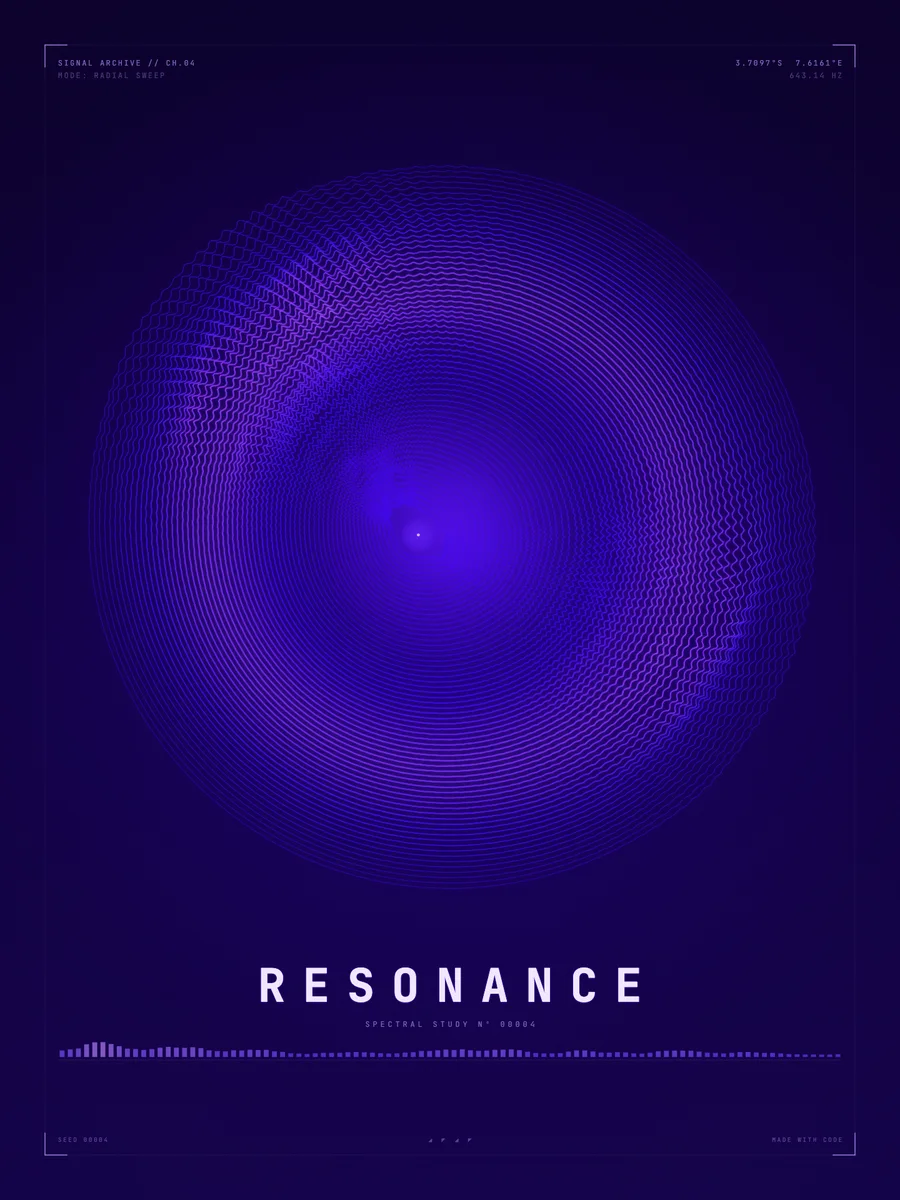
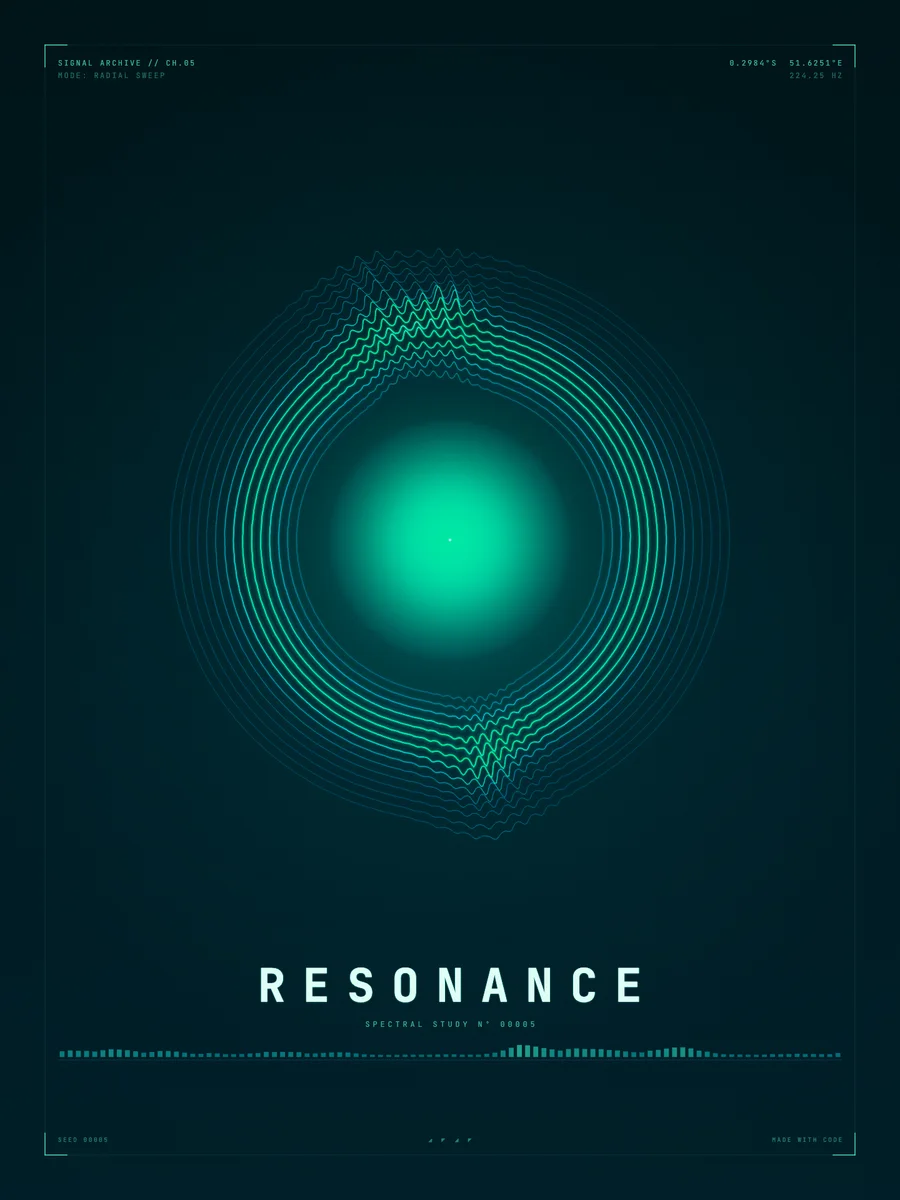
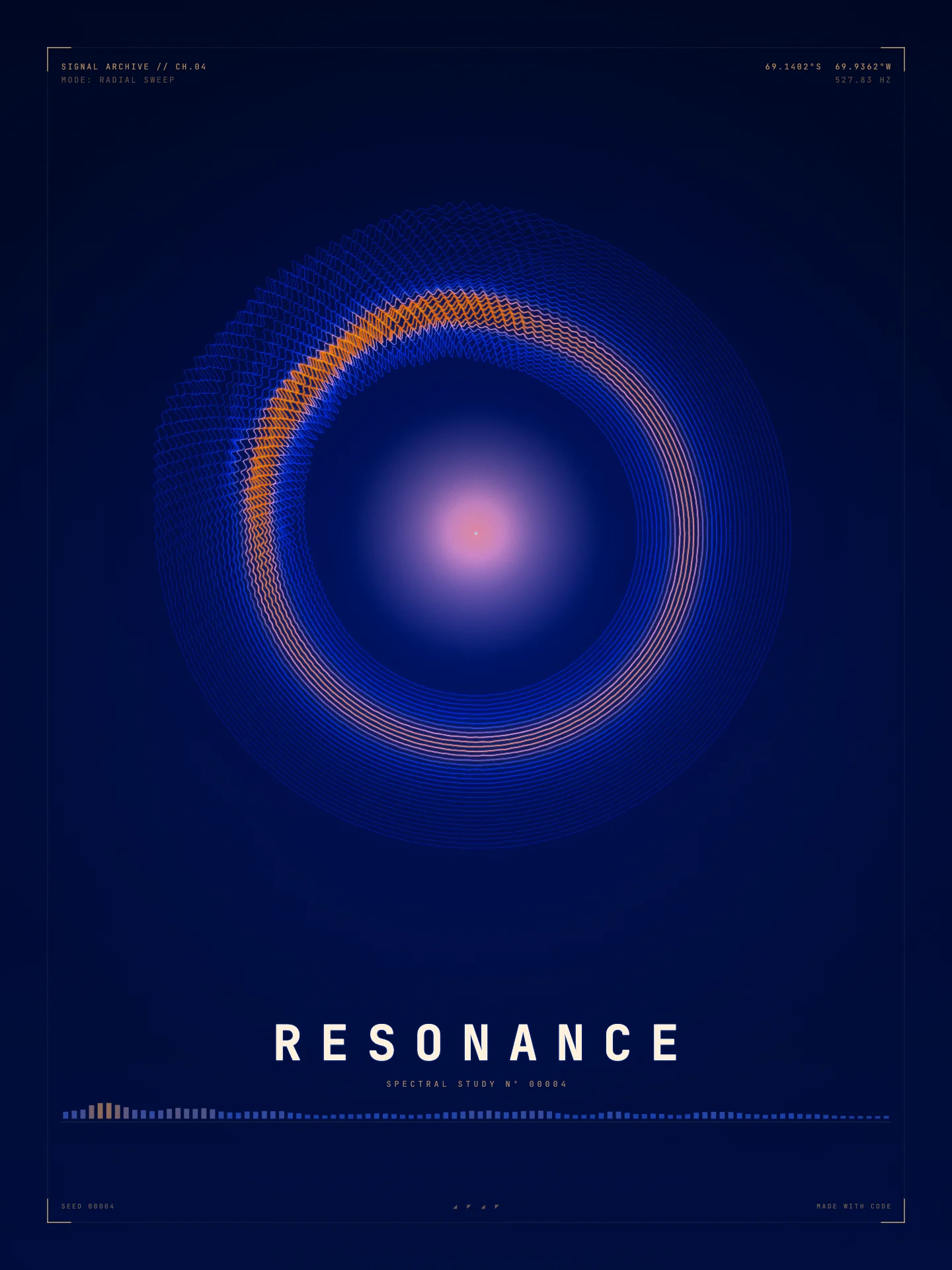
Every piece is computed, not drawn. These are the real equations and numbers from the program that made this exact piece.
rᵢ(θ) = Rᵢ + A·env(θ)·eᵢ·(1.56·n₁(θ)² + 0.45·|sin(f·θ + φᵢ)|³·n₂(θ))env(θ) = Σₖ aₖ·e^(−(Δ(θ, cₖ)/wₖ)²)- Rings
- 34
- Carrier frequency
- 70
- Envelopes
- 230.9°±47.2°
- Perlin noise
- 4 octaves · falloff 0.5
- Samples
- 30,600
Nature is neither perfectly smooth nor completely random: clouds, mountains and waves are somewhere in between. In 1983 Ken Perlin invented a noise that looks like nature: a smooth function that gives random but gentle changes. The program adds four layers (octaves) of this noise, each half as strong and twice as fine as the last. That is what gives the lines life, so they don't look like they were drawn with a ruler.
HISTORY
Where this idea comes from
Orbit
- 1691
Jacob Bernoulli develops polar coordinates: a point is described by an angle and a distance from the centre instead of x and y.
- 1890s
Harmonographs, pendulum drawing machines, trace circular wave patterns and become a popular Victorian art.
- 1983
Perlin noise, sampled around a circle, makes seamless rings that close perfectly through all 360°.
Perlin noise
- 1982
Ken Perlin works on the effects for the film Tron and is frustrated that computer images look too "machine-like".
- 1983
Perlin invents his noise and publishes it in 1985 at SIGGRAPH, in the paper "An Image Synthesizer".
- 1997
Perlin receives an Academy Award for Technical Achievement: his noise becomes the basis of smoke, fire and cloud textures in film.
- 2001
Perlin publishes an improved version and "simplex" noise. Today games, films and code art all over the world use it.